

Most people blame joint discomfort on ageing, previous injuries, or genetics. While these factors certainly influence how the body changes over time, they are only part of the story. Many joint problems develop gradually through repeated behaviours that seem harmless on the surface. Small actions performed every day can either support healthy joints or slowly contribute to wear and tear. Understanding these patterns is essential because the body adapts to what it does most often, whether those activities are beneficial or harmful.
Many individuals overlook the habits that negatively affect mobility because their effects accumulate slowly. A few hours of sitting today may not cause noticeable discomfort, but months or years of similar behaviour can create significant challenges. The same applies to poor posture, inadequate sleep, repetitive movements, and inactivity. These repeated behaviours shape joint health habits, influencing how joints move, recover, and respond to stress. By recognising unhealthy patterns early, people can make meaningful changes that support long term musculoskeletal health, preserve comfort, and improve everyday movement.
Understanding habit loops and their impact on joints
Habit loops consist of three basic elements: a cue, a routine, and a reward. The brain uses these loops to automate behaviour and reduce decision making effort. While this process is useful for efficiency, it can also reinforce behaviours that place unnecessary strain on the body. When certain routines become automatic, people often stop noticing them altogether, even when those routines affect physical wellbeing.
For example, someone may sit at a desk for hours because work demands require concentration. The reward is productivity and convenience. Over time, prolonged sitting becomes a default response whenever work begins. Similar loops develop around screen use, inactivity, poor movement choices, and repetitive motions. These habits influence joint function because joints depend on regular, balanced movement to stay healthy. According to information from the Centers for Disease Control and Prevention and the National Institute of Arthritis and Musculoskeletal and Skin Diseases, lifestyle factors such as activity levels and weight maintenance play an important role in supporting long term joint wellbeing.
The hidden role of poor posture in joint stress
One of the most common yet underestimated contributors to joint discomfort involves the poor posture effects on joints. Modern lifestyles encourage long periods of sitting while working, scrolling through phones, or watching screens. These activities often place the body in positions that shift weight distribution and alter natural alignment.
When posture remains poor for extended periods, certain joints absorb more pressure than they are designed to handle. The neck, shoulders, hips, knees, and lower back frequently experience additional stress. Over time, muscles compensate for these imbalances, creating inefficient movement patterns that may increase discomfort and reduce physical performance. Maintaining proper body alignment allows forces to spread more evenly throughout the body, reducing unnecessary strain on joints and surrounding tissues.
Research available through the National Institutes of Health suggests that prolonged postural stress can influence musculoskeletal pain and affect overall movement quality. The concern is not occasional slouching but rather the repeated positions that become part of everyday life.
How screen habits create postural habit loops
Technology has transformed the way people work and communicate, but it has also introduced movement challenges. Looking down at phones or leaning toward computer screens often encourages forward head posture and rounded shoulders. These positions may seem insignificant during a single work session, yet they become problematic when repeated thousands of times over months and years.
The poor posture effects on joints are often linked to habit loops created by digital devices. Every notification, email, or social media check can reinforce the same movement pattern. Eventually, the body adapts to these positions, making them feel normal even when they are not ideal. Practicing simple posture correction techniques, adjusting screen height, and taking regular movement breaks can help interrupt these loops before they become deeply ingrained.
Sedentary routines and joint deterioration
The human body evolved for regular movement. Joints rely on activity to maintain lubrication, flexibility, and strength. One reason prolonged inactivity becomes problematic is that movement helps circulate synovial fluid, a substance that nourishes and lubricates joint surfaces. Without sufficient movement, joints may feel stiff and less responsive.
Modern lifestyles often encourage physical inactivity through desk jobs, long commutes, and entertainment that involves extended sitting. Even individuals who exercise several times per week may spend most of their waking hours sedentary. This imbalance can contribute to reduced range of motion, muscle weakness, and diminished movement quality.
The World Health Organization highlights the importance of regular physical activity for maintaining overall health. Consistent movement supports mobility and helps preserve the body’s ability to perform daily activities comfortably. Small actions such as standing more frequently, walking during breaks, and stretching throughout the day can make a meaningful difference.
Weight gain habit loops and increased joint loading
Weight gain rarely occurs overnight. Instead, it often develops through repeated behaviours that gradually increase calorie intake while reducing energy expenditure. Frequent consumption of highly processed foods, oversized portions, sugary beverages, and sedentary routines can contribute to gradual increases in body weight.
Excess weight places additional pressure on weight bearing joints such as the hips, knees, and ankles. According to the Centers for Disease Control and Prevention, maintaining a healthy weight can help reduce stress on joints and improve movement. Effective weight management is therefore an important part of protecting long term joint health.
Additional body weight may also influence cartilage health because joint surfaces experience greater mechanical loading during everyday activities. Every step taken under increased load requires joints to absorb more force. Over time, this added demand can contribute to wear and discomfort. Developing healthier eating habits and maintaining regular activity levels can help reduce excessive joint stress while supporting better overall wellbeing.
Inflammation and joint pain causes linked to everyday choices
Mechanical stress is not the only factor that affects joints. Biological processes also influence how people feel and move. Understanding inflammation and joint pain causes helps explain why lifestyle choices matter beyond exercise and posture alone.
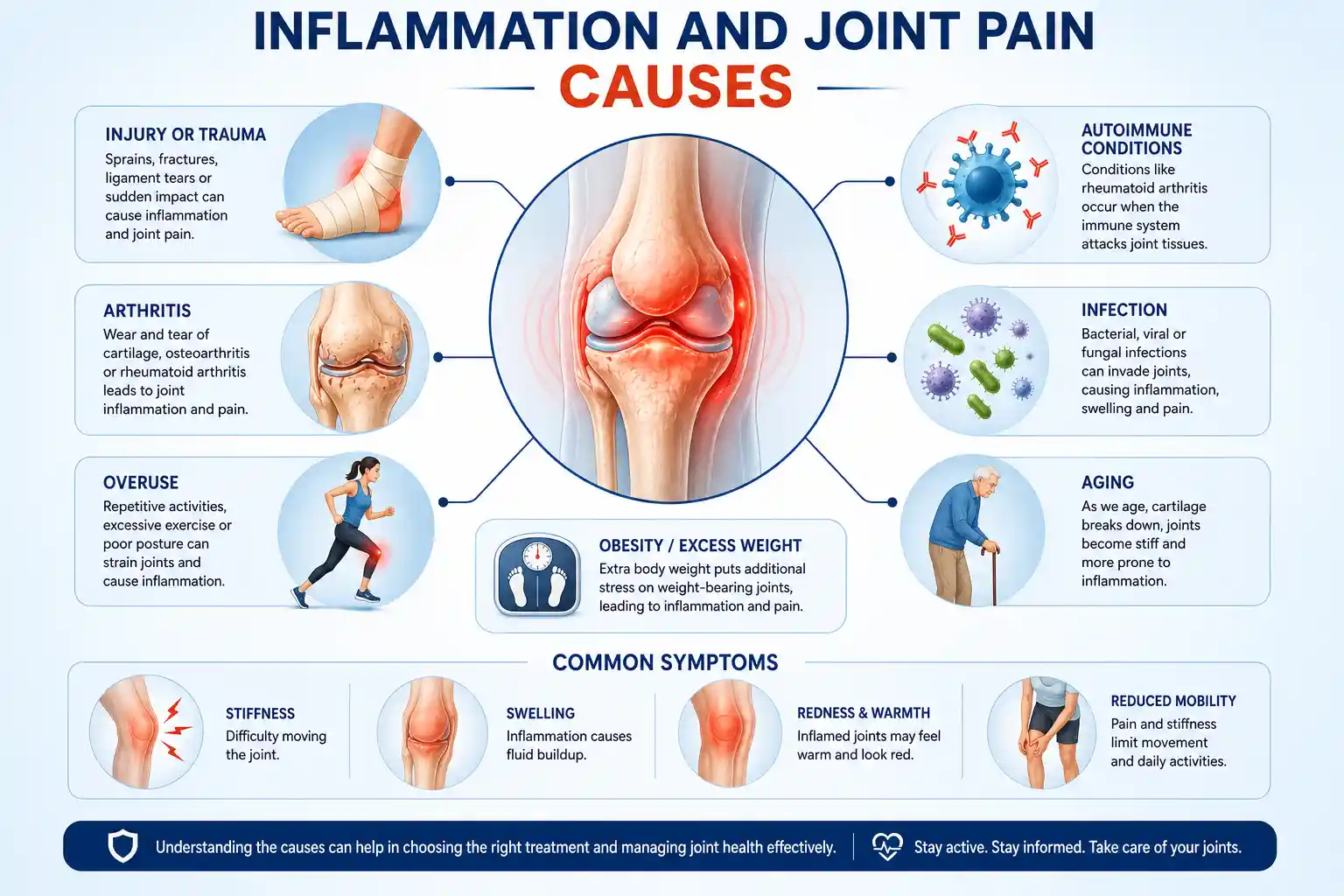
Inflammation is a normal biological response that helps the body heal and defend itself. Problems arise when inflammation becomes persistent. Researchers continue to investigate how chronic inflammation affects various aspects of health, including the musculoskeletal system. Factors such as smoking, excessive alcohol consumption, chronic stress, poor nutrition, and inadequate sleep may influence inflammatory processes.
Studies available through the National Library of Medicine indicate that lifestyle behaviours can affect markers associated with inflammation. While inflammation itself is not always harmful, ongoing inflammatory activity may contribute to discomfort and reduced physical function. Understanding these underlying causes of joint discomfort and inflammation allows individuals to make choices that better support long term health.
Sleep deprivation and inflammation
Sleep is one of the most overlooked aspects of recovery. During sleep, the body performs important repair processes that help support overall function. Quality sleep contributes to tissue recovery, physical restoration, and healthy regulation of biological systems.
People who consistently sleep too little often experience fatigue, lower activity levels, and poorer food choices. These behaviours can reinforce unhealthy habit loops that affect overall wellbeing. Research has also explored how inadequate sleep may influence inflammatory pathways, potentially affecting pain perception and recovery. Prioritising sufficient sleep therefore supports both physical and mental health while reducing factors associated with some causes of chronic joint inflammation.
Repetitive movement patterns and overuse injuries
Not every joint problem develops because of inactivity. In many cases, repetitive actions performed day after day can create a different set of challenges. Repeating the same movement without sufficient variation or recovery may place stress on muscles, tendons, ligaments, and joints. Occupations that involve lifting, typing, kneeling, climbing, or standing for extended periods often expose individuals to these risks. Similarly, athletes and fitness enthusiasts may unknowingly overload certain joints when they repeatedly perform the same exercises without balancing their routines.
The body adapts remarkably well to physical demands, but adaptation requires recovery. When repetitive actions occur faster than the body can repair itself, discomfort and fatigue may develop. Over time, repetitive strain can affect tissues and reduce movement quality. This does not mean people should avoid activity. Instead, it highlights the importance of variety, recovery, and awareness. Incorporating different forms of exercise, strengthening supporting muscles, and paying attention to discomfort can help prevent excessive stress from building up in specific areas.
Daily habits that damage joints through movement shortcuts
Many daily habits that damage joints are not dramatic or obvious. In fact, they are often small shortcuts that save a few seconds throughout the day. Twisting while lifting grocery bags, carrying heavy loads on one side of the body, skipping warm ups before exercise, or repeatedly bending with poor technique may seem harmless in the moment. However, these actions create repeated stress that accumulates over time.
The body responds to repeated mechanical loading by adapting to those demands. When movement quality is poor, those adaptations may not be beneficial. This is where understanding biomechanics becomes valuable. Biomechanics refers to how forces move through the body during activity. Efficient movement distributes forces appropriately, while poor mechanics may increase wear on specific joints. Improving lifting techniques, maintaining balanced muscle strength, and moving with greater awareness can reduce the impact of these Everyday routines that strain joints and support healthier long term outcomes.
Why convenience often overrides healthy movement
Humans naturally prefer convenience. This tendency explains why many people choose elevators over stairs, remain seated during long work sessions, or avoid short walks when transportation is available. Unfortunately, convenience based choices can gradually reduce opportunities for healthy movement throughout the day.
When these behaviours become automatic, they form powerful habit loops. A person may not consciously decide to sit for eight hours. Instead, they simply follow a routine that feels normal and efficient. The challenge is that joints thrive on regular movement. Breaking convenience based patterns by incorporating more walking, standing, stretching, and light activity can improve circulation and help maintain overall physical function.
Why joint health habits matter more than occasional exercise
Many people believe that a few intense workouts each week can compensate for unhealthy routines during the rest of the day. While exercise is incredibly valuable, it represents only a small percentage of a person’s total weekly activity. The behaviours repeated most often typically have a greater cumulative effect.
This is why joint health habits deserve attention. Daily choices involving posture, movement, sleep, nutrition, hydration, and stress management collectively influence long term wellbeing. Someone who exercises three times per week but spends most remaining hours sitting may still experience the effects of inactivity. Conversely, a person who remains moderately active throughout the day often supports better overall physical function even without intensive training.
Research from public health organisations consistently shows that sustainable lifestyle practices produce stronger long term results than short bursts of motivation. The goal is not perfection. Instead, it is the development of routines that support consistent movement, recovery, and physical resilience. Over time, these positive health habits become automatic and require less conscious effort.
The connection between stress and joint discomfort
Stress affects far more than mood. Chronic stress can influence physical health in numerous ways, including changes in sleep quality, physical activity levels, dietary choices, and muscle tension. Many people carry tension in the neck, shoulders, jaw, and lower back without even noticing it. When muscles remain tight for extended periods, movement can become less efficient and more restricted.
This reduction in movement efficiency may influence how forces travel through the body during everyday activities. Joints often depend on coordinated muscle function to move smoothly. When tension alters these patterns, additional stress may be placed on surrounding structures. Stress can therefore contribute indirectly to discomfort by affecting the way the body moves and recovers.
Managing stress does not require drastic lifestyle changes. Simple strategies such as walking, mindfulness practices, breathing exercises, social connection, and regular sleep schedules can help support physical and emotional wellbeing. These habits may not eliminate stress entirely, but they can reduce some of its effects on the body.
Nutrition and hydration habits that influence joints
Food and hydration choices influence nearly every system in the body, including those involved in movement and recovery. Diets rich in vegetables, fruits, whole grains, lean proteins, and healthy fats provide nutrients that support overall health. In contrast, diets dominated by highly processed foods may contribute to poor health outcomes when consumed regularly.
Nutrition also plays a role in supporting recovery after physical activity. The body requires adequate nutrients to repair tissues, maintain muscle function, and support normal physiological processes. Hydration is equally important because water contributes to numerous functions throughout the body. While drinking water is not a cure for joint problems, consistent hydration supports normal bodily operations that help maintain overall wellbeing.
Healthy eating patterns work best when they become part of everyday routines rather than temporary diets. Sustainable habits are generally easier to maintain and often produce more meaningful long term benefits.
How movement quality affects long term outcomes
Many people focus primarily on how much exercise they perform, yet movement quality can be equally important. Performing activities with good control and proper technique often places less unnecessary stress on joints than moving with poor mechanics. This principle applies to exercise, sports, occupational tasks, and even everyday activities such as climbing stairs or lifting household items.
Good movement quality is closely linked to movement efficiency. Efficient movement allows muscles and joints to work together effectively, reducing wasted energy and excessive strain. Maintaining adequate strength, balance, coordination, and flexibility can help improve how the body moves during daily activities.
The concept is simple but important. Rather than focusing only on quantity, people should also consider how they move. Small improvements in technique can produce meaningful benefits when repeated consistently over many years.
Breaking unhealthy habit loops
Changing behaviour can feel difficult because habits operate largely on autopilot. The good news is that habit loops can be modified. The first step involves identifying the cues that trigger unhealthy behaviours. Once these triggers become visible, individuals can begin replacing old routines with healthier alternatives.
For example, someone who sits for extended periods might set reminders to stand and stretch every hour. A person who spends excessive time looking at a phone could establish designated screen free periods. Individuals who struggle with inactivity may pair short walks with existing routines such as lunch breaks or morning coffee.
The key is consistency rather than intensity. Small changes repeated regularly tend to be more sustainable than dramatic lifestyle overhauls. As healthier behaviours become familiar, they gradually replace less beneficial routines. Over time, the brain begins to automate these positive actions, creating new patterns that support long term wellbeing.
Recognising everyday routines that strain joints
Many people search for a single cause of discomfort when the reality is often more complex. Joint health is shaped by numerous behaviours that interact with one another. Prolonged sitting, repetitive movements, poor lifting techniques, inadequate sleep, stress, inactivity, and nutritional choices may each contribute small amounts of strain. When combined over years, these factors can significantly influence physical function.
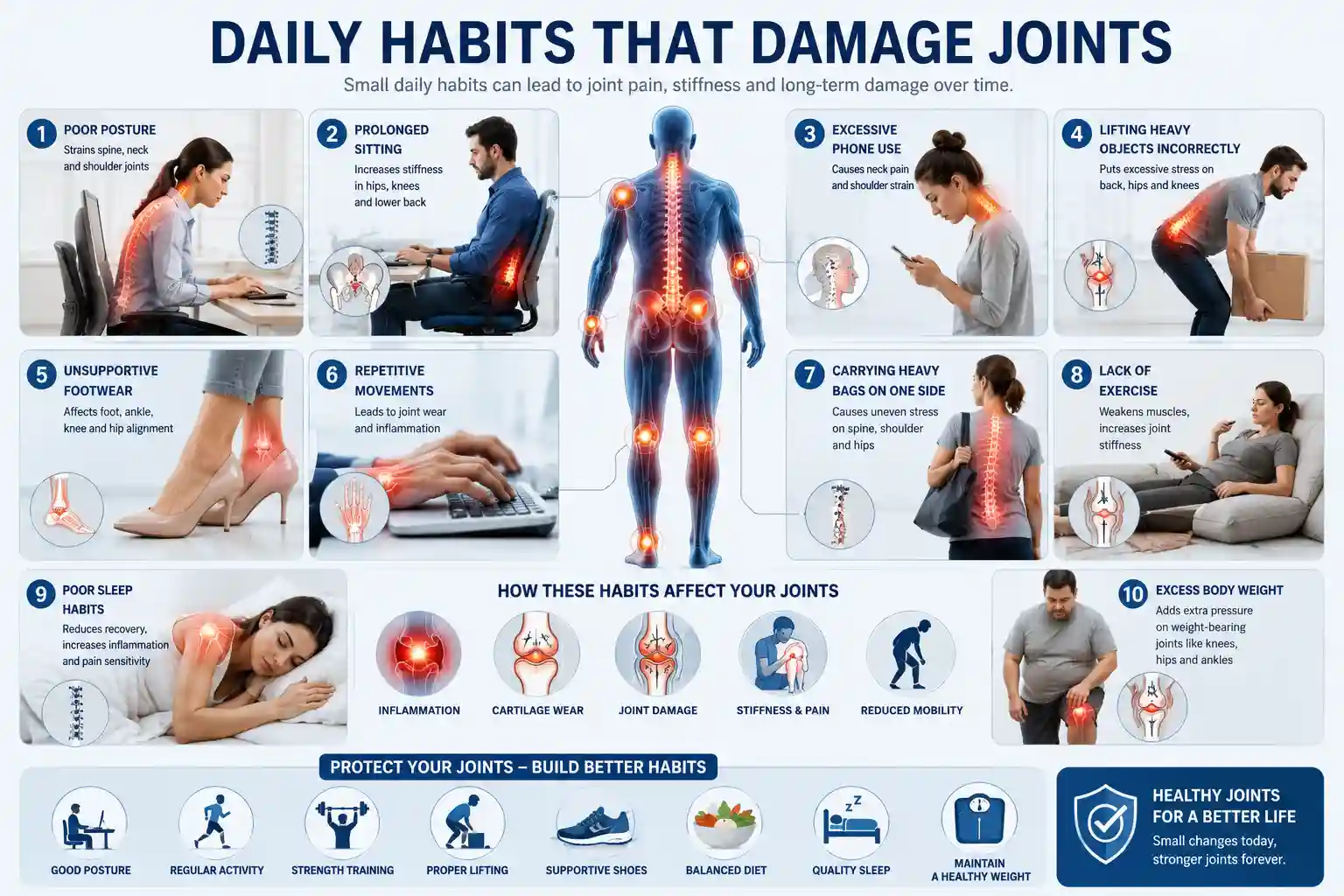
Recognising everyday routines that strain joints allows people to address problems before they become deeply ingrained. The goal is not to eliminate every imperfect movement or behaviour. Instead, it is to become more aware of how daily actions influence long term outcomes. Small improvements made consistently often provide greater benefits than occasional major changes.
Conclusion
Joint discomfort rarely develops because of a single event. More often, it emerges through repeated behaviours that gradually influence how the body moves, recovers, and adapts. Poor posture, inactivity, repetitive movements, inadequate sleep, chronic stress, and unhealthy lifestyle choices can all contribute to long term challenges when they become automatic routines.
Understanding joint health habits provides an opportunity to make meaningful changes before discomfort becomes more serious. By addressing the poor posture impacts on joints, recognising common Lifestyle factors linked to joint pain, and reducing daily actions that can damage joints, individuals can support healthier movement and better physical function. Identifying everyday routines that strain joints and replacing the habits that negatively affect mobility with healthier alternatives can help preserve comfort, independence, and quality of life for years to come.
Sources and references
Centers for Disease Control and Prevention (CDC) Arthritis Information
National Institute of Arthritis and Musculoskeletal and Skin Diseases (NIAMS)
National Institutes of Health (NIH)
World Health Organization (WHO)
National Library of Medicine (PubMed)
National Institute for Occupational Safety and Health (NIOSH)
United States Department of Agriculture (USDA)
Frequently asked questions
How do poor posture effects on joints influence balance and stability over time?
The bad posture effects on joints extend beyond temporary discomfort. When posture remains misaligned for long periods, the body may compensate by shifting weight unevenly across muscles and joints. These changes can affect coordination, balance, and overall movement control. Over time, inefficient positioning may alter natural movement patterns and place additional demands on supporting muscles. Maintaining proper posture and regular movement throughout the day can help improve body awareness and reduce unnecessary stress on joints involved in balance and stability.
Can reasons for joint inflammation and discomfort be linked to stress rather than physical activity?
Yes. While many people associate joint discomfort with exercise or ageing, some causes of inflammation and joint pain may be influenced by chronic stress. Ongoing stress can affect sleep quality, recovery, activity levels, and biological processes involved in inflammation. When these factors combine, individuals may experience greater discomfort or stiffness even without significant physical strain. Managing stress through healthy routines may therefore support overall wellbeing and recovery.
Which daily habits that damage joints are most common among people who work from home?
Several habits that contribute to joint discomfort are especially common among remote workers. These include prolonged sitting, limited movement breaks, poor workstation setup, repetitive keyboard use, and extended screen time. Because these behaviours occur gradually throughout the day, they often become automatic and difficult to notice. Improving workstation ergonomics and scheduling movement breaks can help reduce unnecessary strain.
Does physical inactivity affect flexibility and movement quality?
Yes. Long periods of inactivity can contribute to stiffness and reduced flexibility. Joints and muscles generally respond best to regular movement, which helps maintain normal mobility and supports healthy function. When movement becomes limited for extended periods, everyday tasks may feel more difficult because the body is not regularly moving through its normal range.
How does weight management support long term joint wellbeing?
Maintaining a healthy body weight helps reduce the mechanical load placed on weight bearing joints such as the knees, hips, and ankles. Effective weight management may also support physical activity participation and overall health. While weight is only one factor among many, reducing excess strain can help support comfort and mobility over time.
Why is movement efficiency important for reducing joint stress?
Movement efficiency refers to how effectively the body performs physical actions. Efficient movement allows muscles, tendons, and joints to share workload appropriately during activity. When movement becomes inefficient, certain areas may absorb more force than necessary. Improving strength, balance, coordination, and technique can help support better movement quality and reduce unnecessary joint stress.
Can poor sleep contribute to inflammation and joint pain causes?
Research suggests that sleep plays an important role in recovery and overall health. Inadequate sleep may affect biological processes associated with inflammation while also influencing energy levels and physical activity habits. Because sleep supports recovery and tissue repair, poor sleep quality may contribute to some common causes of inflamed joints when combined with other lifestyle factors.
Author Bio
Jennifer Collins is a wellness researcher and natural health writer focused on adults over 40. With 3+ years of experience in digital health content, Jennifer specializes in making science-backed nutrition and lifestyle strategies easy to follow and apply.
Health Disclaimer
This content is for informational purposes only and is not intended to diagnose, treat, or cure any disease. Always consult your healthcare provider before making changes to your diet or health