

Dr. Preet Pal SB, MD
Physician specializing in diabetes, metabolic health, and joint care management. Read More About Dr. Preet Pal’s Medical Credentials & Editorial Integrity Here
Table of Contents
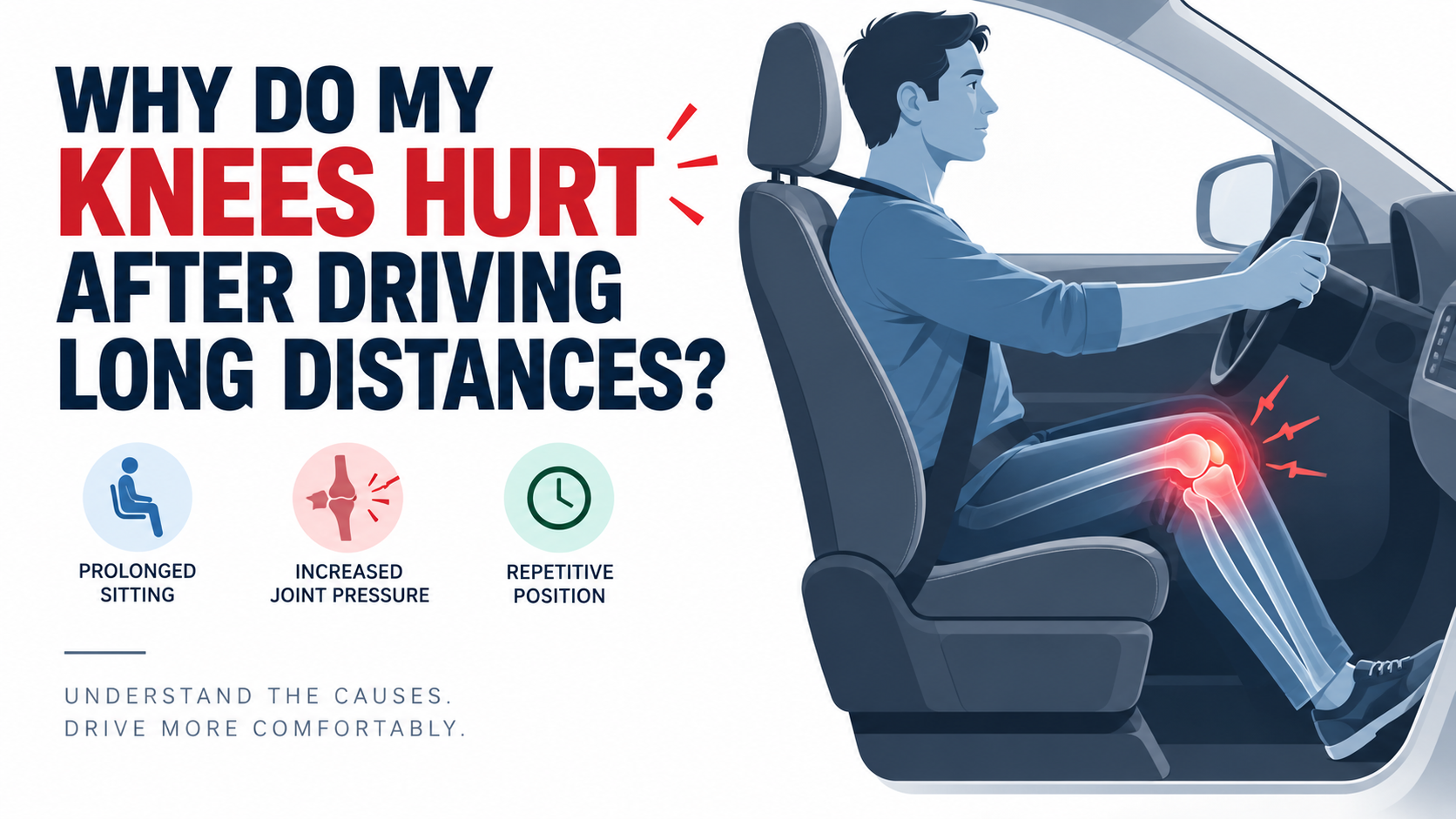
Sitting in traffic for hours or driving across state lines often leaves drivers with an uncomfortable reality: stiff, aching joints. If you are wondering why do my knees hurt after driving long distances, the issue stems from a combination of prolonged joint immobility, poor ergonomics, and continuous stress on the patellofemoral joint.
When you sit behind the wheel, your knees remain bent at a sharp angle for extended periods while your right foot repeatedly toggles between the gas and brake pedals. This static position starves your joint cartilage of vital fluid and places continuous mechanical stress on the kneecap.
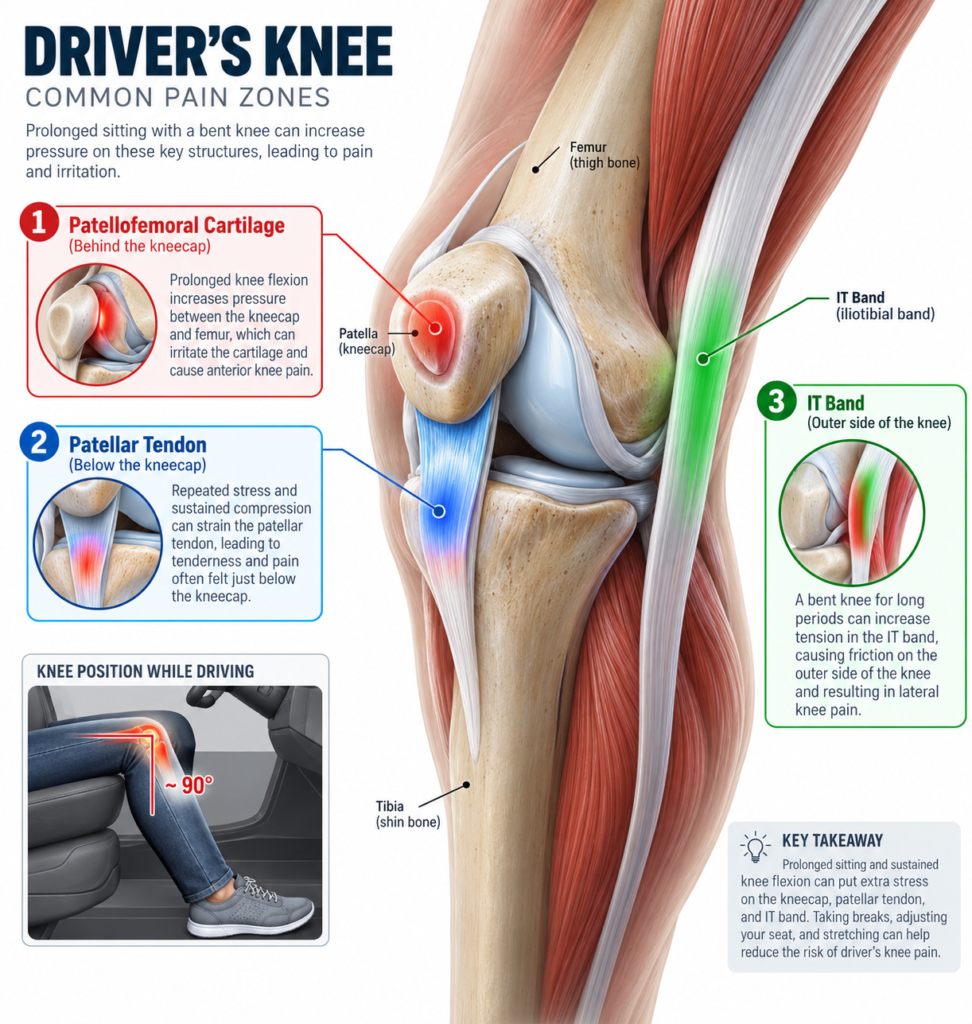
Sitting with knees bent past 90 degrees presses the back of the kneecap (patella) firmly against the thigh bone (femur). Over time, this constant mechanical pressure irritates the cartilage beneath.
Synovial fluid acts like engine oil. Without movement, this fluid stops circulating, causing cartilage to dry out, lose shock absorption, and become stiff.
Constantly working the gas and brake pedals places asymmetrical tension on the patellar tendon and surrounding stabilizing muscles, leading to localized inflammation.
Why Long Drives Trigger Severe Knee Stiffening
To understand why highway travel causes joint distress, consider how human joints function. Healthy knee cartilage relies on a sponge-like dynamic: when you walk, movement squeezes out waste products and absorbs fresh, nutrient-rich synovial fluid.
Sitting in a car seat starves the joint of this natural pump mechanism. Think of your knee cartilage like a wet household sponge resting under a heavy brick. If the sponge stays compressed without fresh water flowing through it, it dries out, stiffens, and loses its spring. The moment you step out at a rest stop, that dried-out cartilage creates raw friction between bones.
Furthermore, driving requires static muscle contraction. While your left leg sits mostly motionless, your right leg remains under low-grade tension to manage pedal pressure. This uneven strain causes tight hamstrings and hip flexors, pulling the kneecap out of its natural alignment tracking groove.
Anatomy of Driver’s Knee: What Is Happening Inside?
Several underlying biomechanical factors contribute to driver’s knee:
Patellofemoral Pain Syndrome (Runner’s/Driver’s Knee)
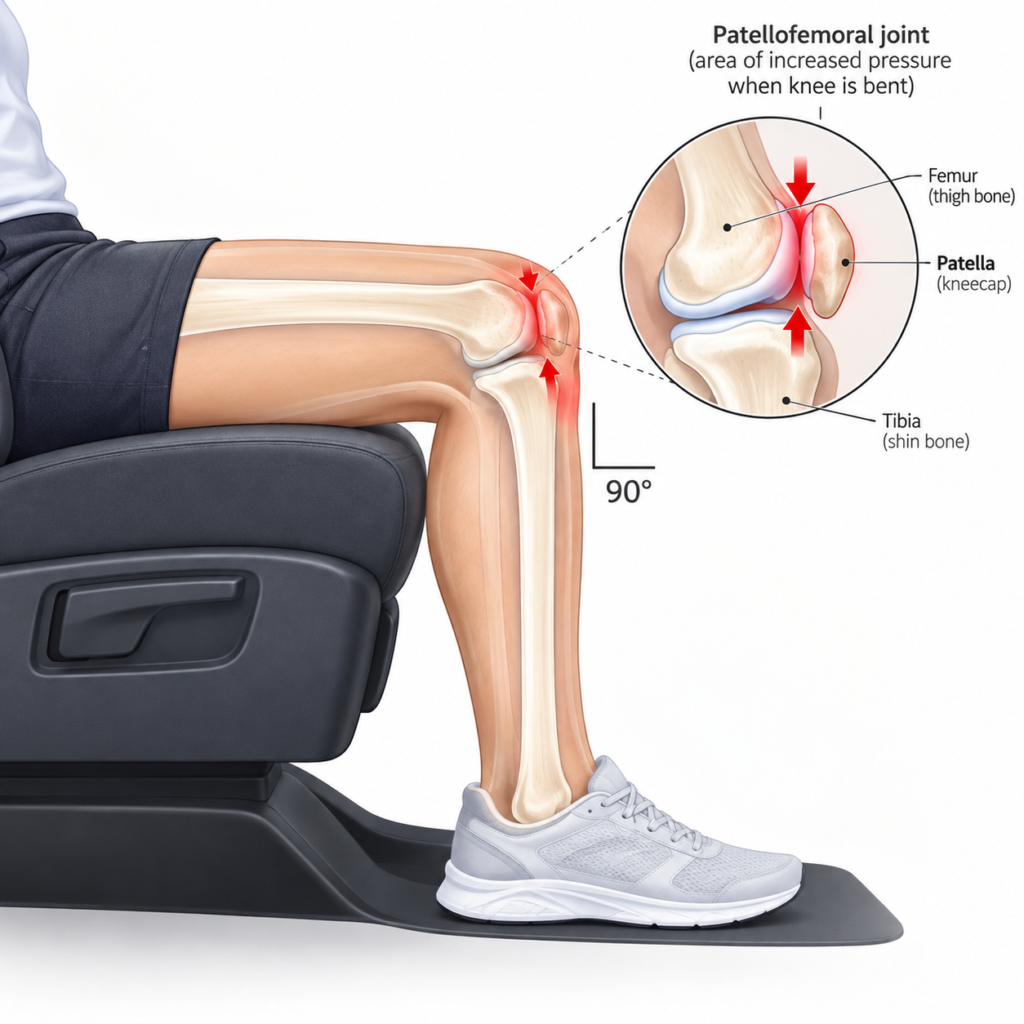
This occurs when the cartilage behind your kneecap gets inflamed from friction against the lower end of the femur. Extended driving holds the patella tight against this tracking groove.
Patellar Tendonitis
Repetitive foot movement causes micro-tears in the tendon connecting your kneecap to your shinbone. Over miles of stop-and-go city driving, this strain builds up into sharp or burning front-knee pain.
Early Osteoarthritis Flare-Ups
For drivers over 40, extended immobility exacerbates underlying cartilage wear. If you also experience discomfort during daily activities—such as knee pain walking downstairs after 50—the prolonged bending of a drive will amplify that deep, aching sensation.
Dr. Preet Pal’s Clinical Perspective
“In my practice, patients frequently mistake post-driving knee stiffness for structural damage. In reality, modern car seats often encourage a slouched posture that tilts the pelvis backward, shortening the hamstrings and doubling the compression force on the patella. Adjusting your seat so your hips rest slightly higher than your knees is often the fastest way to relieve drivers’ knee pain.”
Ergonomic Adjustments to Protect Your Knees Behind the Wheel
Preventing joint pain starts with setting up your driver’s cockpit correctly before turning the key.
Optimize Seat Distance
Slide your seat forward or backward so that when you fully depress the gas pedal, your knee retains a slight bend (roughly 120 degrees) rather than locking out or remaining bent at a sharp right angle.
Raise the Seat Base
Ensure your hips are level with or slightly higher than your knees. Low bucket seats force your hips down and fold your knees acutely, drastically increasing kneecap pressure.
Engage Cruise Control Safely
On open highways, use cruise control to let your right leg rest flat on the floorboard at a comfortable angle, breaking up static muscular tension.
Add Lumbar and Thigh Support
Use a firm seat cushion if your car seat dips backward. Adequate support under the back of your thighs prevents your leg weight from pulling down on the knee joint.
Pre-Drive and Rest Stop Stretches to Maintain Mobility
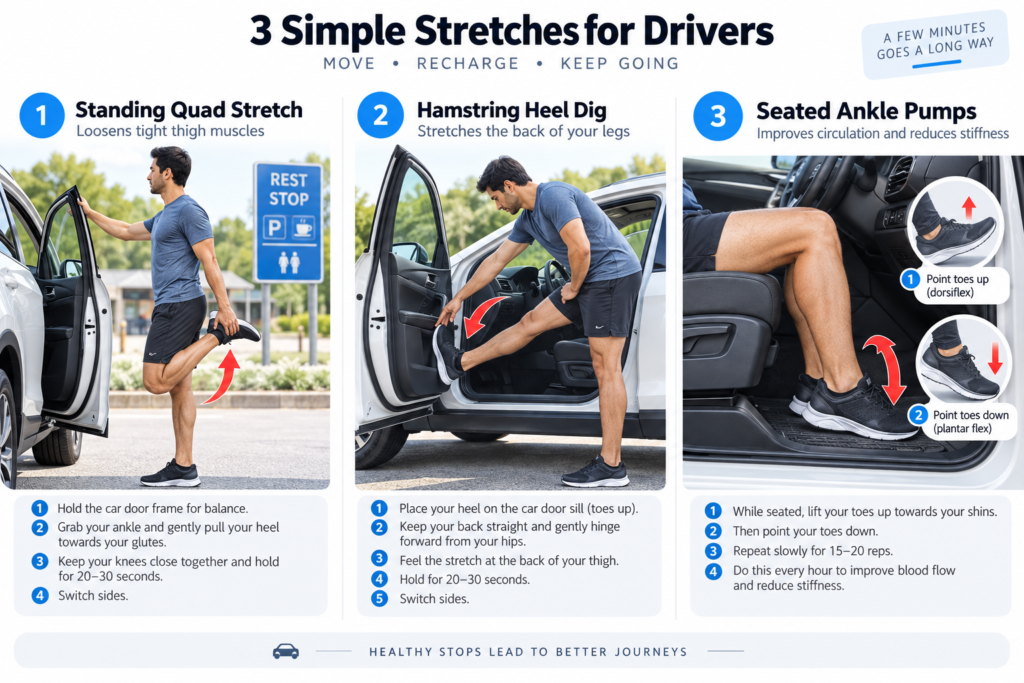
Preventing stiffness requires active intervention during road trips. Plan to stop every 90 to 120 minutes to perform simple movement routines.
Standing Quad Stretch
Stand next to your vehicle, hold the door frame for balance, pull one ankle toward your glutes, and hold for 30 seconds. This releases tension on the anterior patellar tendon.
Hamstring Heel Dig
Place your heel on the car’s door sill or curb with your foot flexed. Lean forward slightly from the hips until you feel a gentle stretch behind your knee.
Seated Ankle Pumps
Before getting out of the car, pump your ankles up and down 20 times. This engages the calf muscle pump, boosting blood circulation up the leg and warming the synovial fluid before you bear weight.
Building long-term joint resilience through targeted strength routines is equally vital. Integrating gentle movements like low-impact exercises for bad knees into your weekly regimen helps stabilize the knee cap during long drives. For mature drivers, practicing consistent knee strengthening exercises for seniors reinforces the quadriceps and hip abductors, taking strain off vulnerable joint cartilage.
Targeting the Root Cause: Synovial Fluid Health
While ergonomic adjustments fix the mechanical pressure of driving, internal joint lubrication dictates how well your cartilage resists friction. Cartilage contains no blood vessels of its own; it receives oxygen and nutrients entirely through synovial fluid.
As we age, or under periods of sustained immobility, synovial fluid loses its thickness and density. Instead of acting as a smooth shock absorber, it thins out, allowing bone-on-bone micro-friction during prolonged sitting.
Supplementation aimed at restoring this natural fluid dynamic can help support joint comfort during travel.
Clinical Note: Restoring Synovial Cushioning with Joint Genesis
Medical Insight by Dr. Preet Pal, MD
When drivers experience persistent stiffness after long road trips, the underlying issue is often a degradation of hyaluronan—the main molecule responsible for keeping synovial fluid thick, viscous, and protective. Without sufficient hyaluronan, cartilage matrix cells lack the hydration required to absorb mechanical impacts.
Joint Genesis is formulated specifically to target this lubricant loss. Powered by Mobilee®—a patented, clinically researched ingredient rich in natural hyaluronic acid—it works to restore the gelatinous quality of synovial fluid. By rehydrating dehydrated cartilage from within, it allows your knees to slide smoothly rather than grind under static driving pressure.
Combining Mobilee® with French Maritime Pine Bark Extract, Joint Genesis helps reduce oxidative stress within the joint space, promoting long-term flexibility, reduced post-drive stiffness, and smoother recovery after hours behind the wheel.
Practical Driving Checklist for Pain-Free Travel
Before setting out on your next long trip, run through this quick checklist to protect your knees:
- Adjust seat depth: Keep knees at a relaxed, shallow angle (~120°).
- Elevate hip position: Keep hips level with or higher than knees.
- Plan rest stops: Schedule a 5-minute movement break every 90–120 minutes.
- Use cruise control: Rest your driving leg whenever highway traffic permits.
- Hydrate adequately: Drink plenty of water; hydrated cartilage copes better with compression.
Understanding why your knees hurt after driving long distances empowers you to make proactive corrections. Combining smart car ergonomics, routine movement breaks, and targeted joint hydration ensures you reach your destination without persistent joint pain.
Frequently Asked Questions
Why do my knees hurt after driving long distances?
Knee pain after long drives is typically caused by prolonged joint immobility, poor driving posture, and static pressure on the kneecap (patellofemoral joint). Holding your legs bent at a sharp angle starves the cartilage of lubricating synovial fluid and puts continuous mechanical strain on the surrounding tendons.
How can I prevent driver’s knee pain during long road trips?
To prevent knee stiffness while driving, adjust your car seat so your hips sit slightly higher than your knees, maintain a slight bend (~120 degrees) in your leg when pressing pedals, use cruise control when safe on open highways, and schedule a 5-minute walking break every 90 to 120 minutes.
Is driving bad for knee osteoarthritis?
Extended driving can aggravate knee osteoarthritis symptoms because joint cartilage requires movement to circulate nutrient-rich synovial fluid. Staying in a fixed, bent position for hours increases bone-on-bone friction and leads to severe stiffness when stepping out of the vehicle.
What stretches provide quick relief for post-driving knee stiffness?
The best stretches at a rest stop include a standing quad stretch (holding your ankle behind your glutes to release anterior tendon tension), a hamstring heel dig, and performing 20 seated ankle pumps before exiting the car to reactivate circulation and warm up joint fluid.
Why does my right knee hurt more than my left knee when driving?
Your right knee experiences greater strain because it is under active, repetitive tension managing the accelerator and brake pedals. This asymmetrical workload causes muscular fatigue in the right quad, tightness in the patellar tendon, and localized inflammation that your inactive left leg avoids.
Verified Medical Sources
- National Institute of Arthritis and Musculoskeletal and Skin Diseases (NIAMS): Osteoarthritis Overview and Joint Mechanics
- Mayo Clinic: Patellofemoral Pain Syndrome Symptoms & Causes
- Centers for Disease Control and Prevention (CDC): Arthritis Intervention and Physical Activity Guidelines
- Arthritis Foundation: Managing Joint Stiffness During Long Travel
Author Bio
Jennifer Collins is a wellness researcher and natural health writer focused on adults over 40. With 3+ years of experience in digital health content, Jennifer specializes in making science-backed nutrition and lifestyle strategies easy to follow and apply.
Health Disclaimer
This content is for informational purposes only and is not intended to diagnose, treat, or cure any disease. Always consult your healthcare provider before making changes to your diet or health routine. This article may include affiliate links, which come at no extra cost to you.