

Walking uphill should feel like a healthy challenge—not a punishment for your hips. Yet many people notice sharp, dull, or nagging hip pain when walking uphill, even if they feel fine on flat ground.
If that sounds familiar, you’re not alone. This issue often points to muscle imbalance, joint stress, or underlying conditions that worsen with incline walking.
Let’s break it down clearly—what causes hip pain when walking uphill, how to fix it, and how to prevent it from coming back.
Table of Contents
Why Hip Pain When Walking Uphill Happens
Walking uphill changes how your body moves. It increases load on your hips, glutes, and lower back.
On flat ground, your body distributes force evenly. But when you walk uphill:
- Your hip flexors work harder
- Your glutes activate more
- Your stride shortens
- Your joints handle more pressure
If something is even slightly off, hip pain when walking uphill shows up quickly.
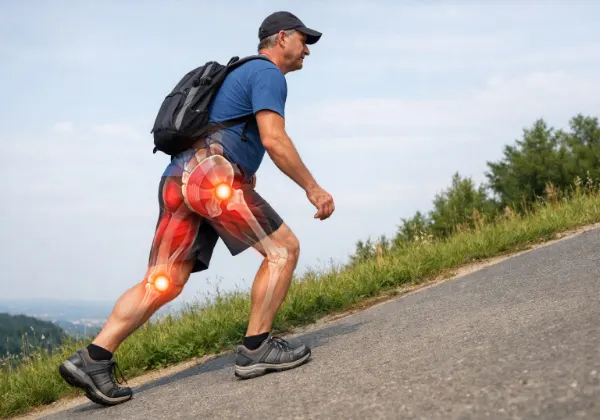
Common Causes of Hip Pain When Walking Uphill
1. Weak Glutes (Your Body’s “Engine” Isn’t Firing)
Your glutes power uphill walking. When they don’t work properly, your hips compensate.
This leads to:
- Overuse of hip flexors
- Poor alignment
- Increased joint stress
You may feel pain on the side or back of your hip.
2. Tight Hip Flexors
Sitting too much shortens your hip flexors. Then uphill walking stretches them aggressively.
That creates:
- Front hip pain
- Pulling sensation
- Reduced mobility
This is one of the most common reasons for hip pain when walking uphill, especially in desk workers.
3. Hip Bursitis (Inflammation)
Bursae are small fluid-filled sacs that reduce friction. When irritated, they cause pain on the outer hip.
Symptoms include:
- Sharp pain when climbing
- Tenderness on the side
- Pain when lying on that side
Incline walking makes this worse due to repeated friction.
4. Arthritis in the Hip Joint
Osteoarthritis causes cartilage breakdown. Uphill walking increases joint compression.
You might notice:
- Stiffness in the morning
- Deep aching pain
- Reduced range of motion
This type of hip pain when walking uphill often develops gradually.
5. Poor Walking Mechanics
Your posture matters more than you think.
Common mistakes:
- Leaning too far forward
- Overstriding
- Not engaging your core
These small errors create big problems over time.
6. Muscle Imbalance
When some muscles are strong and others are weak, your body compensates.
For example:
- Strong quads + weak glutes = hip overload
- Tight IT band = outer hip pain
This imbalance often leads to chronic hip pain when walking uphill.
Symptoms You Should Not Ignore
Hip pain isn’t just “normal soreness.” Watch for these signs:
- Pain that increases on inclines
- Clicking or snapping in the hip
- Pain radiating to the thigh
- Stiffness after sitting
- Pain that lingers after walking
If symptoms persist for more than a few weeks, you should take them seriously.
How to Fix Hip Pain When Walking Uphill
Now the important part—what actually works.
1. Strengthen Your Glutes
Your glutes need to handle the load.
Focus on:
- Glute bridges
- Step-ups
- Clamshells
Strong glutes reduce pressure on your hip joint.
2. Stretch Your Hip Flexors Daily
You can’t fix tight hips overnight—but consistency works.
Simple stretch:
- Kneel on one leg
- Push hips forward gently
- Hold for 20–30 seconds
This reduces strain during uphill walking.
3. Improve Your Walking Form
Small adjustments make a huge difference.
Try this:
- Keep your chest upright
- Take shorter steps
- Push through your heel
- Engage your core

Good form reduces hip pain when walking uphill immediately.
4. Use Proper Footwear
Shoes affect your entire posture.
Look for:
- Good arch support
- Cushioning
- Stability
Worn-out shoes often worsen hip pain without you realizing it.
5. Reduce Intensity (Temporarily)
Pain is feedback—not weakness.
If you feel pain:
- Walk on flatter surfaces
- Reduce incline
- Shorten your sessions
This helps your body recover faster.
6. Apply Ice After Activity
If inflammation causes your pain, ice helps.
- Apply for 15–20 minutes
- Focus on the painful area
- Do this after walking
It reduces swelling and discomfort.
When to See a Doctor
You should not ignore persistent hip pain.
Seek medical advice if:
- Pain lasts more than 2–3 weeks
- Pain worsens over time
- You feel joint locking
- Walking becomes difficult
A professional can diagnose conditions like bursitis, arthritis, or tendon injuries.
Best Exercises to Prevent Hip Pain When Walking Uphill
Prevention always beats treatment.

Strength + Mobility Combo
Include these regularly:
- Glute bridges (build strength)
- Lunges (improve stability)
- Hip flexor stretch (reduce tightness)
- Side leg raises (support hip joint)
These exercises directly target causes of hip pain when walking uphill.
Lifestyle Changes That Make a Big Difference
Move More, Sit Less
Long sitting hours tighten your hips.
Stand, stretch, or walk every hour.
Maintain Healthy Weight
Extra weight increases pressure on your hip joints—especially during uphill walking.
Warm Up Before Walking
Cold muscles lead to injury.
Spend 5 minutes on:
- Light walking
- Dynamic stretches
Your hips will thank you.
If your discomfort feels deeper around the pelvis, these SI Joint Pain Exercises: 8 Simple Moves for Fast Relief can help stabilize your joints and reduce pressure on your hips.
Frequently Asked Questions
Why do I feel hip pain when walking uphill but not on flat ground?
Hip pain when walking uphill usually happens because your muscles and joints handle more load on an incline. Your glutes, hip flexors, and joints work harder, which can expose weakness, tightness, or poor walking mechanics that don’t show up on flat surfaces.
Is hip pain when walking uphill a sign of a serious problem?
Not always, but persistent hip pain when walking uphill can indicate conditions like hip bursitis, muscle imbalance, or early arthritis. If the pain lasts more than a few weeks or gets worse, it’s best to consult a medical professional for proper evaluation.
How can I stop hip pain when walking uphill quickly?
To reduce hip pain when walking uphill, focus on improving your walking posture, taking shorter steps, and strengthening your glutes. Stretching tight hip flexors and wearing supportive shoes can also provide quick relief and prevent further strain.
Which muscles cause hip pain when walking uphill?
Hip pain when walking uphill often comes from weak glutes, tight hip flexors, or an overworked iliotibial (IT) band. When these muscles don’t function properly, your hip joint takes extra stress, leading to discomfort or pain.
Should I keep walking if I have hip pain when walking uphill?
If the pain is mild, you can continue walking with reduced intensity and better form. However, if hip pain when walking uphill becomes sharp, persistent, or worsens over time, you should stop and allow your body to recover before resuming activity.
The Bottom Line
Hip pain when walking uphill isn’t random. It usually signals muscle weakness, tightness, or joint stress.
The good news? You can fix most cases with:
- Strength training
- Better mobility
- Proper walking form
Listen to your body. Small changes today can prevent long-term damage tomorrow.
Sources (Trusted & Verified)
- Harvard Health Publishing
- Mayo Clinic
- Cleveland Clinic
- American Academy of Orthopaedic Surgeons
- National Institute of Arthritis and Musculoskeletal and Skin Diseases
Author Bio
Jennifer Collins is a wellness researcher and natural health writer focused on adults over 40. With 3+ years of experience in digital health content, Jennifer specializes in making science-backed nutrition and lifestyle strategies easy to follow and apply.
Health Disclaimer
This content is for informational purposes only and is not intended to diagnose, treat, or cure any disease. Always consult your healthcare provider before making changes to your diet or health routine. This article may include affiliate links, which come at no extra cost to you.