
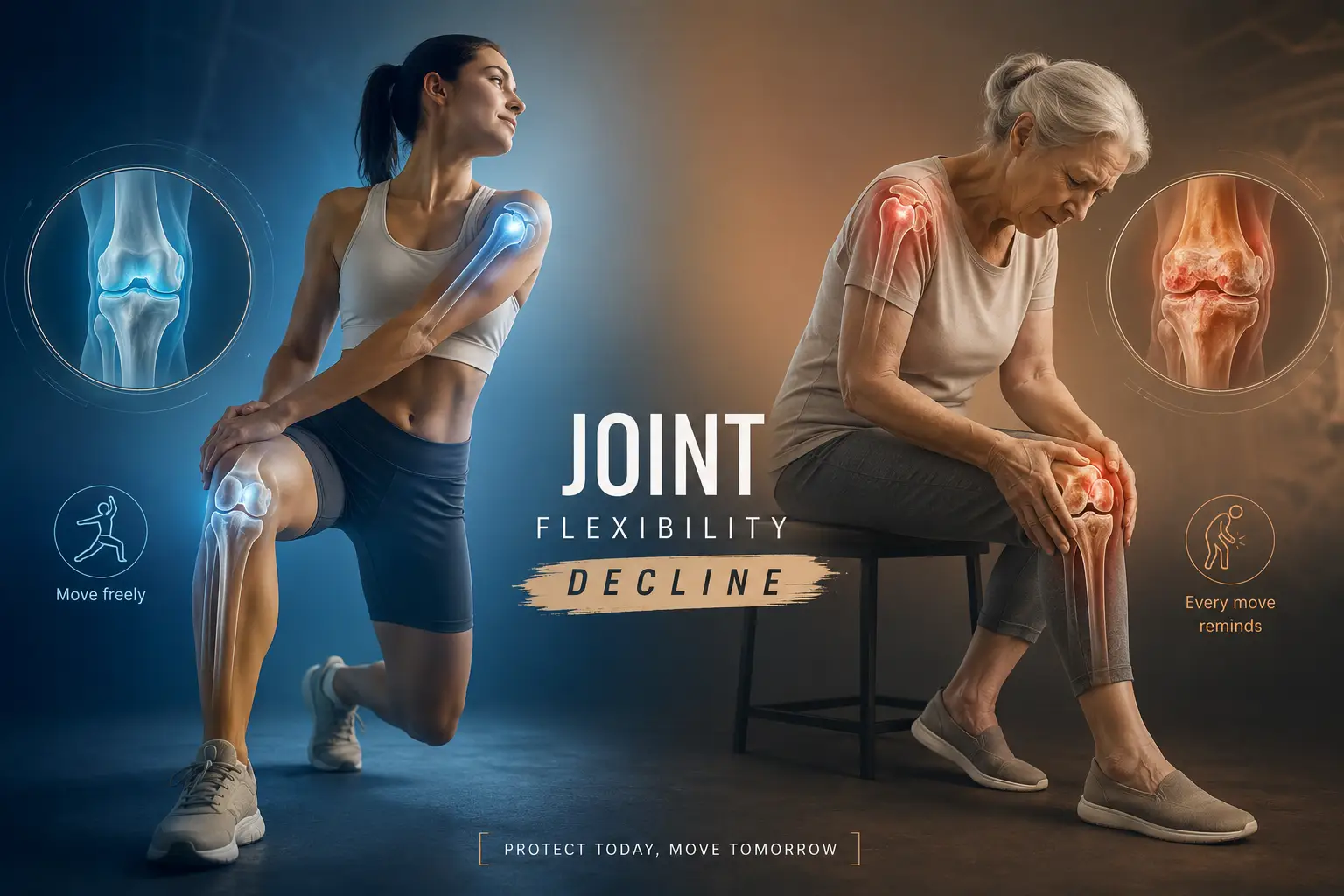
Many people assume that stiff joints only develop after an injury. Yet countless adults notice they cannot bend, stretch, squat, or move as freely as they once could despite never experiencing a major accident. This gradual joint flexibility decline often seems to appear out of nowhere. One day reaching a high shelf feels effortless, and a few years later simple movements require more effort.
The reality is that flexibility changes are a natural part of aging and daily living. However, they are not caused by age alone. Scientists have identified several factors that contribute to changing movement patterns, including alterations in tissues, muscle composition, activity levels, hydration, and overall joint health.
Understanding why flexibility decreases without injury can help people make informed decisions about maintaining mobility and reducing discomfort. While some changes are inevitable, many can be slowed through healthy lifestyle habits and regular movement.
This article explores the science behind flexibility loss, the biological processes involved, and practical strategies that may help preserve movement throughout life.
Understanding flexibility and joint mobility
Flexibility refers to the ability of muscles, tendons, ligaments, and a connective tissue network to allow movement through a normal range of motion. Mobility is a broader concept that includes how well a joint moves while under control.
Many people use flexibility and mobility interchangeably, but they are not identical. A person may have flexible muscles yet still experience limited movement because of joint restrictions, weakness, or altered movement patterns.
Healthy movement depends on several structures working together:
- Joints
- Cartilage
- Muscles
- Tendons
- Ligaments
- Fascia
- Synovial fluid
- Nervous system coordination
When any of these components change over time, movement quality can decline.
Researchers have found that age-related flexibility loss is influenced by both biological aging and lifestyle factors. The good news is that movement habits can significantly affect how quickly these changes occur.
The hidden biological changes that affect movement
The body undergoes continuous remodeling throughout life. Even in healthy adults, tissues slowly change structure and function.
Collagen, the primary protein found in supportive tissues, becomes less elastic with age. Elastin fibers, which help tissues stretch and return to their original shape, gradually decrease in effectiveness. These changes can make muscles and surrounding structures feel tighter.
Additionally, tissues may develop more cross links between collagen fibers. These cross links increase stiffness and reduce tissue elasticity. As a result, movements that once felt easy may require more effort.
The nervous system also plays a role. Muscles and joints communicate constantly with the brain to regulate movement. Changes in sensory feedback can alter how the body responds to motion and contribute to feelings of tightness.
Scientists continue studying why flexibility decreases with aging, and current evidence suggests that biological aging, daily habits, and movement exposure all influence long-term mobility.
These biological processes occur even when no injury is present, making them one of the most important explanations for age-related movement limitations.
Loss of flexibility with age is influenced by connective tissue changes
One of the most significant reasons for loss of flexibility with age involves changes within connective structures.

These structures include tendons, ligaments, joint capsules, and surrounding support tissues. They provide stability while allowing movement. Over time, they become less adaptable because of changes in collagen organization and water content.
Research suggests that aging tissues often contain less water. Reduced hydration can decrease flexibility and make movements feel restricted. Supportive tissues may also become thicker and less compliant.
This process does not happen overnight. It develops gradually over many years, which explains why many adults notice increasing stiffness despite remaining injury free.
Regular movement and stretching exercises may help maintain flexibility, but they cannot completely stop biological aging. Instead, they help preserve function and slow the rate of decline.
Why inactivity accelerates reduced joint mobility
Many people blame aging for stiffness when inactivity is often a major contributor.
The human body adapts to how it is used. When joints move through their full range regularly, tissues receive signals to maintain flexibility and function. When movement becomes limited, the body adapts by reducing available motion.
Long periods of sitting have become common in modern life. Office work, screen time, commuting, and a sedentary lifestyle reduce daily movement exposure. As a result, muscles and supportive tissues may gradually tighten.
Physical inactivity can contribute to:
- Shortened muscle length
- Reduced circulation
- Less efficient fluid distribution
- Lower muscle strength
- Reduced joint nourishment
Over time, these factors contribute to reduced joint mobility and make everyday activities feel more challenging.
Interestingly, research consistently shows that older adults who maintain regular physical activity often preserve greater movement capacity than inactive individuals decades younger.
The role of muscle mass in flexibility changes
Muscle health influences movement more than many people realize.
Beginning around midlife, adults naturally experience gradual declines in muscle mass, a process known as sarcopenia. Reduced muscle quantity can affect balance, strength, and movement efficiency.
As muscles weaken, people may unconsciously limit their movement ranges. Reduced use then reinforces stiffness and further decreases mobility.
Muscle tissue also contributes to joint stability. When strength declines, movement patterns may change, placing different demands on joints and surrounding tissues.
Maintaining muscle health through resistance training can help support healthy movement and may reduce some aspects of age-related flexibility loss.
Causes of joint stiffness that occur without injury
Many noninjury factors contribute to the causes of joint stiffness experienced by adults.
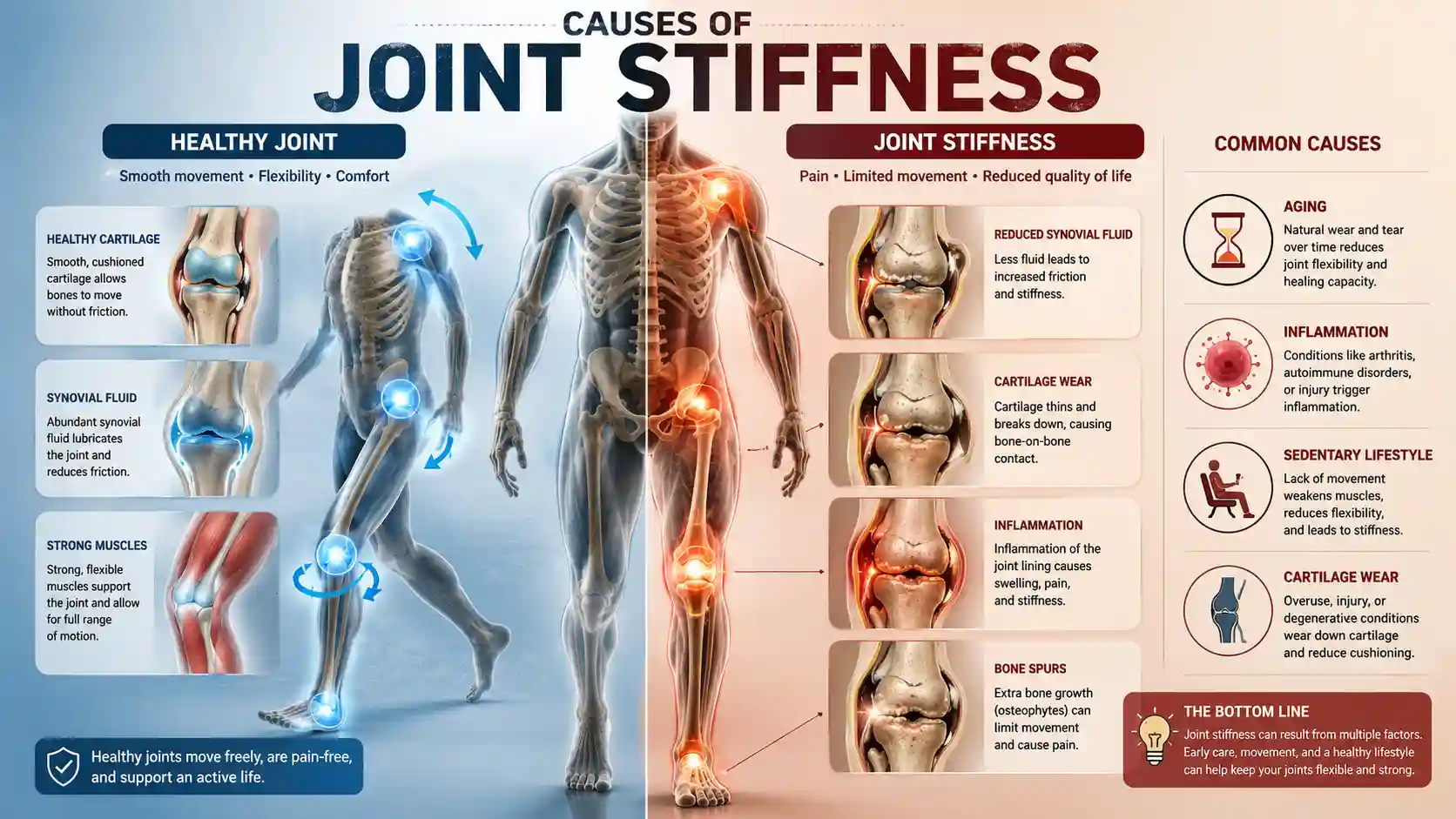
These factors often work together rather than independently.
Reduced synovial fluid circulation
The fluid found inside joints lubricates movement and helps nourish cartilage. Movement helps distribute this fluid throughout the joint space.
When movement decreases, circulation within the joint may become less efficient, leading to sensations of stiffness, particularly after prolonged sitting or sleeping.
Cartilage changes
Cartilage naturally changes with age. Maintaining cartilage health becomes increasingly important because cartilage helps joints move smoothly and absorb mechanical stress. Gradual structural changes can affect comfort and movement quality over time.
Chronic low grade inflammation
Scientists have identified a phenomenon sometimes called inflammaging, referring to low-level chronic inflammation associated with aging. Even mild increases in inflammatory markers may influence tissue function and comfort.
Postural adaptations
Modern lifestyles encourage prolonged sitting, forward head posture, and repetitive habits. These adaptations can create muscular imbalances that affect flexibility over time.
Together, these factors represent some of the most common factors behind joint stiffness in otherwise healthy adults.
How the nervous system influences flexibility
Many people think flexibility depends entirely on muscles. In reality, the nervous system plays a major role.
The brain constantly evaluates movement safety. If it perceives a position as potentially risky, it may limit movement by increasing muscle tension.
This protective mechanism helps prevent injury but can also contribute to perceived stiffness.
Stress, fatigue, poor sleep, and anxiety can influence nervous system function. When stress levels increase, muscles may remain more tense throughout the day.
This explains why some people feel significantly tighter during periods of emotional stress despite no physical injury.
According to the National Institute of Neurological Disorders and Stroke, improving sleep quality, stress management, and overall health can sometimes improve movement without any direct stretching intervention.
Joint flexibility decline and the impact of hydration
Hydration affects more than athletic performance and can lead to joint flexibility decline.
Water supports circulation, nutrient transport, tissue function, and joint movement. Supportive tissues contain substantial amounts of water that help maintain their mechanical properties.
Dehydration can temporarily increase perceptions of stiffness and reduce exercise performance. While drinking more water will not instantly restore flexibility, maintaining adequate hydration supports overall tissue health.
Hydration becomes increasingly important with age because the body’s total water content naturally decreases over time.
Combined with regular movement, proper hydration supports healthier tissue function and may help preserve mobility.
Why sleep quality affects mobility
Sleep is one of the most overlooked factors influencing movement.
During sleep, the body performs numerous repair and recovery processes. Poor sleep quality can increase pain sensitivity, impair muscle recovery, and influence inflammatory responses.
Research has found associations between inadequate sleep and increased discomfort affecting musculoskeletal health. People who consistently sleep poorly often report feeling stiffer and less mobile throughout the day.
Sleep also affects hormone regulation, tissue recovery, and nervous system function. Because flexibility depends on all these systems working together, poor sleep can indirectly contribute to movement limitations.
Improving sleep habits may support better mobility outcomes alongside exercise and stretching programs.
Strategies to reduce reduced joint movement over time
Although aging cannot be stopped, many mobility changes can be influenced.
Evidence supports several practical approaches that help maintain independence and movement quality throughout life.
Stay physically active
Regular activity remains one of the most effective ways to maintain movement capacity.
Walking, cycling, swimming, dancing, and recreational sports encourage joint movement and help preserve physical function. Consistent movement supports circulation and helps the body maintain adaptability.
Perform mobility exercises
Regular mobility exercises take joints through controlled ranges and encourage coordinated movement. These exercises can improve body awareness while helping maintain movement quality over time.
Include strength training
Resistance training supports muscle development, balance, and stability. Strong muscles help joints move more efficiently and reduce physical limitations associated with aging.
Stretch consistently
Many experts recommend dedicated flexibility training alongside regular exercise. Consistency is generally more important than intensity. Gentle routines performed several times per week may help maintain movement capacity.
Break up sitting time
Standing, walking, or moving every hour can reduce stiffness associated with prolonged inactivity. Small movement breaks often provide meaningful benefits when practiced consistently.
These habits can help slow joint movement limitations and support long term physical function.
Nutrition and connective tissue health
Nutrition supports nearly every aspect of physical function.
Adequate protein intake helps maintain muscles that support movement and stability. Vitamins and minerals also contribute to tissue maintenance and recovery.
A balanced diet rich in fruits, vegetables, whole grains, legumes, nuts, and healthy fats provides nutrients that support overall wellness.
Some nutrients commonly associated with movement and recovery include:
- Protein
- Vitamin C
- Vitamin D
- Calcium
- Magnesium
- Omega 3 fatty acids
These nutrients contribute to healthy aging and support systems involved in mobility and recovery.
While no food can eliminate stiffness, healthy dietary patterns support the body’s natural repair processes and may contribute to better long term movement outcomes.
When stiffness may require medical attention
Occasional stiffness is common. However, certain symptoms warrant professional evaluation.
Seek medical advice if stiffness is accompanied by:
- Significant swelling
- Persistent pain
- Joint redness
- Sudden movement loss
- Fever
- Unexplained weakness
- Progressive worsening
These symptoms may indicate underlying conditions that require diagnosis and treatment.
While age-related changes are a common reason for declining flexibility, persistent stiffness or discomfort may sometimes indicate an underlying condition. Individuals experiencing ongoing mobility limitations or back-related symptoms should consult a healthcare professional for proper evaluation rather than relying solely on self-diagnosis or general wellness advice.
Early evaluation can help identify issues before they significantly affect quality of life. Addressing concerns promptly may improve outcomes and prevent further limitations.
The future of healthy movement
Researchers continue to study aging, mobility, and tissue biology. Advances in rehabilitation science and preventive medicine are improving our understanding of movement preservation.
Current evidence suggests that while some flexibility loss is a natural consequence of aging, lifestyle factors remain powerful influences. People who stay active, maintain strength, prioritize recovery, and support overall health often preserve mobility far better than expected.
Understanding age related mobility changes allows individuals to make informed decisions that support lifelong movement and independence.
The goal is not perfect flexibility. The goal is maintaining enough mobility to enjoy daily activities, recreation, independence, and overall well being. Preserving functional movement becomes increasingly important as people age because it directly affects quality of life and confidence during everyday activities.
Conclusion
Experiencing joint flexibility decline without injury is more common than many people realize. Aging affects connective structures, hydration levels, nervous system function, and physical capacity. At the same time, inactivity and modern lifestyle habits can accelerate these changes.
Understanding the biological reasons behind gradual loss of flexibility over time, decreased joint mobility, and the various triggers of joint rigidity allows people to take proactive steps toward maintaining movement. Regular activity, strength training, proper nutrition, hydration, and recovery all play valuable roles in supporting long-term mobility.
While aging cannot be avoided, movement limitations are not entirely predetermined. Consistent healthy habits can help preserve flexibility, improve physical function, and support an active lifestyle for years to come.
Sources and References
National Institute on Aging
National Institutes of Health PubMed
Centers for Disease Control and Prevention
World Health Organization
Section: The role of muscle mass in flexibility changes
National Institutes of Health
National Institute of Neurological Disorders and Stroke
U.S. Department of Agriculture
Harvard T.H. Chan School of Public Health
FAQs
Can prolonged sitting create causes of joint stiffness even in physically active people?
Yes. Many people assume that exercising for an hour each day completely offsets long periods of sitting, but research suggests that extended inactivity can still influence how the body feels and functions. Remaining seated for several hours may reduce circulation, encourage muscle tightness, and limit opportunities for joints to move naturally. Over time, this may contribute to discomfort and stiffness, even in individuals who regularly exercise. Taking brief movement breaks throughout the day, changing positions frequently, and incorporating standing or walking periods into daily routines can help support better mobility and overall physical comfort.
Why does reduced joint mobility often feel worse in the morning?
Morning stiffness commonly occurs because the body remains relatively inactive during sleep. During this period, joints are not moving through their normal daily ranges, and surrounding tissues can temporarily feel less responsive upon waking. Body temperature is also lower after several hours of rest, which may contribute to sensations of tightness. Gentle movement shortly after waking often improves comfort because it encourages circulation and gradually restores normal movement capacity. If stiffness is severe, persistent, or accompanied by swelling or pain, it is important to seek medical evaluation to rule out underlying conditions.
Can fascia contribute to loss of flexibility with age?
Yes. Fascia forms a supportive network that surrounds muscles, organs, and other structures throughout the body. As people age, changes in hydration levels and tissue composition may affect how this network responds to movement. Reduced adaptability within fascial structures can contribute to feelings of tightness or restricted motion. However, these changes do not necessarily mean significant disability will occur. Regular movement, stretching, and maintaining an active lifestyle may help support tissue function and comfort. Researchers continue to explore how fascial changes influence mobility throughout the aging process.
Does muscle weakness affect movement range more than people realize?
Absolutely. Weak muscles can influence how confidently and effectively a person moves. When muscles do not provide sufficient support, individuals may unconsciously avoid deeper movement positions or challenging activities. Over time, this reduced use can contribute to further limitations and feelings of stiffness. Strong muscles help stabilize the body and allow safer, more efficient movement. Building strength gradually through appropriate exercise may improve confidence, support mobility, and help individuals maintain independence. This relationship highlights why strength is considered a critical component of healthy movement at every age.
How does sleep influence musculoskeletal health and mobility?
Sleep plays an essential role in physical recovery and overall function. During sleep, the body performs numerous repair processes that support tissue maintenance, nervous system regulation, and recovery from daily activities. Poor sleep may increase discomfort sensitivity and contribute to feelings of fatigue or stiffness the following day. Over time, inadequate sleep can influence overall physical performance and well being. Improving sleep quality through consistent routines, a comfortable sleep environment, and healthy habits may support better movement outcomes. While sleep alone cannot prevent stiffness, it remains an important component of long term mobility support.
Are mobility exercises different from traditional stretching?
Yes. Traditional stretching typically focuses on lengthening muscles and increasing flexibility. Mobility focused activities emphasize controlled movement through available joint ranges while maintaining coordination and stability. Both approaches can be valuable, but they serve slightly different purposes. Stretching often targets tissue flexibility, whereas mobility work helps individuals improve movement control and confidence. Combining the two approaches may provide greater benefits than relying exclusively on one method. Many fitness and rehabilitation professionals recommend incorporating both strategies into a balanced movement routine to support long term physical function and comfort.
Can hydration affect connective tissue elasticity?
Water plays an important role in maintaining normal tissue function throughout the body. Many supportive structures contain significant amounts of water that contribute to their physical properties and ability to tolerate movement. While increasing water intake alone is unlikely to dramatically improve flexibility, inadequate hydration may contribute to feelings of stiffness and reduced comfort. Maintaining proper hydration supports circulation, nutrient transport, and normal physiological processes that influence movement quality. When combined with regular activity, balanced nutrition, and adequate recovery, proper hydration can support overall physical function and contribute to healthier long term mobility.