
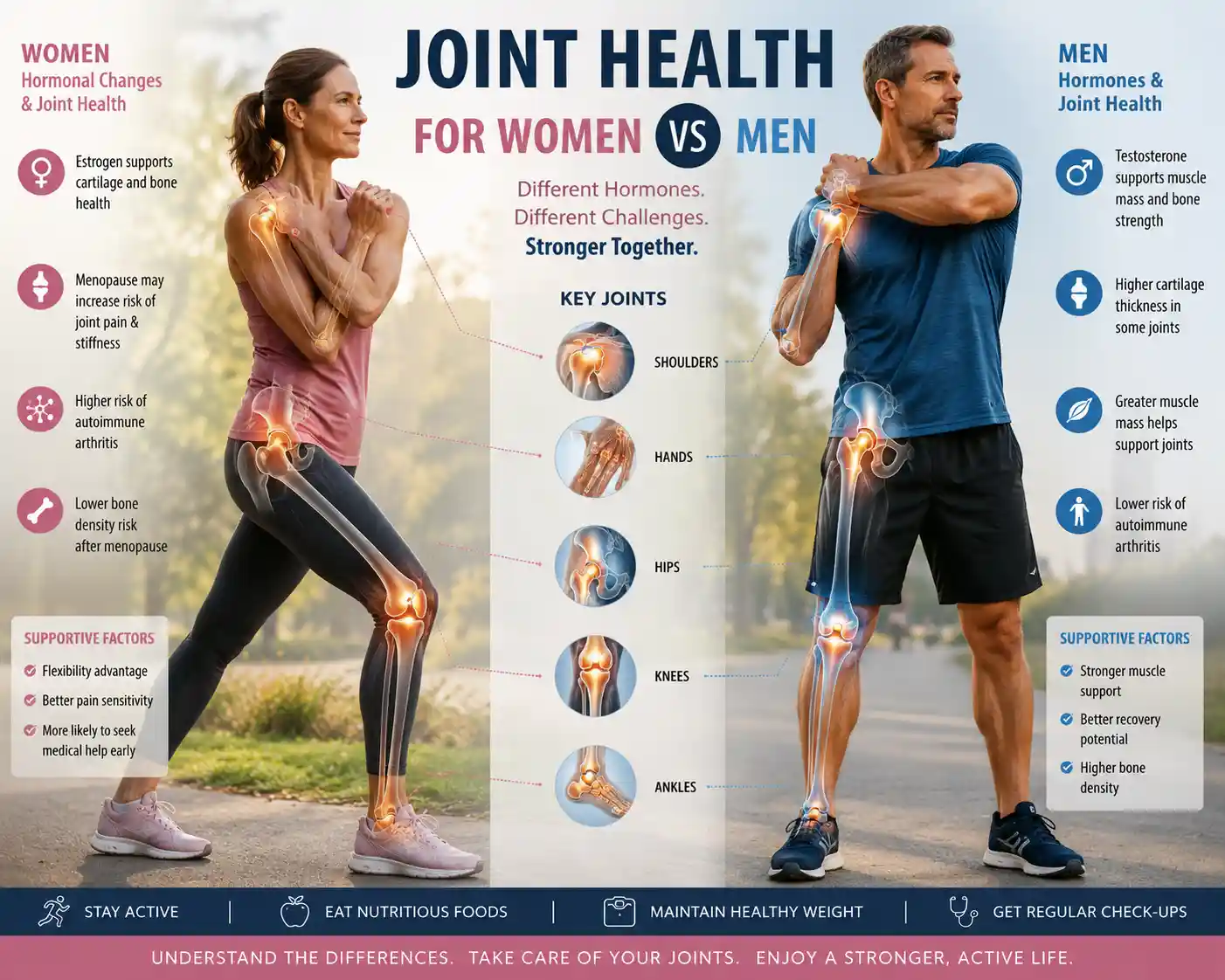
Joint pain rarely develops for a single reason. Age, body weight, physical activity, injuries, nutrition, and genetics all influence how the joints function over time. Yet one major factor often receives less attention than it deserves: hormones. Scientists now understand that hormonal activity plays a major role in cartilage health, inflammation, bone strength, muscle support, and pain sensitivity. These biological differences help explain why men and women experience joint conditions differently throughout life.
The topic of joint health for women vs men has become increasingly important as arthritis rates continue to rise globally. Women are more likely to develop certain inflammatory joint diseases, while men often experience different patterns of cartilage breakdown and injury. Hormonal shifts during puberty, pregnancy, menopause, and aging influence how the body protects or damages joints. Researchers also continue to investigate why women frequently report higher pain intensity and greater stiffness compared with men.
Understanding these differences matters because prevention strategies are not always identical for both sexes. Lifestyle habits, exercise choices, dietary needs, and treatment responses can vary depending on hormonal activity and biological structure. A better understanding of hormone associated inflammation and discomfort may help people make more informed choices about long term mobility, bone protection, and inflammation management.
This article explores the science behind male and female joint function, how hormones affect inflammation, why pain patterns differ, and what practical steps may support lifelong mobility.
Why hormones matter in joint function
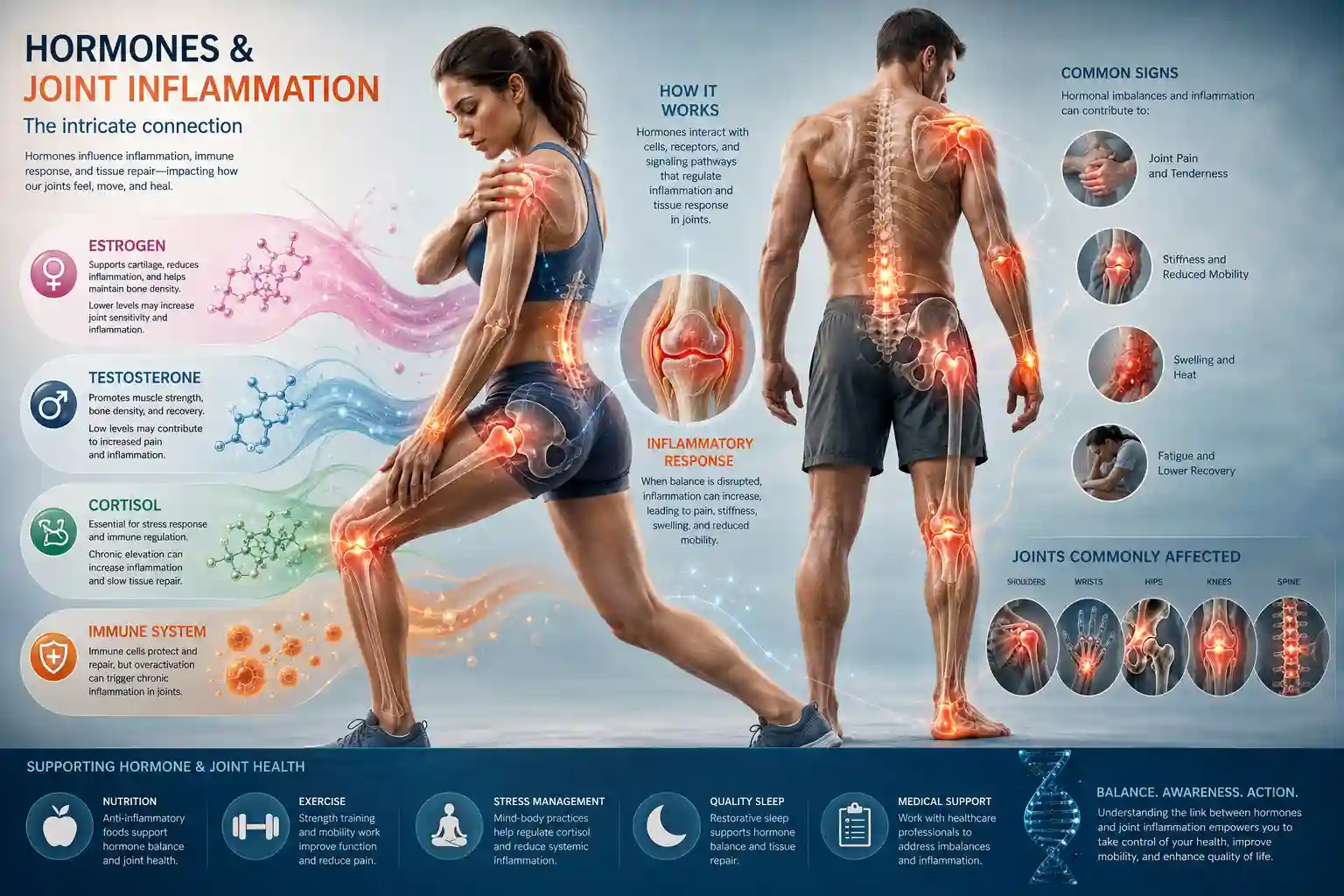
Hormones act as chemical messengers that regulate nearly every system in the body. They influence metabolism, muscle growth, immune response, hydration, bone density, and tissue repair. Because joints depend on cartilage, connective tissue, ligaments, muscles, and bones working together, hormonal changes can directly affect mobility and comfort.
Estrogen, testosterone, progesterone, cortisol, thyroid hormones, and growth hormones all contribute to joint stability in different ways. Estrogen helps maintain collagen production and supports cartilage integrity. Testosterone contributes to muscle mass and bone strength, which help stabilize the joints. Cortisol affects inflammation levels, while thyroid hormones influence metabolism and tissue maintenance.
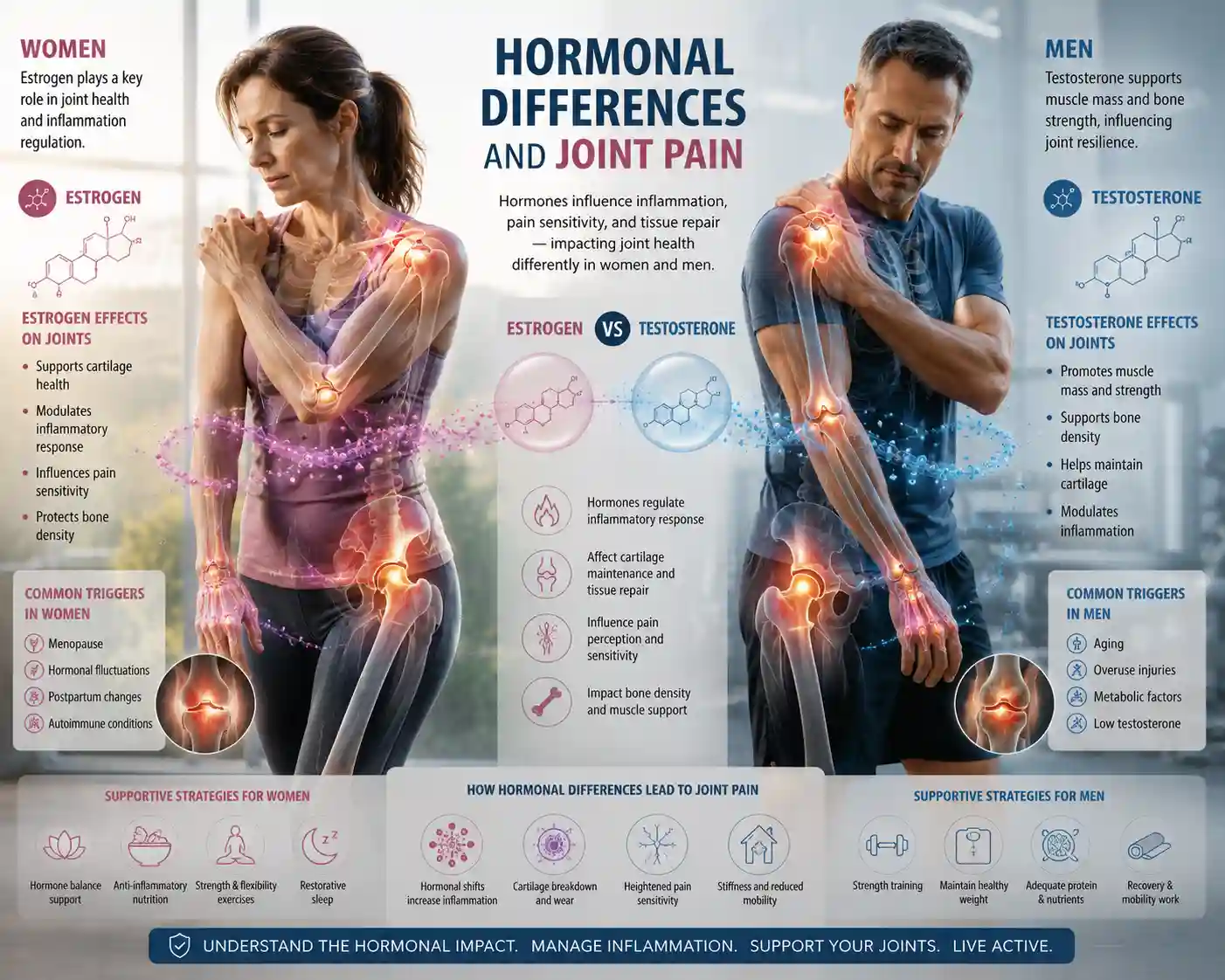
Researchers studying hormones and joint inflammation have observed that hormonal imbalances can alter immune system behavior. Inflammatory chemicals known as cytokines may increase when certain hormone levels decline. This can contribute to swelling, stiffness, and pain around the joints.
The relationship between hormones and joint tissue becomes especially noticeable during major life transitions. Women often experience joint symptoms during pregnancy, perimenopause, and menopause, while men may notice increasing stiffness as testosterone gradually declines with age. Although aging affects everyone, hormonal fluctuations can change how quickly the joints deteriorate or recover.
Structural differences between male and female joints
Biological sex differences extend beyond hormones alone. Men and women have different skeletal structures, muscle distribution, ligament flexibility, and movement patterns. These differences influence how stress travels through the joints during daily activity.
Women generally have wider hips and a larger pelvic angle. This changes the alignment of the knees and can place additional stress on the lower body joints. Researchers often discuss the Q angle, which refers to the angle between the hip and knee. A larger Q angle may increase pressure on the knees during walking, running, and jumping.
Women also tend to have greater ligament flexibility than men, partly because estrogen affects collagen elasticity. While flexibility can improve mobility, it may also increase joint instability in some situations. This is one reason why women experience higher rates of certain knee injuries, including anterior cruciate ligament injuries.
Men typically develop greater muscle mass due to higher testosterone levels. Strong muscles help absorb impact and stabilize joints. However, higher muscle force can also place heavy pressure on cartilage over time, especially in physically demanding occupations or high intensity sports.
Understanding women vs men joint health requires looking at both structure and hormones together. The interaction between biomechanics and hormonal activity creates unique patterns of wear, injury risk, and pain sensitivity.
Estrogen and its role in joint protection
Estrogen plays one of the most important roles in female joint health. This hormone supports collagen formation, maintains bone density, and may help regulate inflammation. Many researchers believe estrogen has protective effects on cartilage tissue during the reproductive years.
Joint symptoms often become more noticeable when estrogen levels fluctuate. Some women report increased stiffness before menstruation, during postpartum recovery, or throughout menopause. Scientists continue studying exactly how estrogen interacts with immune signaling and cartilage maintenance.
One reason menopause affects mobility is that declining estrogen may reduce the body’s ability to maintain healthy cartilage. Lower estrogen levels can also contribute to reduced bone density, increasing the risk of osteoporosis and fractures.
Studies examining hormonal differences and joint pain suggest that estrogen may influence pain perception as well. Pain receptors can become more sensitive during hormonal fluctuations, potentially explaining why some women experience more widespread discomfort during certain stages of life.
Researchers have also explored whether hormone replacement therapy may help reduce joint symptoms in some menopausal women. Results vary depending on the individual, and treatment decisions should always involve medical guidance. However, scientific evidence continues to support the idea that estrogen plays a major role in maintaining mobility and tissue resilience.
Testosterone and male joint health
Testosterone affects far more than muscle development. It also contributes to bone strength, physical endurance, connective tissue support, and recovery after exercise. Healthy testosterone levels help maintain the muscular stability needed to protect joints from excessive strain.
Men generally experience a slower hormonal decline compared with women. Testosterone levels gradually decrease with age, often beginning in middle adulthood. This decline may contribute to reduced muscle mass, slower recovery, and increased stiffness.
Some researchers investigating hormonal effects on inflammatory joints, have observed links between low testosterone and higher inflammatory markers. Reduced testosterone may also contribute to increased body fat accumulation, which can place greater stress on weight bearing joints.
Although men have lower rates of autoimmune arthritis than women, they often experience osteoarthritis associated with repetitive stress, occupational strain, or sports injuries. Years of heavy lifting, impact activity, or mechanical stress can accelerate cartilage wear.
Understanding musculoskeletal differences between men and women also means recognizing that men sometimes delay treatment until symptoms become severe. Early intervention, strength training, and mobility work can help reduce long term joint degeneration.
Autoimmune disease and gender differences
One of the clearest examples of hormonal influence appears in autoimmune disease patterns. Women are significantly more likely to develop autoimmune disorders such as rheumatoid arthritis, lupus, and Sjogren syndrome.
Researchers believe estrogen and immune system interactions partly explain this difference. Female immune systems tend to produce stronger immune responses, which may improve infection defense but also increase the risk of autoimmune activity.
Rheumatoid arthritis affects the lining of the joints and can lead to pain, swelling, and tissue damage. Women develop this condition more frequently than men, especially during middle age. Some women also notice symptom changes during pregnancy or menopause, suggesting hormonal involvement.
The connection between hormonal changes and inflammatory joint conditions remains an active area of scientific research. Scientists continue investigating how estrogen, progesterone, and immune signaling pathways interact in autoimmune conditions.
Men can still develop autoimmune joint diseases, but disease progression and symptom severity may differ. In some cases, men experience more structural damage despite lower disease rates. Biological sex appears to influence both disease development and immune system behavior.
Menopause and changing joint health
Menopause represents one of the most significant hormonal transitions affecting female mobility. During this stage, estrogen levels decline substantially, influencing bones, muscles, cartilage, and inflammation.
Many women report increased stiffness, aching, and reduced flexibility during perimenopause and menopause. Some experience discomfort in the hands, knees, hips, shoulders, or lower back. Researchers believe these symptoms may result from declining estrogen combined with age related tissue changes.
Joint discomfort during menopause can sometimes be confused with ordinary aging. However, studies suggest estrogen reduction may independently affect cartilage maintenance and pain sensitivity.
The topic of joint health for women vs men becomes especially relevant after menopause because women’s arthritis risk increases significantly during later adulthood. Osteoarthritis rates rise sharply among postmenopausal women.
Weight gain during menopause may also contribute to joint stress. Excess body weight increases pressure on weight bearing joints, particularly the knees and hips. Inflammatory fat tissue may further increase discomfort.
Healthy lifestyle habits become increasingly important during this stage. Regular strength training, balanced nutrition, sleep quality, stress management, and medical evaluation may help support mobility and reduce long term joint deterioration.
Exercise differences and injury risk
Exercise supports joint health in both sexes, but injury patterns and training needs may differ. Women often face greater risk of knee instability injuries, while men may experience higher rates of overuse damage linked to heavy mechanical stress.
Biomechanics, muscle activation patterns, and hormonal fluctuations all influence athletic injury risk. Estrogen can affect ligament elasticity, potentially altering joint stability during certain phases of the menstrual cycle.
Strength training remains one of the most effective ways to support long term mobility. Strong muscles reduce pressure on cartilage and improve balance, coordination, and stability. Resistance training may also support bone density, which becomes increasingly important with age.
For women, hip and glute strengthening may help improve lower body alignment and reduce knee stress. Men may benefit from mobility work that counteracts stiffness associated with muscle tightness and repetitive loading.
Experts studying men and women joint wellness increasingly recommend individualized exercise plans rather than assuming identical needs for everyone. Recovery time, flexibility work, stability exercises, and training intensity should reflect each person’s body mechanics and health status.
Low impact activities such as swimming, cycling, yoga, and walking can support cardiovascular fitness while minimizing excessive joint strain. Consistency often matters more than intensity when protecting mobility over the long term.
Body weight, metabolism, and inflammation
Body weight strongly influences joint stress because every additional kilogram increases pressure on the knees, hips, and lower back. Excess fat tissue also contributes to inflammation through the release of inflammatory chemicals.
Hormonal changes affect body composition differently in men and women. Women may store more body fat after menopause due to declining estrogen, while men often lose muscle mass as testosterone decreases with age.
Researchers exploring hormonal differences and joint pain have found that metabolic health strongly influences inflammation levels. Insulin resistance, poor diet quality, and inactivity may worsen joint symptoms.
Chronic inflammation can accelerate cartilage breakdown and increase stiffness. This is why maintaining a healthy body composition matters for mobility.
Balanced nutrition supports both hormonal regulation and tissue repair. Diets rich in fruits, vegetables, omega 3 fatty acids, whole grains, lean proteins, and calcium containing foods may support joint function. Vitamin D also plays a major role in bone and muscle health.
Hydration matters as well because cartilage depends on water content for shock absorption. Even mild dehydration may affect tissue lubrication and physical performance.
Sleep, stress, and pain sensitivity
Joint pain does not exist only in the joints themselves. The nervous system, stress hormones, and sleep quality all influence pain perception.
Poor sleep increases inflammatory activity and can heighten pain sensitivity. Women are more likely to experience sleep disturbances during hormonal transitions such as pregnancy and menopause, which may worsen joint discomfort.
Chronic stress raises cortisol levels, potentially contributing to inflammation and muscle tension. Long term stress may also reduce physical activity levels, creating additional stiffness and weakness.
Research into hormones and joint inflammation suggests that nervous system regulation plays a larger role in chronic pain than many people realize. Pain processing pathways in the brain can become more sensitive after prolonged inflammation or stress exposure.
Healthy stress management practices may indirectly support joint comfort. Meditation, breathing exercises, moderate physical activity, social support, and sleep hygiene all contribute to overall recovery.
Men and women sometimes respond differently to stress and pain communication. Women often report symptoms earlier, while men may minimize pain until it interferes with daily function. These behavioral differences can affect diagnosis and treatment timing.
Nutrition strategies for stronger joints
No single food prevents arthritis, but nutrition can support the systems that protect mobility. Joint tissue depends on protein, vitamins, minerals, antioxidants, and healthy fats for maintenance and repair.
Protein supports muscle preservation, which helps stabilize the joints. Calcium and vitamin D support bone health. Omega 3 fatty acids found in fatty fish may help regulate inflammatory activity.
Antioxidant rich foods such as berries, leafy greens, nuts, and colorful vegetables may help reduce oxidative stress. Oxidative stress contributes to tissue damage and inflammation over time.
Women may need additional attention to calcium and vitamin D intake after menopause because estrogen decline affects bone density. Men may benefit from maintaining adequate protein intake to preserve muscle mass as testosterone gradually decreases.
The discussion around joint health for women vs men also includes the importance of maintaining consistent physical activity alongside good nutrition. Diet alone cannot protect the joints if the body remains inactive.
Researchers continue investigating supplements such as glucosamine, chondroitin, collagen peptides, and turmeric. Evidence remains mixed for some products, and individuals should consult healthcare professionals before beginning supplementation.
Medical advances and future research
Scientific understanding of joint biology continues evolving rapidly. Researchers are increasingly examining how sex hormones influence cartilage cells, immune signaling, and pain pathways.
Precision medicine may eventually allow more personalized arthritis treatments based on hormonal status, genetics, and inflammatory markers. Scientists are also studying how menopause, aging, and metabolic health interact in long term joint degeneration.
New imaging techniques help researchers identify earlier signs of cartilage damage before severe arthritis develops. Regenerative medicine approaches involving stem cells, platelet rich plasma, and tissue engineering are also under investigation.
The future of women vs men joint health research will likely focus on individualized prevention strategies. Rather than treating everyone identically, healthcare professionals may increasingly tailor exercise, rehabilitation, and medication approaches according to biological differences.
Public awareness is improving as more people recognize that joint health involves far more than aging alone. Hormonal health, sleep quality, stress levels, metabolic health, and lifestyle choices all contribute to long term mobility.
Conclusion
The science behind joint health for women vs men reveals that hormones play a major role in how the body experiences inflammation, pain, cartilage maintenance, and mobility across different life stages. Estrogen and testosterone influence muscle strength, connective tissue, bone density, immune activity, and recovery patterns in ways that shape long term joint function.
Also Read: Can air conditioning worsen joint stiffness? What science says about air conditioning and joint pain
Women face unique challenges linked to hormonal fluctuations, pregnancy, menopause, and higher autoimmune disease rates. Men often experience different patterns of cartilage stress and muscle related joint loading. These differences help explain why mobility problems, injury risk, and arthritis patterns vary between sexes.
Understanding hormonal effects on joint pain can encourage earlier prevention and more personalized care. Exercise, healthy body composition, sleep quality, stress management, and balanced nutrition all contribute to stronger joints over time.
Research into inflammation caused by hormonal imbalance continues to expand, offering new insights into pain sensitivity, aging, and tissue repair. While aging cannot be stopped, informed lifestyle habits and early medical attention may help preserve mobility, reduce discomfort, and improve quality of life for both men and women.
Sources
Arthritis Foundation
National Institutes of Health
Centers for Disease Control and Prevention
Mayo Clinic
Cleveland Clinic
Johns Hopkins Medicine
World Health Organization
FAQs
Why do women experience more joint inflammation during menopause?
During menopause, estrogen levels decline significantly, which may affect cartilage maintenance, immune regulation, and pain sensitivity. Lower estrogen can contribute to increased stiffness, swelling, and reduced flexibility. Researchers studying endocrine system and joint swelling also believe that estrogen reduction may increase inflammatory signaling within joint tissues, especially in weight bearing areas such as the knees and hips.
Can hormonal imbalance increase joint pain even without arthritis?
Yes, hormonal imbalance may contribute to stiffness and discomfort even in people without diagnosed arthritis. Fluctuations in estrogen, testosterone, thyroid hormones, or cortisol can influence inflammation levels, muscle support, and pain sensitivity. Hormonal differences and joint pain are commonly discussed during menopause, postpartum recovery, and age related hormonal decline.
Why are autoimmune joint diseases more common in women?
Women generally have stronger immune responses than men, which may increase the risk of autoimmune activity. Researchers believe estrogen and immune signaling pathways interact in ways that raise susceptibility to diseases such as rheumatoid arthritis and lupus. This connection remains one of the most important topics in women vs men joint health research.
Does testosterone help protect joints in men?
Testosterone supports muscle mass, bone density, and physical strength, all of which help stabilize the joints. Healthy muscles reduce pressure on cartilage and improve movement efficiency. Low testosterone levels may contribute to reduced mobility, slower recovery, and increased inflammation over time.
How does body weight affect hormones and joint inflammation?
Excess body fat increases stress on the joints while also releasing inflammatory chemicals into the body. Hormonal changes during aging can influence body composition, increasing fat storage or reducing muscle mass. Poor metabolic health may worsen inflammation and accelerate cartilage breakdown.
Which exercises best support long term joint mobility?
Strength training, walking, swimming, cycling, and flexibility exercises can all support mobility while reducing excessive joint stress. The ideal exercise approach depends on age, fitness level, injury history, and biomechanics. Experts increasingly recommend personalized training programs when addressing joint health differences between men and women concerns.
Can sleep quality influence chronic joint discomfort?
Yes, poor sleep may increase inflammation and pain sensitivity. Sleep disruptions can interfere with tissue repair and recovery processes. Researchers studying hormone linked inflammatory response in joints have also observed connections between chronic stress, poor sleep, and worsening pain perception.
Author Bio
Jennifer Collins is a wellness researcher and natural health writer focused on adults over 40. With 3+ years of experience in digital health content, Jennifer specializes in making science-backed nutrition and lifestyle strategies easy to follow and apply.
Health Disclaimer
This content is for informational purposes only and is not intended to diagnose, treat, or cure any disease. Always consult your healthcare provider before making changes to your diet or health