
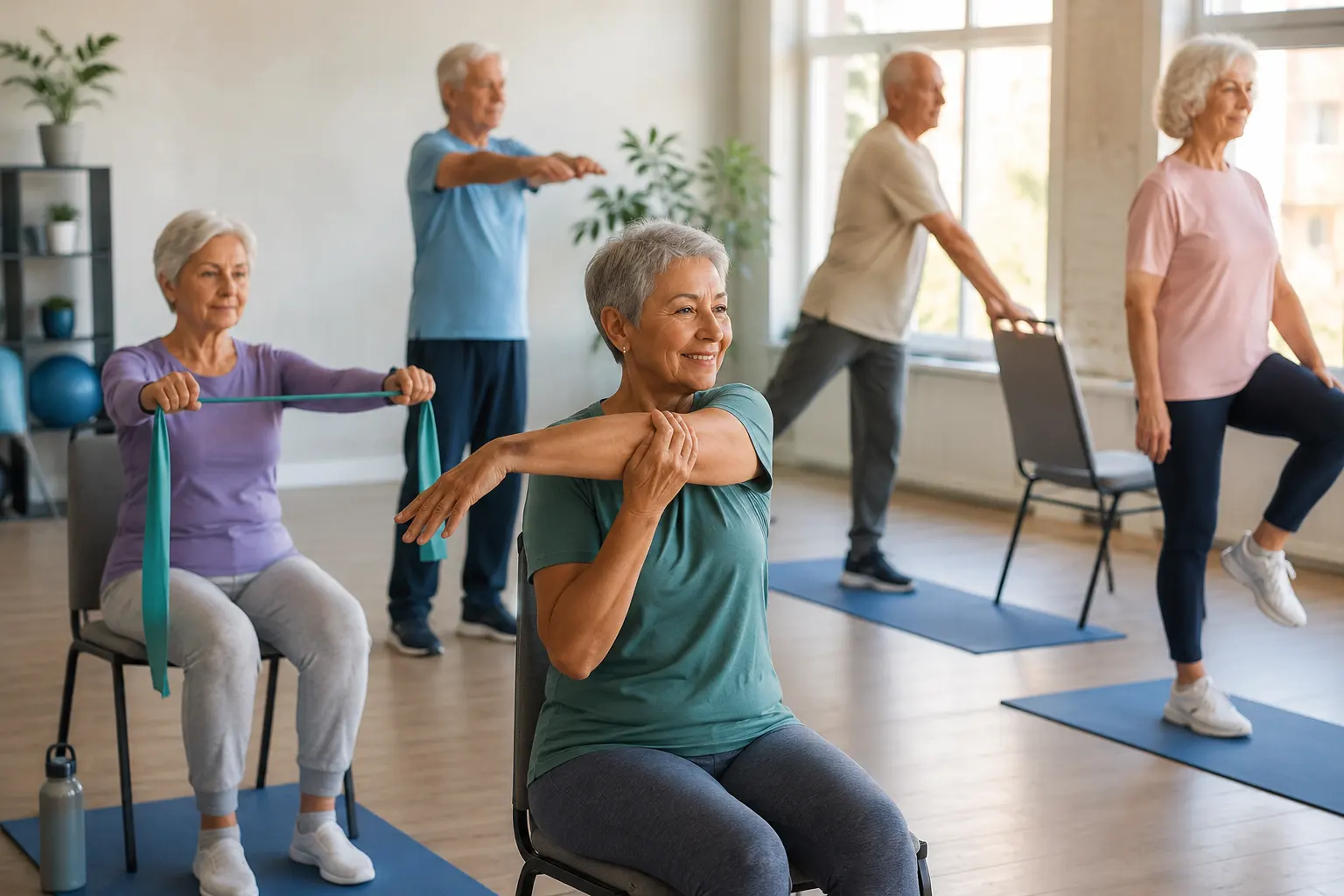
Aging changes the way the body moves, balances, and recovers. Joints may stiffen, muscles lose elasticity, and daily tasks that once felt effortless can suddenly become uncomfortable. Many people begin to wonder whether these physical limitations are permanent or whether movement quality can actually improve again later in life. This is where mobility exercises for seniors become an essential part of maintaining independence, restoring function, and supporting long-term physical well-being.
Many experts now focus on healthy aging strategies that support long term movement ability rather than simply managing discomfort after symptoms appear.
The encouraging news is that the body remains adaptable far longer than most people realize. Research in physical therapy, sports medicine, and gerontology suggests that movement capacity often responds positively to consistent training and lifestyle adjustments. This is one reason why gentle mobility exercises for aging adults continue gaining attention among health professionals and aging researchers.
While no one can completely stop biological aging, movement function often improves significantly through targeted activity. In many cases, people who adopt healthier habits experience better flexibility, stronger balance, reduced stiffness, and improved coordination within months. This raises an important question: can mobility age truly be reversed, or is improvement simply about slowing decline?
The answer lies somewhere in between. Aging cannot disappear, but the body can regain many physical abilities that were previously lost through inactivity, poor posture, chronic inflammation, or reduced muscle use. Understanding how mobility works helps explain why movement often improves at any age.
Understanding what mobility age actually means
Mobility age refers to how well the body moves compared with average physical function expected at a certain age. Someone in their seventies with excellent flexibility, balance, and coordination may have the movement profile of a much younger person. On the other hand, inactivity and joint stiffness can make a middle aged adult move like someone decades older.
Strong joint flexibility often determines how comfortably people perform ordinary tasks such as walking, bending, reaching, and climbing stairs.
Mobility involves several systems working together. Muscles generate force, joints create range of motion, nerves coordinate movement, and the brain manages balance and body awareness. When one system weakens, movement quality declines.
Researchers from the National Institute on Aging explain that physical inactivity accelerates many age related changes involving muscles, connective tissue, and balance control. Reduced movement creates a cycle where stiffness leads to less activity, which then causes even more stiffness and weakness.
This is why experts increasingly focus on maintaining movement capacity instead of simply treating pain after it appears. Healthy mobility supports independence, lowers fall risk, and improves overall quality of life.
Why movement declines with age
Several biological processes contribute to reduced mobility over time. Muscle mass naturally decreases with age, especially after the age of fifty. This condition, known as sarcopenia, affects strength, coordination, and walking ability.
Declining muscle strength commonly affects stability, endurance, and overall confidence during everyday movement patterns.
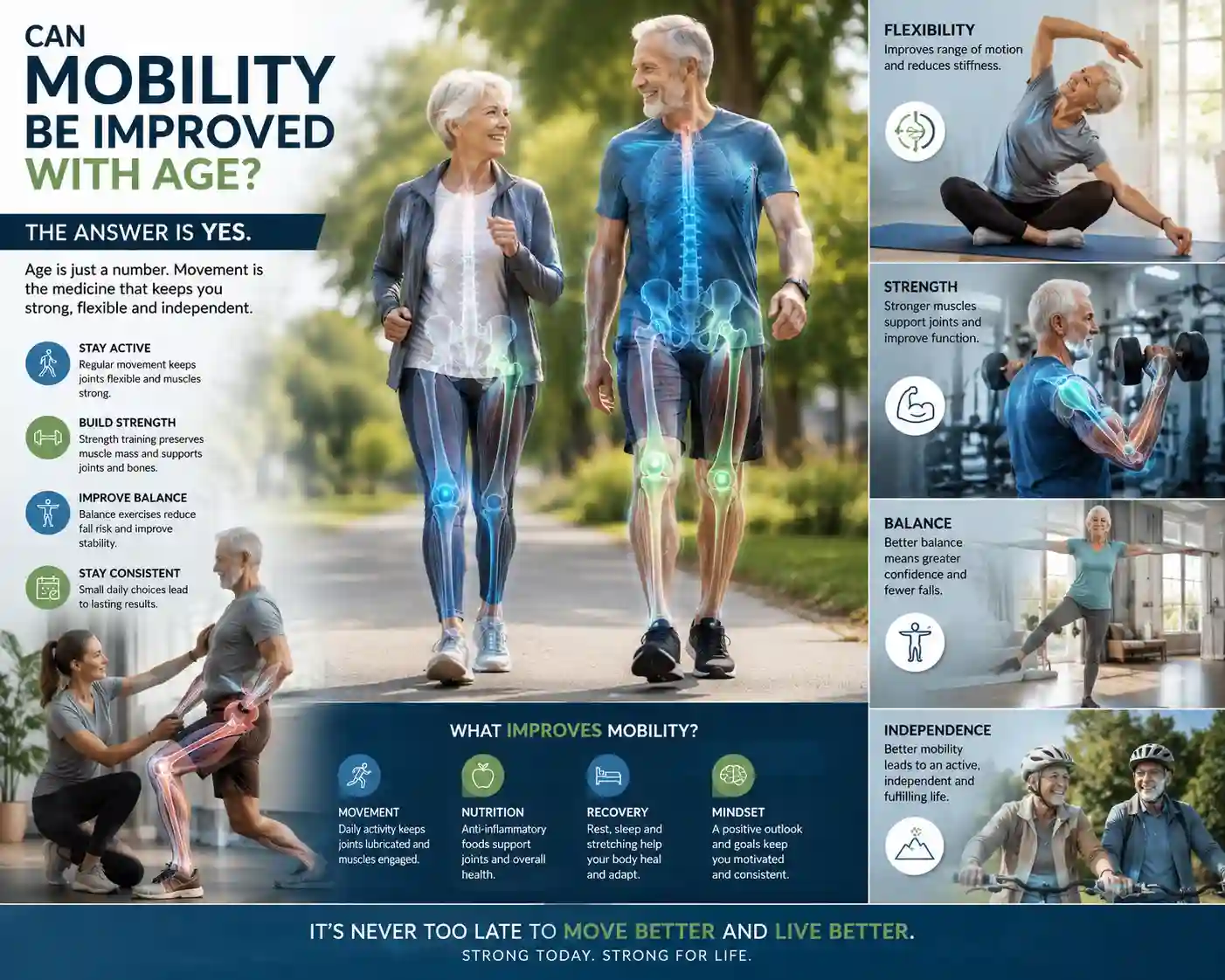
Joint cartilage also experiences wear over time. Connective tissues lose elasticity, making movements feel tighter and less fluid. Reduced activity further weakens stabilizing muscles around the hips, knees, shoulders, and spine.
Inflammation plays another major role. Chronic low grade inflammation may increase stiffness and discomfort in joints and muscles. Poor sleep, stress, inactivity, and unhealthy eating habits can all worsen inflammatory responses.
Balance changes also become more noticeable. Vision, inner ear function, nerve sensitivity, and reaction time gradually decline with age, increasing instability during movement.
Despite these changes, researchers repeatedly confirm that the body retains remarkable adaptability. Strength, flexibility, and balance improvements occur even among people in their eighties and nineties when proper training begins consistently.
Can mobility be improved with age through targeted movement?
Many older adults assume physical decline becomes irreversible after a certain point. Modern research strongly challenges that belief. Studies from Harvard Medical School and the Centers for Disease Control and Prevention show that structured physical activity improves joint flexibility, walking speed, coordination, and muscular endurance across older populations.
The reason is simple. The human body continuously adapts to movement demands. Muscles strengthen when challenged, connective tissue responds to stretching, and neural pathways improve with repeated coordination practice.
This means can mobility be improved with age is no longer a theoretical question. Scientific evidence consistently supports the idea that older adults often regain substantial physical function through movement focused training.
Improved functional movement allows older adults to maintain independence while reducing strain on joints and surrounding tissues.
Mobility training differs from intense exercise programs designed for athletic performance. Instead, it emphasizes controlled movement patterns that improve range of motion, posture, joint stability, and body awareness.
Examples include hip openers, spinal rotations, ankle mobility drills, shoulder circles, and balance exercises. Walking, swimming, tai chi, yoga, and resistance training also contribute significantly to improved movement quality.
Importantly, mobility improvement depends more on consistency than intensity. Gentle daily practice often produces greater long term results than aggressive workouts performed inconsistently.
The role of mobility exercises for seniors in healthy aging
Mobility focused movement helps counteract several age related physical changes simultaneously. Stretching and joint movement maintain tissue elasticity. Strength training supports joint stability. Balance exercises improve coordination and reaction time.
Health professionals increasingly recommend mobility exercises for seniors because they address both prevention and recovery. Improved movement lowers fall risk, supports circulation, reduces pain sensitivity, and helps maintain independence during daily activities.
Maintaining physical independence becomes easier when regular movement routines support coordination, flexibility, and muscular control.
An active lifestyle that includes walking, stretching, and strength focused movement may significantly improve long term physical wellbeing.
Mobility training also supports brain health. Research published by the National Institutes of Health suggests physical movement stimulates neural activity linked to memory, coordination, and cognitive function.
Another important benefit involves confidence. Fear of falling often causes older adults to avoid movement entirely, which accelerates physical decline. Regaining movement ability frequently restores confidence and encourages greater physical activity overall.
Mobility work does not require expensive equipment or athletic experience. Many effective exercises rely solely on bodyweight movement and controlled breathing patterns.
How inflammation affects movement quality
Inflammation influences nearly every aspect of mobility. When tissues remain chronically inflamed, joints may feel stiff, muscles recover more slowly, and discomfort can limit movement willingness.
Long term inflammation may negatively affect overall joint health by increasing stiffness and limiting comfortable movement.
Poor nutrition, smoking, sedentary behavior, obesity, and insufficient sleep often contribute to ongoing inflammation. Conditions such as arthritis may further increase stiffness and discomfort.
Anti inflammatory habits can support mobility improvements significantly. Researchers commonly recommend diets rich in vegetables, fruits, omega three fats, legumes, and whole grains because these foods may help regulate inflammatory responses.
Hydration matters as well. Connective tissue functions better when adequately hydrated, while dehydration may increase muscle tightness and fatigue.
Stress management also plays an important role. Chronic stress raises cortisol levels, which may negatively affect tissue recovery and inflammation control over time.
Reverse mobility loss naturally with lifestyle adjustments
People searching for ways to reverse mobility loss naturally often focus only on exercise. While movement remains essential, several supporting habits influence physical recovery and mobility restoration.
Many adults discover that the best daily stretches for aging adults are simple routines performed consistently rather than complicated exercise programs.
Sleep is one of the most overlooked factors. During sleep, the body repairs tissues, regulates hormones, and restores nervous system function. Poor sleep often worsens pain perception and muscular fatigue.
Nutrition strongly affects tissue recovery and muscle preservation. Protein intake becomes increasingly important with age because muscle synthesis slows over time. Older adults frequently require higher protein intake than younger adults to maintain muscle health.
Daily walking remains one of the most effective movement strategies available. Walking improves circulation, lubricates joints, strengthens stabilizing muscles, and supports cardiovascular health simultaneously.
Posture awareness also matters. Long periods of sitting shorten hip muscles, weaken the core, and restrict spinal movement. Small posture adjustments throughout the day can improve movement efficiency significantly.
This holistic approach helps explain why many adults successfully regain mobility without medication and without extreme interventions or intense fitness programs.
Best movement habits for long term flexibility and strength
Healthy mobility depends on regular movement variety. Repeating the same limited motions daily gradually reduces overall flexibility and coordination.
Experts often recommend combining several movement categories for balanced aging support.
Supporting aging muscles through regular resistance exercise and recovery practices helps maintain stability and endurance later in life.
Strength training
Resistance exercises help preserve muscle mass, improve bone density, and support joint stability. Bodyweight squats, resistance bands, and light weights can all be effective.
Flexibility training
Stretching maintains tissue elasticity and joint range of motion. Gentle stretches performed consistently often reduce stiffness and improve comfort during daily movement.
Regular flexibility training supports smoother movement patterns while helping reduce muscular tightness over time.
Balance practice
Balance training helps reduce fall risk and improves coordination. Standing on one leg, heel to toe walking, and tai chi are commonly recommended.
Aerobic movement
Walking, cycling, swimming, and dancing support cardiovascular health while improving endurance and circulation.
Joint mobility drills
Controlled rotations and movement patterns improve joint lubrication and nervous system coordination. These exercises are particularly helpful for the shoulders, hips, ankles, and spine.
How to improve mobility after 50 without overtraining
Many adults begin prioritizing physical health after noticing stiffness or reduced flexibility during middle age. Fortunately, learning how to improve mobility after 50 does not require punishing workouts or high intensity exercise.
Choosing low impact exercise options such as swimming, walking, and tai chi often reduces unnecessary strain while supporting sustainable progress.
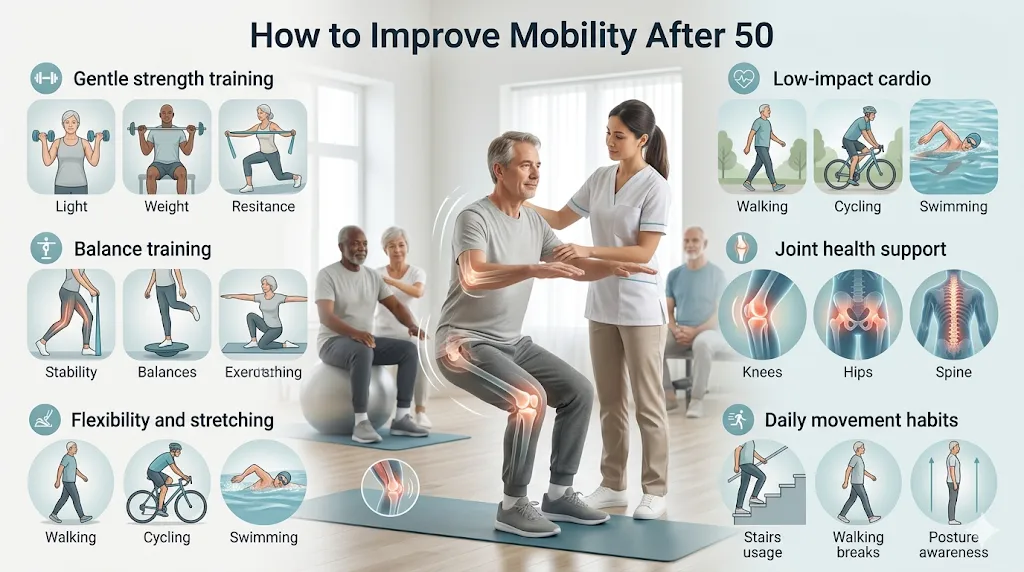
In fact, excessive training may increase injury risk if the body lacks recovery time. Sustainable progress usually comes from gradual and consistent movement exposure.
Experts often recommend beginning with short sessions lasting ten to twenty minutes daily. Gentle stretching, walking, and balance exercises provide an effective foundation.
Warm ups become increasingly important after fifty because connective tissue generally requires more preparation before intense movement. Slow joint rotations and dynamic stretching help increase blood flow and reduce stiffness before activity.
Recovery strategies matter as well. Rest days, hydration, adequate sleep, and stress management all influence movement quality and tissue repair.
Most importantly, progress should feel sustainable rather than exhausting. Long term consistency produces better results than short bursts of extreme motivation.
Why sedentary habits accelerate physical aging
Modern lifestyles encourage prolonged sitting, which negatively affects mobility across all age groups. Extended inactivity reduces circulation, shortens muscles, weakens posture, and decreases joint lubrication.
Poor sitting habits frequently contribute to posture improvement challenges because muscles gradually adapt to limited movement positions.
Researchers from the World Health Organization associate sedentary behavior with increased risks of cardiovascular disease, obesity, diabetes, and musculoskeletal decline.
Even regular exercise cannot fully offset excessive sitting if the rest of the day remains inactive. This is why movement frequency matters alongside workout intensity.
Simple habits such as standing regularly, stretching during breaks, and walking after meals help reduce prolonged immobility. Small movement interruptions throughout the day often improve flexibility and circulation noticeably.
Movement functions like maintenance for the human body. Without regular motion, tissues gradually lose adaptability and efficiency.
The connection between brain health and mobility
Mobility involves far more than muscles and joints. The nervous system controls coordination, balance, posture, and movement timing. As people age, maintaining brain health becomes increasingly important for preserving physical independence.
Research from Johns Hopkins Medicine suggests regular movement may support cognitive performance, reaction speed, and neural adaptability. Balance exercises appear especially beneficial because they challenge communication between the brain and body.
Better movement quality often reflects stronger coordination between muscles, nerves, and balance systems throughout the body.
Learning new movement patterns also stimulates mental engagement. Dance classes, yoga sequences, tai chi routines, and coordination drills require concentration and body awareness.
This mind body connection helps explain why physically active older adults often maintain stronger independence and confidence during aging.
Flexibility and mobility training for seniors and fall prevention
Falls remain one of the leading causes of injury among older adults. Reduced balance, weaker muscles, slower reaction times, and poor joint stability all contribute to fall risk.
Senior joint mobility exercises play an important preventive role by improving coordination, flexibility, and lower body strength. Exercises targeting the hips, ankles, and core particularly support stability during walking and directional changes.
Consistent balance training improves stability during walking, turning, and uneven surface navigation.
Tai chi receives strong support from researchers because it improves balance control while remaining low impact and accessible for many older adults.
Many community wellness programs now include senior fitness classes designed specifically to improve coordination, flexibility, and lower body strength.
Environmental awareness matters too. Good lighting, supportive footwear, and removing tripping hazards help complement physical training efforts.
Preventing falls is not simply about avoiding injury. Confidence in movement often improves emotional wellbeing and encourages continued physical activity.
Can older adults regain mobility even after injury?
Many adults believe injuries permanently limit movement capacity later in life. While some conditions require long term management, rehabilitation research shows substantial improvement often remains possible.
Structured physical therapy programs frequently help individuals rebuild coordination and confidence following injuries or surgeries.
Physical therapy programs frequently restore movement patterns following surgeries, fractures, joint replacements, and periods of immobility. The nervous system adapts through repetition and gradual retraining.
Recovery timelines may lengthen with age, but improvement still occurs consistently when movement remains appropriately structured and supervised.
The key involves progression. Overloading healing tissues too aggressively may worsen discomfort, while complete inactivity often delays recovery.
This is another reason does mobility improve with age and exercise continues receiving strong scientific support. The body maintains adaptability throughout life, even after setbacks.
Rebuild mobility naturally over time through daily routines
Structured workouts help, but daily habits ultimately determine long term movement quality. Small routine changes often create meaningful mobility improvements over time.
People searching for natural ways to regain flexibility after retirement often benefit more from sustainable daily habits than occasional intense exercise efforts.
Using stairs occasionally instead of elevators increases lower body strength. Gardening, household chores, and recreational walking all contribute to movement variety.
Morning stretching routines may reduce stiffness accumulated overnight. Evening walks can support circulation and joint lubrication after prolonged sitting.
Consistency matters more than perfection. People who remain moderately active daily often preserve movement capacity more effectively than those relying solely on occasional intense exercise.
These lifestyle patterns help many adults reverse age-related stiffness naturally, while improving overall health and independence simultaneously.
How to increase mobility after age 50 with realistic expectations
Improving movement after fifty requires patience and realistic goals. Some people expect dramatic transformation within weeks, then lose motivation when progress feels gradual.
Regular movement also supports muscle recovery by improving circulation and reducing prolonged stiffness after activity.
Mobility improvements usually occur in layers. Pain reduction may appear first, followed by improved flexibility, better balance, and increased endurance over time.
Tracking small improvements often helps maintain consistency. Being able to squat more comfortably, walk longer distances, or move without stiffness are meaningful signs of progress.
It is also important to distinguish between aging and inactivity. Many physical limitations blamed on age actually result from years of reduced movement habits rather than unavoidable biological decline alone.
Learning improving mobility in your 50s and beyond becomes far more achievable when approached as a long term lifestyle shift instead of a temporary fitness challenge.
Conclusion
The body changes with age, but movement decline is not always permanent or irreversible. Scientific research increasingly shows that flexibility, strength, balance, and coordination often improve substantially through consistent movement and supportive lifestyle habits.
Mobility exercises for seniors help maintain independence, reduce stiffness, improve confidence, and support healthier aging overall. While aging itself cannot be reversed completely, many adults regain movement abilities once considered permanently lost.
Also Read: Hidden causes of joint pain: 11 overlooked reasons your X rays may look normal
The most effective strategy combines regular movement, strength training, balance work, proper recovery, healthy nutrition, hydration, and reduced sedentary behavior. Even small daily improvements create meaningful long term results.
Protecting connective tissue through proper hydration, mobility work, and balanced movement habits may support healthier physical function over time.
Consistent mobility training supports long term independence, flexibility, and movement confidence throughout the aging process.
Most importantly, mobility improvement remains possible far later in life than many people assume. The body continues adapting when given consistent opportunities to move, recover, and strengthen naturally.
Sources
National Institute on Aging
Centers for Disease Control and Prevention
Harvard Medical School
National Institutes of Health
World Health Organization
Johns Hopkins Medicine
FAQs
Can joint stiffness decrease without intense exercise?
Yes. Gentle movement performed consistently often improves circulation, tissue elasticity, and joint lubrication without requiring exhausting workouts or advanced fitness routines. Walking, stretching, controlled movement drills, and light strengthening exercises may gradually reduce stiffness while improving comfort during everyday activities. Many health experts recommend slow and steady progression because aggressive exercise can sometimes increase discomfort in older adults. The body responds well to regular movement exposure, especially when exercises focus on flexibility, posture, and controlled mobility instead of speed or heavy resistance training, making it possible to reverse mobility loss naturally in a gradual and sustainable way.
Does balance training support cognitive function?
Research increasingly suggests that movement and brain health are closely connected. Balance focused activities challenge communication between the nervous system, muscles, and sensory systems responsible for coordination and stability. Exercises such as tai chi, yoga, and controlled standing drills require concentration, timing, and body awareness, which may help stimulate mental engagement. Many researchers believe that maintaining coordination skills through movement can support reaction speed and preserve confidence during daily activities. This is one reason movement based wellness programs are becoming more common among older adults.
Why does prolonged sitting reduce flexibility?
Long periods of sitting place the body in limited positions for extended durations, which can gradually shorten muscles and reduce joint movement capacity. Reduced circulation and inactivity may also increase stiffness in the hips, lower back, shoulders, and legs. Over time, the body adapts to these restricted positions, making movement feel tighter and less comfortable. Regular movement breaks, stretching, and walking throughout the day help maintain healthier movement patterns. Even standing briefly every hour may improve circulation and reduce the negative effects associated with prolonged inactivity.
Are walking routines enough for healthy aging?
Walking offers excellent benefits for circulation, heart health, coordination, and endurance, making it one of the most accessible forms of movement for older adults. However, most experts recommend combining walking with flexibility exercises, strength work, and balance focused activities for more complete physical support. Walking alone may not fully address muscle weakness, posture changes, or limited joint mobility that often develop with age. A balanced approach helps support stability, flexibility, and long term independence while reducing the likelihood of falls and movement limitations later in life, which is why understanding how to improve mobility after 50 is often linked with combining multiple types of movement rather than relying on a single activity.
Can inflammation affect coordination and stability?
Yes. Chronic inflammation may influence muscles, joints, nerves, and connective tissues in ways that reduce comfortable movement and physical control. Increased stiffness and discomfort can alter walking patterns, reduce reaction speed, and affect balance during daily activities. Inflammation may also contribute to fatigue, making muscles less responsive and coordination more difficult. Healthy sleep habits, regular movement, hydration, stress management, and nutrient rich foods often support healthier inflammatory responses. While inflammation cannot always be eliminated completely, supportive lifestyle habits may help reduce its overall impact on movement quality.
Why do mobility routines improve confidence?
Many people avoid movement after experiencing pain, instability, or fear of falling. Unfortunately, inactivity often worsens stiffness and weakness over time. Mobility focused routines help rebuild flexibility, coordination, and muscular support gradually, allowing people to feel safer during movement again. As balance and comfort improve, confidence usually increases as well. This emotional benefit is extremely important because confident individuals are often more willing to remain physically active. Continued movement then reinforces strength, flexibility, and coordination, creating a positive cycle that supports long term independence and daily function, which is why questions like can mobility be improved with age become especially relevant when people begin to notice these changes.
Does hydration influence joint movement?
Hydration plays a surprisingly important role in physical movement and tissue health. Muscles, joints, and connective tissues rely on proper fluid balance to function efficiently. Dehydration may contribute to muscular tightness, fatigue, and reduced movement comfort, especially during physical activity or warm weather conditions. Water also supports circulation, which helps transport nutrients throughout the body and supports tissue recovery after movement. While hydration alone cannot eliminate stiffness or mobility limitations, maintaining healthy fluid intake may improve overall comfort and support better physical performance during daily activities.
Author Bio
Jennifer Collins is a wellness researcher and natural health writer focused on adults over 40. With 3+ years of experience in digital health content, Jennifer specializes in making science-backed nutrition and lifestyle strategies easy to follow and apply.
Health Disclaimer
This content is for informational purposes only and is not intended to diagnose, treat, or cure any disease. Always consult your healthcare provider before making changes to your diet or health