
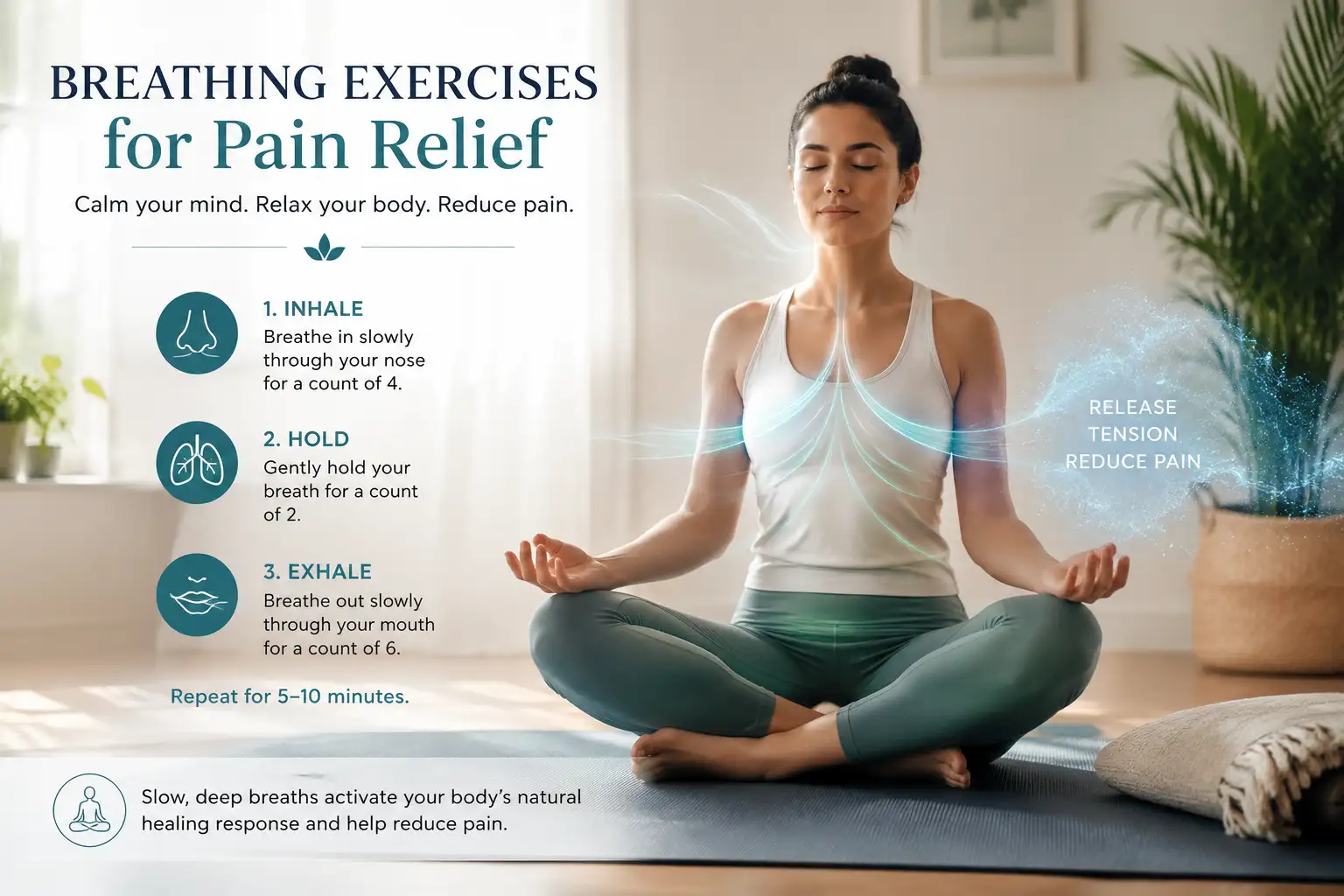
Pain affects far more than the body. It influences sleep, mood, concentration, energy levels, and emotional wellbeing. Many people searching for natural pain management methods often focus on medications, stretching, or physical therapy, yet one of the most overlooked tools is something the body already does every minute of the day: breathing.
Research increasingly shows that breathing patterns directly influence the nervous system, stress response, heart rate, muscle tension, and pain perception. This growing body of evidence explains why breathing exercises for pain relief are now commonly included in pain management programs, rehabilitation clinics, meditation practices, and stress reduction therapies.
Researchers studying nervous system regulation increasingly explore how controlled breathing influences pain sensitivity and relaxation responses.
Although breathing exercises cannot eliminate every source of discomfort, controlled breathing techniques may help reduce physical tension, calm stress responses, and improve the way the brain processes pain signals. In many situations, the body reacts to discomfort by tightening muscles, shortening breaths, and activating stress hormones. Unfortunately, these reactions may intensify discomfort instead of easing it.
Learning how to breathe more effectively can interrupt that cycle. Controlled breathing encourages relaxation, improves oxygen flow, and helps regulate the nervous system. For some people, the results feel surprisingly powerful. Others simply notice improved calmness, better sleep, or reduced physical tension. Either way, the connection between breathing exercises and pain continues receiving serious scientific attention.
Understanding how breathing affects pain perception
Pain is not produced only where discomfort occurs. The brain and nervous system also shape how intensely pain feels. This is one reason emotional stress, fear, fatigue, and anxiety often increase physical discomfort.
Breathing patterns strongly influence the autonomic nervous system, which controls involuntary body functions such as heart rate, digestion, and stress responses. Fast, shallow breathing often activates the sympathetic nervous system, commonly called the fight or flight response. Slow and controlled breathing encourages parasympathetic activity, which supports relaxation and recovery.
Proper diaphragmatic breathing exercises may help improve oxygen exchange while encouraging calmer physical responses during stressful situations.
Researchers from the National Institutes of Health explain that slower breathing may reduce stress related activation while supporting emotional regulation and muscular relaxation. This shift may influence how the brain interprets pain signals.
Controlled breathing also improves awareness of body tension. Many people unconsciously tighten their shoulders, jaw, neck, and abdominal muscles during discomfort or emotional stress. Over time, this muscular guarding may increase stiffness and worsen pain sensitivity.
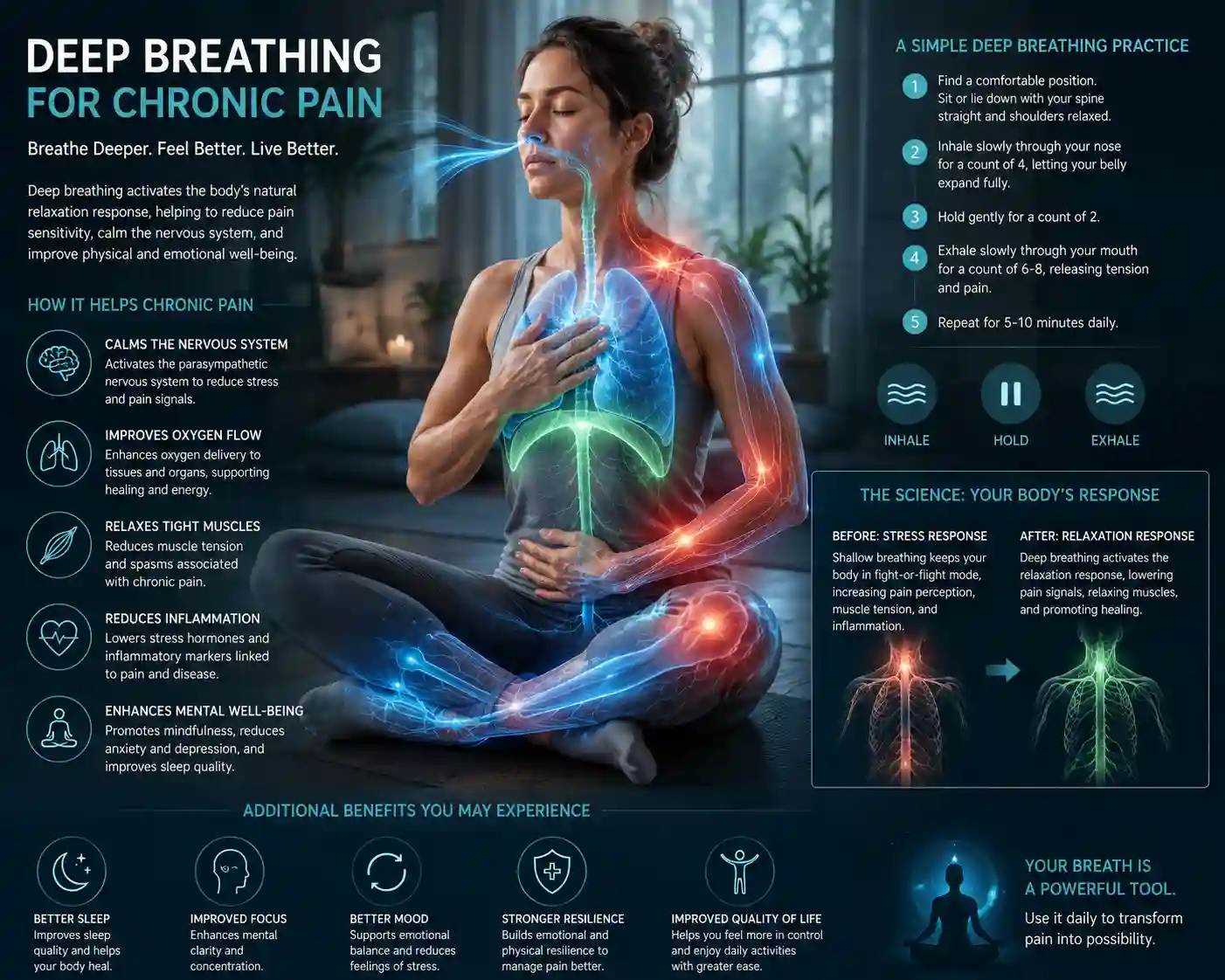
Understanding these biological responses helps explain why breathing techniques are increasingly used in chronic pain management programs worldwide.
Why stress often makes pain feel worse
Stress and pain share a close biological relationship. When stress hormones rise, muscles tighten, heart rate increases, and breathing often becomes shorter and faster. These responses prepare the body for immediate action, but they may also increase physical discomfort.
The body’s relaxation response may become harder to activate when stress remains elevated for long periods.
Chronic stress may even increase inflammation and nervous system sensitivity over time. Researchers from Harvard Medical School note that long term stress can influence pain processing pathways and emotional regulation systems.
This is one reason breathing techniques for stress and pain often work together rather than separately. Calming the stress response may indirectly reduce muscular tension, improve circulation, and lower overall physical sensitivity.
Protecting emotional wellbeing is an important part of long term pain management because emotional stress often intensifies physical discomfort.
Stress related pain commonly appears in the neck, shoulders, jaw, back, stomach, and chest. Headaches and tension related migraines may also worsen during periods of emotional strain.
Breathing exercises provide a simple way to interrupt this stress cycle without requiring complicated equipment or intense physical activity.
The science behind breathing exercises for pain relief
The relationship between breathing exercises and pain management involves several biological mechanisms working together. Slow breathing may influence oxygen delivery, heart rate variability, muscle relaxation, emotional regulation, and nervous system balance.
Researchers studying mindfulness and pain management often observe that controlled breathing helps reduce catastrophic thinking patterns associated with chronic discomfort. This mental shift may lower anxiety surrounding pain experiences.
Many breathing practices encourage mindful breathing techniques that improve concentration and reduce emotional overwhelm during pain episodes.
Breathing exercises for pain relief also encourage mindfulness, which helps individuals focus attention on the present moment rather than anticipating future discomfort. This subtle mental change may reduce emotional amplification of pain signals.
Another important factor involves muscle relaxation. Controlled breathing encourages the diaphragm to move more efficiently, reducing tension in the chest, neck, and shoulders. Better breathing mechanics may improve posture and reduce unnecessary muscular strain.
Some pain specialists also believe slow breathing influences vagus nerve activity. The vagus nerve helps regulate relaxation responses throughout the body and may affect inflammation, digestion, and stress recovery.
Although breathing exercises should not replace necessary medical treatment, many healthcare professionals now consider them valuable supportive tools for pain management.
Deep breathing exercises for chronic pain and nervous system regulation
People experiencing long term discomfort often develop shallow breathing patterns without realizing it. Chronic pain may cause the body to remain in a partially guarded state where muscles stay tense and breathing becomes restricted.
Deep breathing for chronic pain focuses on activating the diaphragm instead of relying primarily on upper chest breathing. Diaphragmatic breathing encourages fuller oxygen exchange while promoting nervous system relaxation.
Long term muscle tension may gradually decrease when breathing patterns become slower and more controlled.
This technique usually involves inhaling slowly through the nose, allowing the abdomen to expand gently, then exhaling gradually through the mouth or nose. Many practitioners recommend extending the exhalation slightly longer than the inhalation because longer exhalations may enhance relaxation responses.
Researchers from the Cleveland Clinic and the National Center for Complementary and Integrative Health suggest diaphragmatic breathing may support stress reduction, relaxation, and emotional regulation among people experiencing chronic discomfort.
Consistency matters more than perfection. Even short breathing sessions practiced daily may gradually improve awareness of tension patterns and stress responses.
Common breathing patterns linked to tension and discomfort
Many adults breathe inefficiently without noticing it. Stress, poor posture, prolonged sitting, anxiety, and chronic pain often change natural breathing mechanics.
Developing greater body awareness often helps people recognize unhealthy breathing habits before tension increases significantly.
Common unhealthy breathing patterns include:
Chest breathing
This pattern relies heavily on upper chest muscles instead of diaphragmatic movement. Chest breathing often accompanies stress and muscular tension.
Breath holding
People frequently hold their breath during pain, stress, or concentration. Repeated breath holding may increase tension and reduce relaxation.
Rapid shallow breathing
Fast breathing may signal danger to the nervous system, increasing anxiety and physical tightness.
Uneven breathing rhythms
Irregular breathing may contribute to nervous system dysregulation and emotional stress responses.
Recognizing these habits is often the first step toward healthier breathing patterns and improved relaxation.
How breathing reduces pain naturally through relaxation responses
Understanding how breathing reduces pain naturally begins with recognizing how closely the body and nervous system communicate. Slow breathing encourages the body to shift away from stress driven responses and toward calmer physiological states.
Relaxed breathing often lowers muscle guarding around painful areas. Reduced tension may improve circulation and decrease strain on surrounding tissues.
People experiencing chronic discomfort frequently notice stronger symptoms during periods of emotional stress and physical exhaustion.
Controlled breathing may also influence emotional responses connected to pain. Fear and anxiety often intensify physical discomfort because the nervous system becomes more alert and reactive.
Many people notice that pain feels stronger during periods of panic, exhaustion, or emotional overload. Relaxation focused breathing may help reduce this amplification effect.
Researchers continue exploring how breathing practices influence inflammatory markers, stress hormones, and nervous system sensitivity. Although results vary among individuals, evidence increasingly supports breathing based interventions as valuable supportive tools.
Breathing techniques for stress and pain management
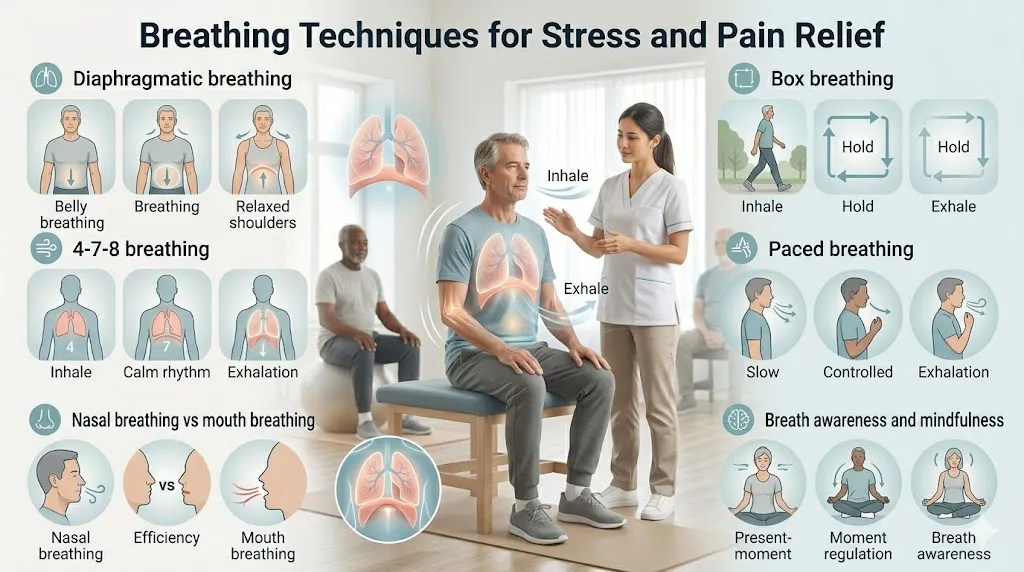
Several breathing methods are commonly used to support relaxation and pain reduction. Most techniques focus on slowing breathing speed while improving awareness and diaphragmatic movement.
Many therapists combine breathing exercises with physical therapy programs to improve relaxation and movement confidence.
Box breathing exercises
This technique involves inhaling, holding the breath, exhaling, and pausing for equal counts. Many people use it to improve calmness and concentration.
Diaphragmatic breathing exercises
Also called belly breathing, this method emphasizes abdominal expansion during inhalation and relaxed exhalation.
Pursed lip breathing exercises
Often used in respiratory therapy, this method slows exhalation and may improve breathing control and relaxation.
Resonance breathing exercises
This technique encourages slow rhythmic breathing at approximately five to six breaths per minute, which may support nervous system regulation.
Mindful breathing exercises
Mindful breathing combines breath awareness with present moment attention, helping reduce mental stress and emotional reactivity.
Many pain specialists recommend experimenting gently to determine which method feels most comfortable and sustainable.
The role of posture in effective breathing
Breathing quality depends heavily on posture. Slouched sitting positions may compress the diaphragm and restrict lung expansion, making breathing shallower and less efficient.
Gentle posture correction may improve breathing efficiency while reducing unnecessary strain on the upper body.
Poor posture may also increase strain on the neck, shoulders, ribs, and lower back. These tension patterns sometimes worsen headaches, chest tightness, and muscular discomfort.
Simple posture adjustments often improve breathing efficiency noticeably. Sitting upright with relaxed shoulders allows the diaphragm to move more freely.
Gentle stretching, mobility work, and regular movement breaks may further support healthier breathing mechanics throughout the day.
This connection between posture and respiration explains why breathing based therapies often include body awareness and movement education.
Mindful breathing for chronic discomfort during sleep and recovery
Pain and poor sleep frequently reinforce one another. Discomfort may interrupt sleep quality, while sleep deprivation often increases pain sensitivity and emotional stress.
Breathing methods for ongoing pain relief is commonly recommended before bedtime because slower breathing patterns may help reduce nervous system stimulation and muscular tension.
Better respiratory health may support relaxation and improve nighttime recovery routines.
Relaxation therapy techniques often combine breathing exercises with meditation or guided imagery before sleep.
Some people combine breathing exercises with meditation, calming music, or progressive muscle relaxation routines. These habits may encourage better sleep preparation and emotional calmness.
Researchers from the Sleep Foundation and the National Institutes of Health note that relaxation based breathing may support healthier sleep onset and stress reduction.
Improved sleep may indirectly influence pain management because the body performs important recovery and repair processes during rest.
How breathing affects inflammation and muscle tension
Inflammation and muscular tension often interact closely with stress responses. During prolonged stress, muscles may remain partially contracted for extended periods, contributing to soreness and fatigue.
Slow breathing practices may support muscle relaxation by encouraging parasympathetic nervous system activity. Relaxed muscles generally require less energy and place less strain on surrounding joints and tissues.
Some researchers believe breathing practices may offer indirect inflammation support through stress reduction pathways.
Some researchers also investigate whether breathing and mindfulness practices influence inflammatory markers indirectly through stress reduction pathways.
Although breathing exercises cannot cure inflammatory conditions, they may support overall relaxation and emotional resilience during pain management efforts.
This broader nervous system effect helps explain why breathing practices are increasingly included alongside physical therapy, mindfulness training, and rehabilitation programs.
Breathing techniques for pain management in rehabilitation programs
Many rehabilitation specialists now incorporate breathing awareness into injury recovery and chronic pain treatment plans. Proper breathing mechanics support posture, movement coordination, and muscular control.
Breathing exercises are increasingly included in rehabilitation recovery programs focused on improving movement coordination and stress management.
Breathing practices for pain reduction may help patients reduce guarding behaviors that often develop after injury or surgery. Guarding occurs when muscles tighten protectively around painful areas.
While short term guarding may feel protective, prolonged tension often limits movement and increases stiffness over time.
Physical therapists sometimes teach breathing coordination during stretching, walking, or strength exercises to improve relaxation and body awareness.
Breathing work may also help individuals feel more confident during movement recovery, especially after periods of fear related to pain or reinjury.
Everyday habits that improve breathing quality
Healthy breathing patterns develop through consistent daily habits rather than occasional practice sessions alone.
Many people use calming techniques such as meditation and stretching to support healthier breathing habits throughout the day.
Consistent breathing awareness throughout daily activities may help reduce unconscious stress related breathing patterns.
Several lifestyle factors may influence breathing quality:
Regular movement
Walking, stretching, yoga, and light aerobic activity support lung expansion and posture.
Stress management
Meditation, journaling, mindfulness, and relaxation practices may reduce shallow stress related breathing patterns.
Hydration
Proper hydration supports tissue function and respiratory comfort.
Reduced sedentary time
Long periods of sitting may compress breathing mechanics and increase muscular tension.
Nasal breathing awareness
Breathing through the nose may support calmer breathing rhythms and better air filtration.
Small daily changes often create meaningful improvements over time.
How breathing helps reduce pain naturally during emotional stress
Emotional stress frequently changes breathing patterns within seconds. Many people unconsciously tighten their jaw, chest, shoulders, and abdomen during difficult situations.
Understanding how breathing techniques reduce pain without medication involves recognizing how emotional states influence physical sensations. Calmer breathing may reduce stress driven muscle tension and help stabilize emotional reactions.
Improved breath control may help stabilize emotional reactions during physically demanding or stressful situations.
People who practice breathing techniques regularly often become more aware of early stress signals before tension escalates significantly.
This awareness creates opportunities to relax muscles, slow breathing, and interrupt escalating discomfort patterns.
Although breathing alone may not eliminate severe pain conditions, it may improve coping ability, emotional resilience, and overall relaxation during challenging periods.
Conclusion
Pain management often requires multiple supportive strategies working together. Medication, movement, sleep, nutrition, physical therapy, and emotional wellbeing all influence how the body experiences discomfort.
Breathing exercises for pain relief offer a simple yet scientifically supported approach that may help regulate stress responses, relax muscles, improve body awareness, and support nervous system balance. While results vary from person to person, many individuals experience noticeable improvements in calmness, tension reduction, and emotional resilience through regular breathing practice.
Deep breathing techniques for persistent pain, mindful breathing routines, and relaxation focused techniques may all support healthier responses to physical discomfort. Understanding how breathing supports natural pain reduction also helps explain why breathing based therapies continue gaining attention in rehabilitation and stress management programs.
Practicing breathing exercises regularly may also support nervous system balance and overall relaxation during daily activities.
Some individuals find that natural breathing methods for body tension become valuable long term wellness habits because they are simple, accessible, and adaptable.
Also Read: Can air conditioning worsen joint stiffness? What science says about air conditioning and joint pain
Others benefit from calming breath routines for chronic discomfort that help reduce stress related tension and improve relaxation throughout the day.
Most importantly, breathing exercises remain accessible, low cost, and adaptable for many different lifestyles. Even a few minutes of slow controlled breathing each day may help support greater relaxation, improved awareness, and better overall wellbeing.
Sources
National Institutes of Health
Harvard Medical School
National Center for Complementary and Integrative Health
Cleveland Clinic
Sleep Foundation
FAQs
Can stress related breathing patterns increase muscle tension?
Yes. Stress often changes breathing patterns automatically, leading to shorter and faster breaths that activate the body’s alert systems. This response may tighten muscles in the shoulders, neck, chest, jaw, and back. Over time, repeated tension patterns may contribute to headaches, stiffness, and discomfort. Learning slower breathing rhythms may help reduce this physical stress response while improving body awareness and relaxation during emotionally difficult situations, which is why breathing techniques for stress and pain are commonly recommended as part of holistic stress management and pain reduction approaches.
Why does shallow breathing sometimes worsen discomfort?
Shallow breathing may increase nervous system alertness because the body interprets rapid breathing as a sign of stress or danger. This reaction may increase muscle tension, emotional anxiety, and physical sensitivity. Limited diaphragmatic movement may also reduce relaxation throughout the body. Many people notice that discomfort feels more intense during periods of anxious or restricted breathing. Slower breathing patterns often encourage better relaxation and calmer physical responses over time.
Can relaxation focused breathing improve sleep quality?
Relaxation based breathing practices may help calm the nervous system before sleep by slowing heart rate and reducing muscular tension. Many individuals notice improved sleep preparation when combining breathing routines with calming evening habits such as stretching or mindfulness exercises. Better sleep may indirectly support recovery and emotional wellbeing because sleep deprivation often increases stress sensitivity and discomfort perception throughout the day.
How does posture influence breathing efficiency?
Posture strongly affects breathing mechanics because slouched positions may compress the diaphragm and limit lung expansion. Poor posture may also increase tension in the chest, shoulders, neck, and back. Sitting upright with relaxed shoulders usually allows smoother breathing patterns and better oxygen flow. Gentle movement and posture awareness throughout the day may improve breathing comfort and reduce unnecessary muscular strain caused by prolonged sitting.
Why do emotional reactions affect physical discomfort?
The brain and nervous system constantly communicate with the body. Emotional stress may increase muscle tension, breathing speed, heart rate, and nervous system sensitivity. These responses sometimes amplify physical discomfort even when no new injury occurs. Relaxation focused practices may help regulate emotional responses while reducing stress related tension patterns that contribute to discomfort and physical fatigue over time.
Can mindful breathing support rehabilitation recovery?
Many rehabilitation specialists use breathing awareness during recovery because controlled breathing may reduce protective muscle guarding and improve movement confidence. Coordinating breathing with stretching or gentle exercise may help individuals relax surrounding muscles while improving body awareness. This approach often supports smoother movement patterns during physical therapy and rehabilitation programs following injury or prolonged inactivity, and it is also closely aligned with deep breathing for chronic pain, which is often used to help manage long-term discomfort and improve relaxation responses during recovery.
Does breathing practice need long sessions to be effective?
Not necessarily. Short breathing sessions practiced consistently may still support relaxation and nervous system regulation. Many experts recommend beginning with just a few minutes daily instead of attempting long complicated routines immediately. Consistency usually matters more than duration. Regular practice may gradually improve awareness of stress patterns, muscular tension, and breathing habits throughout daily life, which also helps explain how breathing reduces pain naturally by calming the body’s stress response and improving overall relaxation.
Author Bio
Jennifer Collins is a wellness researcher and natural health writer focused on adults over 40. With 3+ years of experience in digital health content, Jennifer specializes in making science-backed nutrition and lifestyle strategies easy to follow and apply.
Health Disclaimer
This content is for informational purposes only and is not intended to diagnose, treat, or cure any disease. Always consult your healthcare provider before making changes to your diet or health