

PEMF therapy has gained attention in wellness clinics, rehabilitation centers, and research discussions focused on non invasive approaches to supporting the body’s natural recovery systems. People often discover it while searching for alternatives to medication based pain management or tools that may help improve healing after injury.
Research increasingly shows that electromagnetic stimulation and related physiological responses can influence the nervous system, stress response, heart rate, muscle tension, and pain perception. This growing body of evidence explains why PEMF therapy benefits are now commonly included in pain management programs, rehabilitation clinics, meditation practices, and stress reduction therapies.
Researchers studying nervous system regulation increasingly explore how controlled breathing influences pain sensitivity and relaxation responses.
Although PEMF therapy cannot replace medical treatment, it is widely studied as a form of non invasive therapy that may help reduce physical tension, support recovery processes, and influence the way the brain processes pain signals.
Learning how to breathe more effectively can interrupt that cycle. Controlled breathing encourages relaxation, improves oxygen flow, and helps regulate the nervous system. For some people, the results feel surprisingly powerful. Others simply notice improved calmness, better sleep, or reduced physical tension. Either way, the connection between breathing and pain continues receiving serious scientific attention.
What PEMF therapy is and how it works
PEMF stands for pulsed electromagnetic field therapy. It uses low frequency electromagnetic waves delivered through coils or mats placed near or around the body. These pulses are a form of therapeutic fields delivered in rhythmic bursts.
At a cellular level, PEMF therapy is believed to influence ion exchange across cell membranes. Cells rely on electrical charges for communication and energy production, and this is where bioelectric signals become important in maintaining balance.
Researchers from institutions such as the National Institutes of Health have studied how electromagnetic fields interact with biological tissues, particularly in bone healing and cellular repair processes.
These signals may support tissue regeneration by influencing how cells communicate and respond to injury. Cells involved in recovery often depend on stable electrical gradients to function properly.
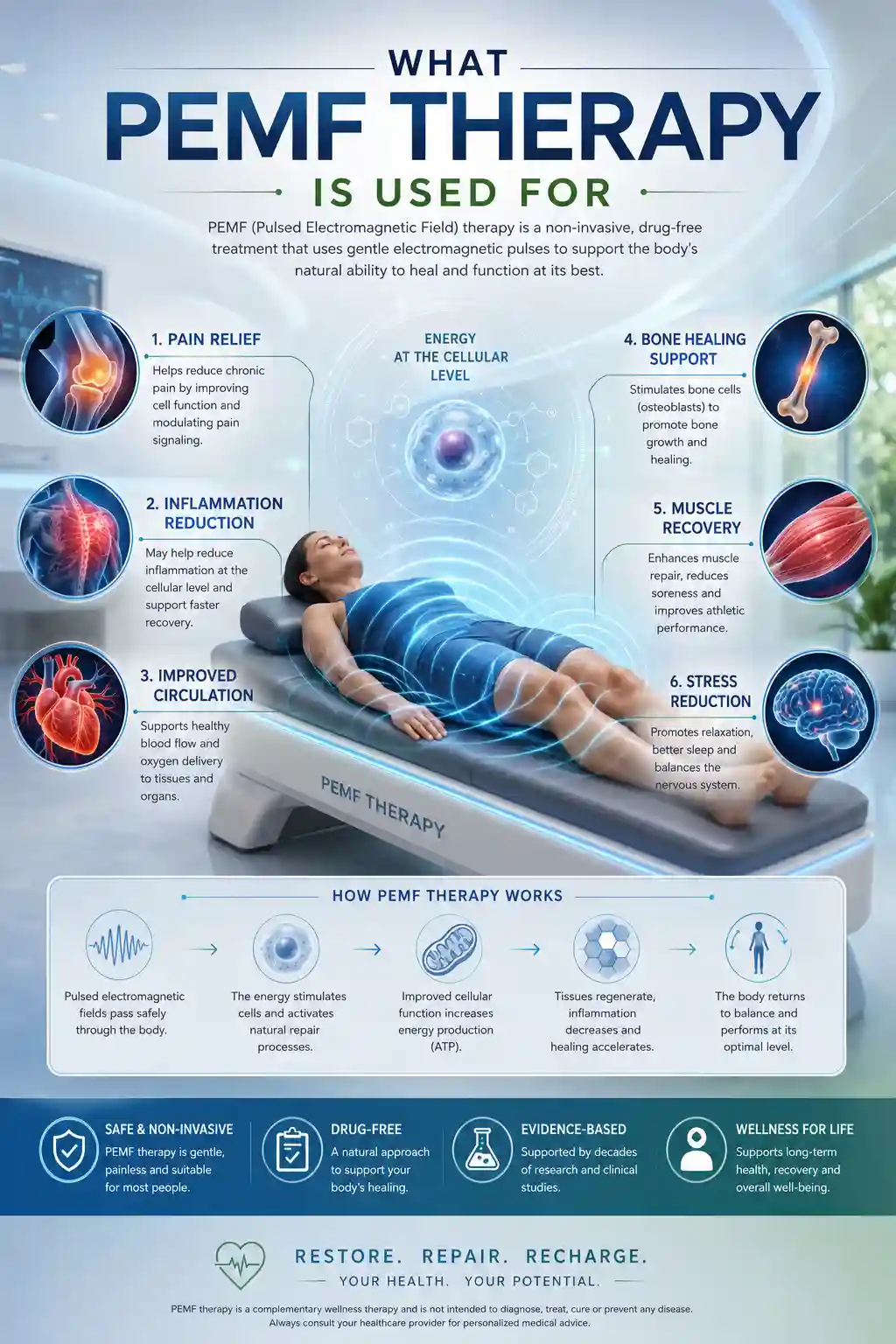
PEMF therapy does not introduce chemicals or drugs into the body. Instead, it uses electromagnetic stimulation as a physical energy input that may support natural physiological responses.
PEMF therapy benefits and how they are studied
Research into PEMF therapy benefits has focused on bone healing, pain reduction, inflammation reduction, and tissue repair. These areas fall under broader regenerative medicine and rehabilitation support research.
One of the most studied outcomes is bone healing, where electromagnetic stimulation may influence osteoblast activity involved in skeletal repair.
Clinical research also explores how PEMF may affect cellular repair mechanisms and energy production at a mitochondrial level. Mitochondria are responsible for ATP production, which powers cellular function and recovery processes.
Some studies suggest improved microcirculation, which may support oxygen delivery and recovery enhancement in damaged tissues.
However, results vary depending on treatment parameters, device settings, and individual physiological response.
The role of medical device therapy in this field continues to expand, especially in structured rehabilitation environments.
What PEMF therapy is used for in clinical and wellness settings
Understanding what is PEMF therapy used for helps explain its wide adoption in both clinical rehabilitation and wellness therapy spaces.
In clinical settings, PEMF therapy is primarily used in bone healing applications, especially after fractures or orthopedic surgery. Some approved medical device therapy systems are specifically designed for this purpose.
In wellness environments, PEMF is used for relaxation, recovery process support, and general musculoskeletal health improvement. Athletes often include it in recovery routines to support muscle recovery and reduce fatigue.
Rehabilitation support programs sometimes combine PEMF with exercise therapy and physical therapy to improve functional movement outcomes.
Research also continues exploring its potential role in regenerative medicine, including nerve regeneration and connective tissue recovery.
PEMF therapy for pain relief and inflammation support
PEMF therapy for pain relief is one of its most widely discussed applications. Pain management involves both physical and neurological processes, and electromagnetic stimulation may influence both.
Some studies suggest PEMF may contribute to inflammation reduction by affecting inflammatory signaling pathways in tissues. Reduced inflammation may lead to decreased pain perception in musculoskeletal health conditions such as arthritis or back pain.
Improved circulation may also support recovery enhancement by improving oxygen and nutrient delivery.
The long tail keyword electromagnetic field therapy for healing recovery is often used in discussions about how these fields interact with tissue regeneration processes.
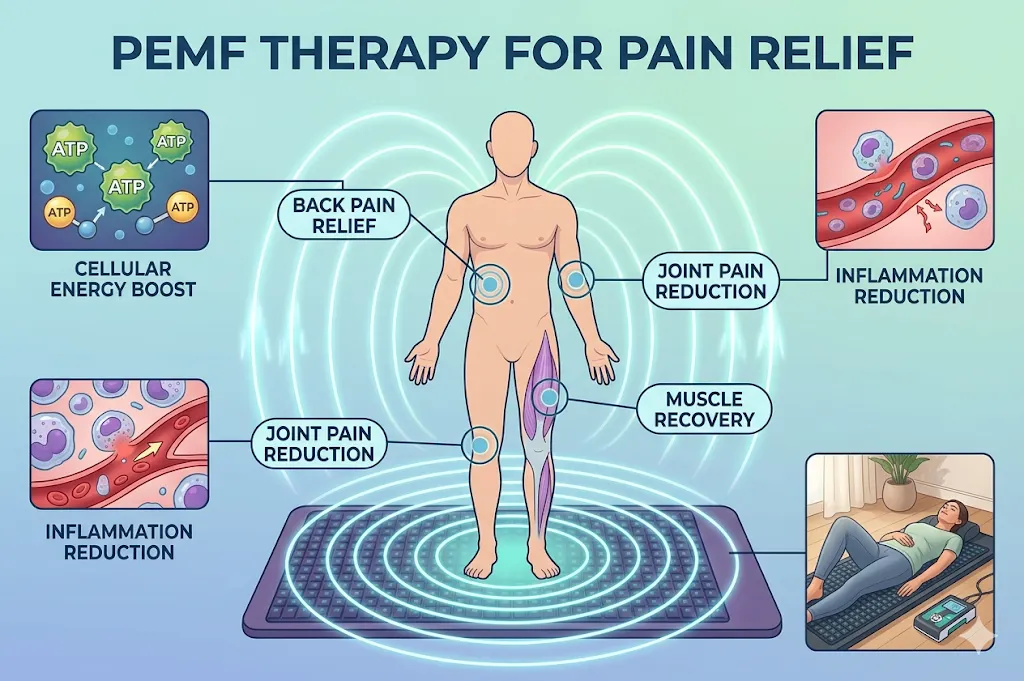
Another variation seen in clinical literature is PEMF treatment for joint and muscle pain support, especially in rehabilitation contexts focused on mobility and function restoration.
While promising, PEMF remains a complementary therapy and is not a replacement for standard medical care.
Does PEMF therapy really work according to research
The question does PEMF therapy really work has been widely studied, but results remain mixed depending on condition and methodology.
Bone healing shows the strongest evidence base, where controlled studies have demonstrated improvements in fracture healing under certain conditions.
For pain management, outcomes vary. Some studies report improvements in pain scores, while others show minimal difference compared to placebo.
Clinical research highlights variability in treatment protocols, which makes standardization difficult across studies.
Some researchers suggest that differences in bioelectric signals between individuals may influence outcomes.
Overall, PEMF is still considered an evolving area within regenerative medicine and therapeutic fields research.
Cellular mechanisms behind electromagnetic field therapy
PEMF therapy is believed to influence ion exchange processes across cell membranes, especially involving calcium ions, which play a role in signaling and repair.
At the cellular level, energy production is closely linked to mitochondrial activity. Some laboratory studies suggest PEMF may influence ATP availability, which supports cellular repair and recovery process efficiency.
These mechanisms are part of broader regenerative medicine research exploring how external energy fields may influence biological systems.
Cellular communication depends on stable bioelectric signals, which are essential for coordinated healing responses.
Advantages of PEMF therapy in rehabilitation and recovery programs
Rehabilitation specialists study benefits of pulsed electromagnetic field therapy as part of integrated rehabilitation support strategies.
In physical therapy environments, PEMF may be used alongside movement training to improve functional movement and reduce stiffness.
Some clinicians suggest it may support recovery enhancement by reducing inflammation and supporting musculoskeletal health recovery processes.
It is also being studied for connective tissue repair and nerve regeneration.
The non invasive therapy nature of PEMF makes it appealing in recovery-focused programs where patients benefit from low risk interventions.
Safety considerations and known limitations
PEMF therapy is generally considered safe when used correctly. However, it is not recommended for individuals with implanted electronic devices due to interference risks.
Pregnant individuals are advised to avoid use unless medically supervised.
Side effects are typically mild and may include fatigue or temporary discomfort during physiological response adjustments.
As with any wellness therapy, results depend on individual health status and treatment consistency.
The future of PEMF research and clinical use
PEMF research continues expanding within clinical research and regenerative medicine fields.

Scientists are exploring how electromagnetic stimulation may be optimized for different tissue types and recovery needs.
Future developments may include more advanced medical device therapy systems with personalized frequency adjustments.
There is also growing interest in combining PEMF with other therapeutic approaches such as physical therapy and wellness therapy programs.
Conclusion
PEMF therapy represents a growing area of interest in non invasive therapy and regenerative medicine. Research suggests potential roles in bone healing, inflammation reduction, and pain management, though outcomes vary.
PEMF therapy benefits continue to be explored in both clinical research and wellness therapy settings, particularly for musculoskeletal health and recovery process support.
Also Read: Joint health for women vs men: how hormones shape pain, mobility, and aging differently
Understanding what is PEMF therapy used for helps clarify its role as a supportive tool rather than a standalone treatment.
While pulsed electromagnetic field therapy for pain shows promise in certain studies, more standardized research is needed to confirm long term effectiveness.
Ultimately, electromagnetic field therapy for healing recovery and PEMF treatment for joint and muscle pain support remain promising but still evolving areas of science.
Sources
National Institutes of Health
U.S. National Library of Medicine
Harvard Medical School
Cleveland Clinic
Mayo Clinic
FAQs
What is PEMF therapy used for in modern rehabilitation programs
PEMF therapy is commonly used in rehabilitation support programs to assist recovery process outcomes after injuries, fractures, and surgeries. It is often applied in clinical environments where bone healing and musculoskeletal health are priorities. Some systems are approved as medical device therapy tools specifically for orthopedic use. Researchers continue to study how electromagnetic stimulation may influence tissue regeneration and cellular repair mechanisms in controlled clinical research environments.
Can PEMF therapy for pain relief help with chronic conditions
PEMF therapy pain management is often explored in chronic conditions involving inflammation reduction and musculoskeletal discomfort. Some individuals report improvement in pain management, especially in joint-related conditions. However, outcomes vary widely due to differences in physiological response and treatment protocols. While it may support recovery enhancement, it is best considered a complementary approach alongside standard medical care rather than a standalone treatment.
Does PEMF therapy really work for inflammation and recovery
The question does pulsed electromagnetic field therapy really work has been widely investigated in clinical research. Stronger evidence exists for bone healing applications, where electromagnetic stimulation may influence skeletal repair. For inflammation reduction and broader recovery process outcomes, results are mixed. Some studies show improvement, while others show limited effects. More standardized regenerative medicine research is needed to fully understand its effectiveness across different conditions.
How does PEMF therapy influence cellular activity
PEMF therapy may influence cellular activity by interacting with ion exchange processes across cell membranes. These processes affect communication between cells and energy production mechanisms. Some studies suggest possible effects on mitochondrial energy production, which supports cellular repair and recovery process functions. Bioelectric signals play a key role in these interactions, making this an active area of regenerative medicine research.
Is PEMF therapy safe for long term use
PEMF therapy is generally considered safe when used appropriately. Most reported effects are mild and temporary, such as fatigue or mild discomfort. However, individuals with implanted electronic devices should avoid use unless medically cleared. Safety during pregnancy has not been fully established. As a non invasive therapy, it is widely used in wellness therapy and rehabilitation support settings, but long-term effects continue to be studied.
Can PEMF therapy replace physical therapy or medication
PEMF therapy should not replace physical therapy or prescribed medication. It is best used as part of a broader rehabilitation support plan that includes movement training and medical supervision. While it may contribute to recovery enhancement and musculoskeletal health improvement, it does not address all aspects of injury or disease management on its own.
What conditions are most studied in PEMF therapy research
The most studied conditions include bone healing, fractures, joint pain, and musculoskeletal disorders. Some research also explores nerve regeneration and connective tissue recovery. These areas fall under regenerative medicine and clinical research focused on therapeutic fields and recovery processes. Bone healing remains the most established application with the strongest scientific support.
Author Bio
Jennifer Collins is a wellness researcher and natural health writer focused on adults over 40. With 3+ years of experience in digital health content, Jennifer specializes in making science-backed nutrition and lifestyle strategies easy to follow and apply.
Health Disclaimer
This content is for informational purposes only and is not intended to diagnose, treat, or cure any disease. Always consult your healthcare provider before making changes to your diet or health