
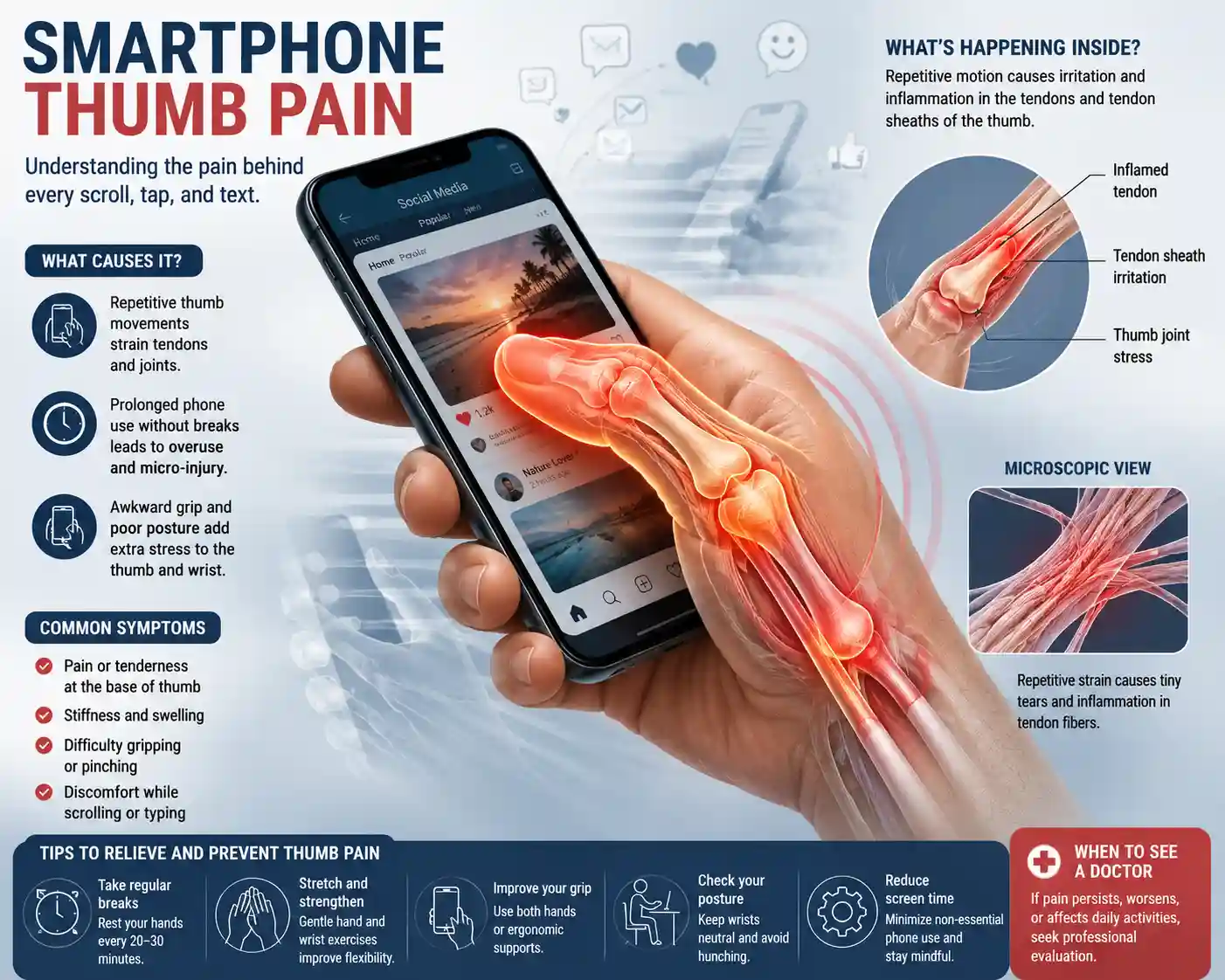
Modern life runs on screens, and our thumbs are doing most of the heavy lifting. From endless scrolling to constant messaging, the human hand is adapting to a level of repetitive motion that it was never designed for. Over time, this repeated strain can contribute to smartphone thumb pain, a growing concern among both young adults and working professionals.
Researchers have started linking long hours of phone use with musculoskeletal stress, showing how small repetitive movements can affect tendons, joints, and even nerve function. Conditions such as exting-related thumb tendinitis, wrist strain from mobile use, and repetitive phone use joint pain are now being studied as part of a broader digital lifestyle health issue. What once seemed like minor discomfort is now recognized as a potential early warning sign of chronic joint strain.
This article explores how phone habits affect joint health, what happens inside the hand and wrist, and what science says about prevention and recovery.
How modern phone habits affect hand and wrist health
The human hand is built for a wide variety of movements, but not for thousands of repetitive micro motions in a single direction. When scrolling, typing, or tapping becomes continuous, the tendons in the thumb and wrist begin to work under constant tension.
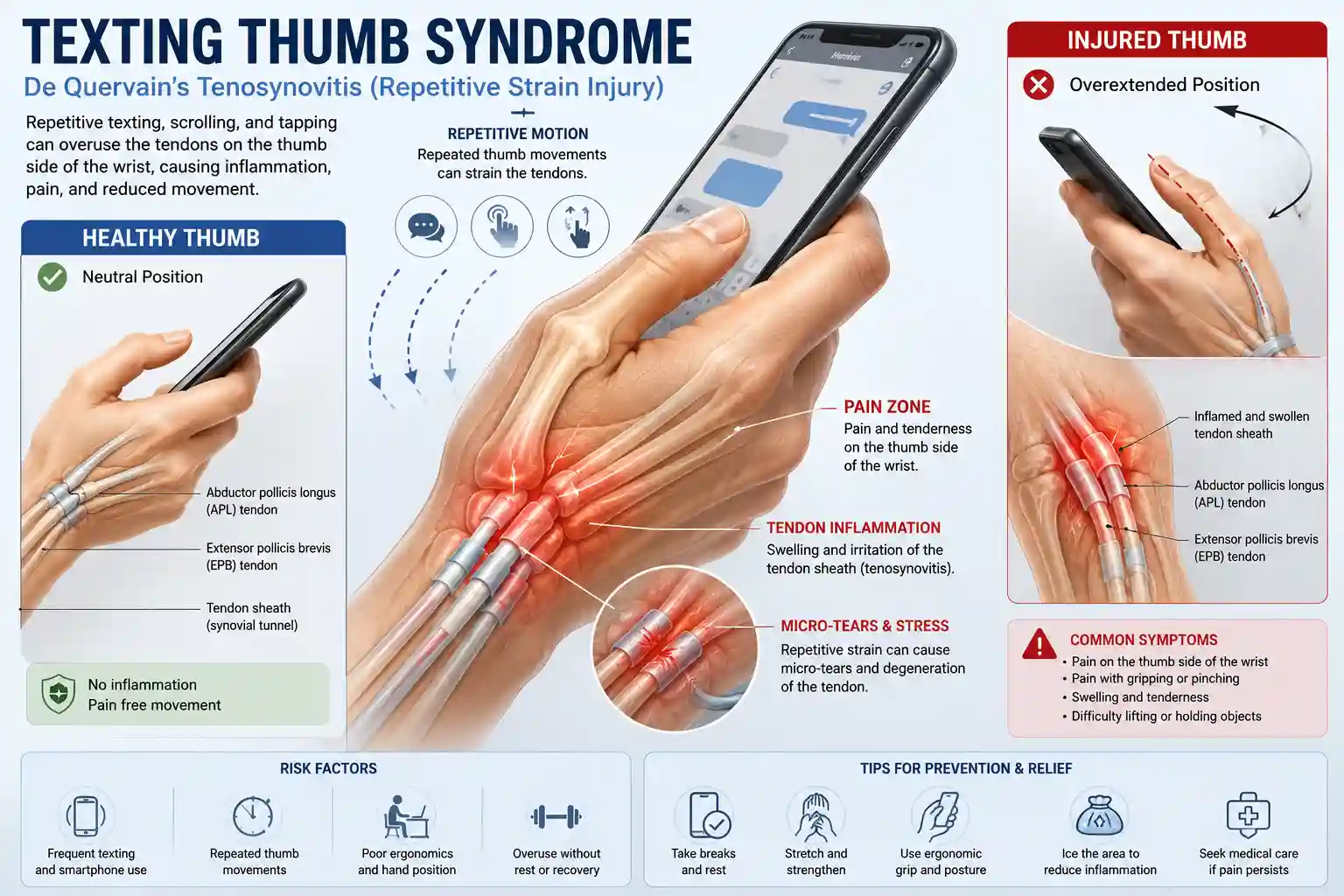
This is where smartphone-induced thumb pain often begins. The flexor tendons that control thumb movement can become irritated due to overuse. Over time, inflammation may build up in the tendon sheaths, making even simple tasks uncomfortable.
Health researchers studying musculoskeletal strain patterns note that prolonged screen time contributes to repetitive thumb strain from texting, especially in individuals who use their phones for work, social media, and entertainment without breaks.
This repeated stress can gradually extend beyond the thumb and affect the wrist joint, leading to early signs of wrist pain from phone use. In some cases, discomfort spreads to the forearm due to compensatory muscle activity.
Another emerging concern is smartphone overuse joint pain, which describes discomfort affecting multiple small joints in the hand and wrist due to repetitive strain and poor posture.
The anatomy behind smartphone thumb pain
To understand why discomfort develops, it helps to look at the structure of the hand. The thumb relies on a complex network of tendons, ligaments, and small joints that allow precision movement. These structures are highly efficient but sensitive to repetitive strain.
When people frequently grip their phones or scroll using one thumb, pressure builds on the thumb joints and surrounding tendons. This is one of the most common causes of smartphone thumb pain in daily users.
The condition often overlaps with texting thumb syndrome, where repetitive tapping causes micro irritation in tendon sheaths. This irritation can reduce flexibility and lead to stiffness.
Medical research on repetitive strain injuries shows that continuous low level stress without recovery time can gradually impair tissue function. This is why early intervention is important when symptoms appear.
Common causes linked to smartphone overuse
Several lifestyle habits contribute to the development of hand and wrist discomfort. One of the most significant is prolonged screen engagement without breaks. Continuous scrolling or typing places the thumb in repetitive motion cycles that increase strain over time.
This is a key factor behind texting thumb syndrome, especially in individuals who rely heavily on messaging apps and social platforms.
Poor posture while using a phone can also increase tension in the wrist, leading to texting-related wrist pain. Holding the device at an awkward angle forces small stabilizing muscles to work harder than necessary.
Another contributing factor is lack of variation in movement. When the same finger performs most of the input work, stress becomes concentrated in a single region. This pattern is closely associated with gadget overuse joint pain and is frequently observed in clinical assessments of repetitive strain injuries.
Symptoms and early warning signs
Early symptoms often start subtly, which makes them easy to ignore. Mild stiffness in the thumb, occasional wrist discomfort, or a slight burning sensation after phone use may be early indicators.
Many individuals report symptoms consistent with mobile phone thumb strain, especially after long periods of messaging or scrolling.
As the condition progresses, users may notice symptoms commonly linked with handheld device thumb fatigue, including reduced grip strength and difficulty performing fine motor tasks like holding small objects.
Persistent discomfort in the wrist is often categorized as wrist pain from phone use, especially when symptoms worsen during or after device usage.
In more advanced cases, individuals may experience smartphone overuse joint pain, where multiple joints in the hand feel sore or inflamed simultaneously.
Smartphone thumb strain and tendon strain mechanisms
Repetitive motion plays a central role in the development of tendon irritation. When the thumb repeatedly moves in the same pattern, the surrounding tendon sheath can become inflamed. This is a major contributor to phone overuse thumb pain, especially in users who spend several hours daily on handheld devices.
The condition often overlaps with texting-related thumb inflammation, where the repetitive tapping motion places constant stress on flexor tendons. Over time, this can reduce mobility and cause discomfort during even simple movements.
In some cases, the strain extends into the wrist, resulting in mobile device wrist discomfort. This happens when compensatory movements shift stress from the thumb to surrounding joints and muscles.
Researchers studying repetitive strain patterns also identify mobile overuse joint discomfort as part of a broader category of digital device related musculoskeletal disorders.
Risk factors that increase joint strain
Several factors can increase the likelihood of developing hand and wrist discomfort. High daily screen time is one of the most significant contributors. Individuals who use their phones for both work and leisure often experience higher cumulative strain.
This is commonly associated with mobile texting overuse condition, especially in younger populations who engage heavily in messaging and social media use.
Poor ergonomics also play a major role. Holding the phone below eye level or using only one hand for extended periods increases the risk of gadget-related wrist pain.
In addition, lack of rest periods between usage sessions can contribute to smartphone-related musculoskeletal joint pain, as tissues do not get adequate recovery time to repair micro damage.
Prevention strategies for healthier hand function
Preventing discomfort begins with reducing repetitive strain. One effective strategy is alternating between hands during phone use. This helps distribute workload more evenly across joints and tendons.
Regular breaks are also important. Short pauses allow muscles and tendons to relax, reducing the risk of developing repetitive thumb strain from phones.
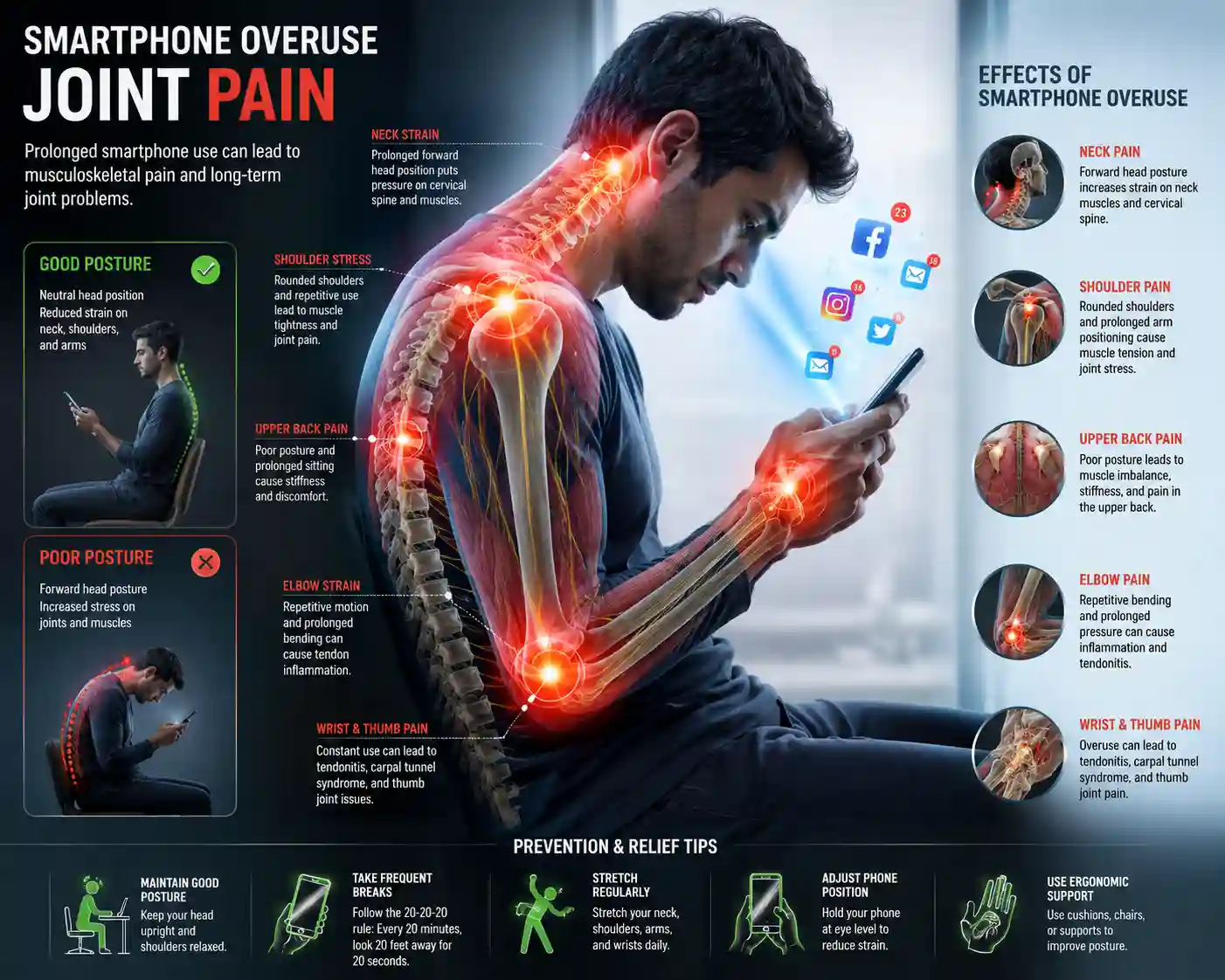
Switching to voice input or using typing aids can reduce the repetitive motion that contributes to screen typing thumb pain.
Improving posture while using devices can also reduce stress on the wrist, helping to prevent handheld device wrist pain. Holding the phone at a comfortable height and avoiding prolonged static positions can make a significant difference.
Overall, balanced usage patterns help reduce the likelihood of mobile device overuse joint strain over time.
When discomfort becomes a concern
Occasional soreness after heavy phone use is common, but persistent pain should not be ignored. Ongoing symptoms may indicate developing strain in tendons or joints.
Individuals experiencing recurring smartphone-related thumb discomfort should consider reducing screen time and evaluating usage habits. Early adjustments often prevent worsening symptoms.
If symptoms consistent with smartphone messaging thumb strain persist despite rest, it may indicate deeper tendon irritation requiring professional evaluation.
Similarly, ongoing wrist overuse injury from phone use that does not improve with rest may suggest inflammation in wrist structures.
When discomfort spreads across multiple joints, repetitive smartphone strain joint pain may indicate a broader repetitive strain issue that needs structured management.
Conclusion
Digital devices have become essential tools in everyday life, but they also introduce new physical challenges. One of the most common emerging issues is smartphone thumb pain, which reflects how repetitive modern habits can affect hand and wrist health.
Also Read: 11 overlooked joint health habits that silently accelerate joint wear and discomfort
Understanding the early signs of repetitive texting thumb injury, phone-related wrist pain, and screen addiction joint pain is important for preventing long term discomfort. With mindful usage, proper ergonomics, and regular breaks, it is possible to maintain both productivity and joint health in a screen driven world.
Sources
National Institutes of Health (NIH)
National Institute of Arthritis and Musculoskeletal and Skin Diseases (NIAMS)
Centers for Disease Control and Prevention (CDC)
National Library of Medicine (NCBI)
FAQs
What causes texting thumb syndrome in frequent phone users?
Smartphone thumb syndrome develops when repetitive thumb movements place continuous strain on tendons and joint structures. This is common in individuals who frequently message, scroll, or type for long periods without rest. Over time, micro stress builds up in the tendon sheaths, leading to stiffness and discomfort. Many users first notice mild soreness that worsens with continued activity. Early intervention through reduced usage and ergonomic adjustments can help prevent progression into more persistent musculoskeletal issues.
How is wrist pain from smartphone use different from regular wrist strain?
Smartphone-induced wrist pain is typically caused by repetitive low level movements and sustained awkward positioning while holding devices. Unlike sudden wrist injuries, this type of discomfort develops gradually due to continuous micro stress. It often appears after prolonged scrolling or typing sessions. Users may feel aching, stiffness, or reduced flexibility. Adjusting hand position, taking breaks, and alternating usage patterns can significantly reduce symptoms and prevent long term strain on wrist structures.
Can smartphone repetitive strain joint pain affect more than just the hand?
Yes, mobile screen overuse joint discomfort can extend beyond the hand and affect the wrist, forearm, and even elbow in some cases. This happens due to compensatory movement patterns where surrounding muscles take on extra load. Over time, repetitive strain may lead to discomfort in multiple connected areas. If ignored, symptoms can become more persistent and interfere with daily activities. Early awareness and reduced device usage are important to prevent widespread musculoskeletal stress.
Is mobile scrolling thumb pain reversible with rest?
In many cases, screen time thumb pain improves with rest and reduced repetitive activity. Early stage discomfort is often caused by temporary tendon irritation rather than permanent damage. Allowing tissues time to recover, along with modifying phone usage habits, can significantly reduce symptoms. However, continued overuse without changes may prolong recovery. If symptoms persist for an extended period, professional evaluation may be necessary to rule out more advanced tendon or joint conditions.
Why does smartphone texting thumb disorder become worse over time?
Mobile device thumb overuse tends to worsen when repetitive strain continues without adequate recovery. Each repeated movement creates small amounts of stress in the tendon system. Without breaks, this stress accumulates and leads to inflammation and reduced flexibility. Poor posture and excessive screen time further accelerate the condition. Over time, simple movements may feel uncomfortable or stiff. Addressing usage habits early is key to preventing progression and maintaining long term hand function.
What daily habits increase wrist pain from phone use?
Several habits contribute to phone overuse wrist pain, including holding devices at awkward angles, using phones for extended periods without breaks, and relying on one hand for all interactions. These behaviors increase pressure on wrist joints and surrounding muscles. Over time, this leads to discomfort and reduced mobility. Simple changes such as alternating hands, improving posture, and limiting continuous usage sessions can significantly reduce strain and support healthier wrist function.
How does smartphone overuse joint pain develop in young adults?
Screen time joint pain is increasingly seen in young adults due to high daily screen exposure. Continuous scrolling, messaging, and app usage create repetitive strain on small hand and wrist joints. Because younger users often underestimate early symptoms, minor discomfort can progress unnoticed. Lack of breaks and poor ergonomics further contribute to the issue. Over time, this can lead to persistent joint irritation, highlighting the importance of early awareness and preventive habits.