

Dr. Preet Pal SB, MD
Physician specializing in diabetes, metabolic health, and joint care management. Read More About Dr. Preet Pal’s Medical Credentials & Editorial Integrity Here
Table of Contents
When joint pain creeps in, every step can feel like grinding rusty gears. Over-the-counter NSAIDs often serve as a temporary band-aid, but long-term reliance can take a heavy toll on your stomach lining and kidneys. That’s why millions of adults are turning toward clinical phytotherapy—using evidence-backed botanical compounds to calm systemic inflammation and protect structural cartilage.
If you are exploring herbal remedies for joint pain, understanding how specific plants target key inflammatory enzymes (like COX-2 and 5-LOX) is essential. Rather than masking discomfort, targeted botanicals down-regulate the body’s pain signals while preserving joint mechanics.
Block Inflammatory Pathways
Inhibit COX-2 and 5-LOX enzymes naturally
Curcumin (from Turmeric) and Boswellic acids down-regulate inflammatory cytokines like TNF-alpha and Interleukin-6, suppressing swelling at the cellular level.
Enhance Bioavailability
Pair active compounds for maximum uptake
Combine Curcumin with Piperine (black pepper extract) or liposomal lipids. Standard turmeric root powder yields low blood concentrations; targeted extracts boost absorption by up to 2,000%.
Preserve Synovial Fluid & Cartilage
Protect the joint’s internal shock absorber
Botanicals like Frankincense and specialized Pine Bark extracts inhibit matrix metalloproteinases (MMP enzymes)—proteins that break down collagen and thin out your joint’s protective lubricating fluid.
Science-Backed Mechanisms: How the Best Herbs for Joint Care Work
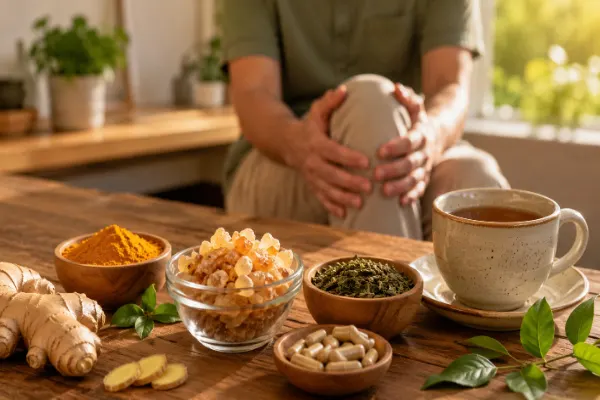
To understand how plants alleviate stiffness, picture your knee or hip joint as a high-performance door hinge. In a healthy joint, smooth cartilage acts as a thick rubber bumper, while viscous synovial fluid functions like premium machine oil.
When chronic inflammation strikes, inflammatory enzymes act like rust, stripping away the oil and chewing through the rubber bumper until bone meets bone.
The best herbs for joint care do not simply numb pain signals in the brain. Instead, they act like biochemical rust inhibitors.
Turmeric (Curcumin): The Master NF-kB Inhibitor
Curcumin is the primary bioactive compound found in turmeric root (Curcuma longa). At a molecular level, curcumin inhibits nuclear factor-kappa B (NF-kB)—a major signaling pathway that flips on inflammatory genes across the body.
- Clinical Evidence: A meta-analysis published in the Journal of Medicinal Food revealed that 1,000 mg/day of standardized curcumin extract reduced joint discomfort and morning stiffness as effectively as baseline doses of ibuprofen, without gastrointestinal irritation.
- Smart Pairing: Plain turmeric powder contains only ~3% curcumin by weight and exhibits poor intestinal absorption. Always select supplements standardized to 95% curcuminoids paired with piperine or lecithin.
If you are managing systemic flare-ups across multiple joints, exploring targeted natural remedies for inflammation offers additional protocol ideas to lower your overall inflammatory burden.
Boswellia Serrata (Indian Frankincense): The 5-LOX Specialist
While turmeric handles the COX-2 pathway, Boswellia serrata targets 5-lipoxygenase (5-LOX), an enzyme responsible for producing inflammatory leukotrienes.
- Cartilage Protection: Boswellic acids—specifically AKBA (acetyl-11-keto-beta-boswellic acid)—deactivate matrix metalloproteinase-3 (MMP-3). This prevents inflammatory proteins from degrading the structural collagen framework inside your cartilage.
- Rapid Action: Clinical trials indicate that high-AKBA Boswellia extracts can produce noticeable improvements in joint mobility in as little as 5 to 7 days.
Ginger Root (Zingiber officinale): Dual COX/LOX Inhibition
Ginger contains bioactive gingerols and shogaols that act as dual inhibitors of both COX-2 and 5-LOX pathways.
- Mobility Support: In clinical studies involving knee discomfort, standardized ginger extract significantly reduced pain upon standing and walking.
- Application: Works exceptionally well when taken orally as a concentrated extract or applied topically as a warm oil infusion to increase localized micro-circulation.
Comparing Top Botanical Extracts for Joint Health
Not all herbs target the same aspect of joint degeneration. The comparison table below highlights how these key botanicals differ in target pathways, clinical dosages, and ideal applications:
Targeting Specific Joint Conditions
Different joint issues stem from distinct underlying mechanics. Tailoring your natural regimen to the specific condition yields better clinical outcomes.
Osteoarthritis & Wear-and-Tear
Osteoarthritis involves progressive mechanical wear of the articular cartilage. Pairing anti-inflammatory herbs with cartilage-nourishing lifestyle adjustments is critical. For a deeper breakdown of managing structural cartilage loss naturally, read our comprehensive guide on natural remedies for osteoarthritis.
Tendonitis & Soft Tissue Calcification
When discomfort is localized to tendons—such as shoulders, heels, or elbows—inflammation often coincides with micro-tears or calcium crystal deposits. If you are dealing with localized shoulder tightness or calcific deposits, see our specialized walkthrough on calcific tendonitis shoulder natural remedy protocols.
Dr. Preet Pal’s Clinical Perspective
“In clinical practice, patients often assume joint discomfort is purely a cartilage problem. In reality, cartilage has no nerves—the pain you feel comes from inflamed synovial membranes and dehydrated synovial fluid. When synovial fluid loses its thickness, friction spikes, accelerating joint breakdown.
Botanicals like Boswellia and Curcumin perform exceptionally well at cooling down membrane inflammation. However, for long-term recovery, you must combine anti-inflammatory herbs with targeted nutrients that restore synovial hyaluronan levels. Restoring fluid viscosity is the single most effective way to protect cartilage from mechanical friction.”
Advanced Nutritional Support: Restoring Synovial Cushioning
While botanical extracts down-regulate inflammatory firestorm pathways, long-term joint comfort requires restoring the body’s internal lubricating fluid.
As we age, the population of hyanocytes—specialized cells inside the joint capsule that produce hyaluronic acid—declines. This causes synovial fluid to thin out, losing its shock-absorbing capacity.
Clinical Spotlight: Joint Genesis
For individuals seeking an all-in-one, clinically formulated daily solution, Joint Genesis combines high-potency botanicals with advanced synovial-restoring ingredients.
- Advanced Hyaluronan Matrix: Features Mobilee®, a patented compound proven to increase hyaluronan concentration in synovial fluid by up to 10-fold, restoring thick, protective fluid cushioning between bones.
- French Maritime Pine Bark Extract: Rich in powerful antioxidants that neutralize free radicals within the joint capsule, protecting synovial cells from oxidative damage.
- Synergistic Botanical Core: Integrates standardized Boswellia Serrata and Ginger extracts to maintain balanced inflammatory pathways throughout daily movement.
By addressing both sides of the joint equation—reducing enzymatic breakdown while rehydrating synovial fluid—this approach offers comprehensive, long-term joint care without harsh side effects.
Safety, Contraindications, and Usage Guidelines
Herb-drug interactions require careful attention, particularly for individuals on prescription medications:
- Blood Thinners (Anticoagulants): High-dose Curcumin, Ginger, and Willow Bark possess mild antiplatelet activity. Consult your physician if taking warfarin, aspirin, or clopidogrel.
- Gastrointestinal Considerations: Take high-potency extracts with meals to enhance absorption and prevent mild stomach upset.
- Surgery: Discontinue high-dose botanical supplements 14 days prior to any elective surgical procedures.
Lifestyle Habits That Improve Joint Health Naturally

Even the best natural herbs for joints work better when paired with healthy habits.
Stay Active
Regular movement helps maintain flexibility and strengthen muscles around joints.
Low impact exercises include:
- Walking
- Swimming
- Cycling
- Yoga
Maintain a Healthy Weight
Extra body weight increases pressure on knees, hips, and lower back.
Even moderate weight loss may improve joint comfort.
Eat an Anti Inflammatory Diet
Foods linked to lower inflammation include:
- Fruits
- Vegetables
- Fatty fish
- Olive oil
- Nuts
Prioritize Sleep
Poor sleep may increase pain sensitivity and inflammation.
Manage Stress
Chronic stress can worsen inflammatory activity. Relaxation techniques may help support pain management.
Are Herbal Remedies Enough for Severe Joint Pain?
Herbs may support mild to moderate symptoms, but severe joint pain often requires medical evaluation.
See a healthcare professional if you experience:
- Sudden swelling
- Joint deformity
- Fever with pain
- Severe stiffness
- Loss of mobility
Some joint conditions need medications, physical therapy, or other medical treatments. Herbal support should complement proper care, not replace it.
Frequently Asked Questions
What are the best herbal remedies for joint pain?
Some of the best herbal remedies for joint pain include turmeric, boswellia, ginger, devil’s claw, willow bark, green tea extract, and cat’s claw. Research suggests these herbs may help reduce inflammation, stiffness, and discomfort naturally when used consistently and safely
Does ginger for arthritis really work?
Yes, several studies suggest ginger for arthritis may help lower inflammation and reduce joint pain, especially in osteoarthritis. Ginger contains natural anti inflammatory compounds called gingerols that may support better joint mobility and comfort over time.
How long do herbal remedies for joint pain take to work?
Most herbal remedies for joint pain do not work instantly. Many people notice improvements after 2 to 8 weeks of regular use. Results depend on the type of herb, dosage, overall health, and severity of joint pain.
Is boswellia joint pain relief supported by science?
Yes, boswellia joint pain relief has been studied in people with osteoarthritis and inflammatory joint conditions. Research shows Boswellia may help reduce stiffness, improve mobility, and support overall joint function by targeting inflammatory pathways.
Are natural herbs for joints safer than pain medications?
Natural herbs for joints may cause fewer side effects for some people compared to long term use of certain pain medications. However, herbs can still interact with medicines or cause side effects. It is always smart to talk with a healthcare professional before starting herbal supplements for joint pain.
Final Thoughts on Herbal Remedies for Joint Pain
Many people now explore herbal remedies for joint pain because they want natural ways to improve mobility and reduce discomfort. Scientific research supports several herbs, especially Boswellia, turmeric, ginger for arthritis, willow bark, and devil’s claw joints support.
Still, results vary between individuals. Herbs usually work gradually rather than instantly. Consistency matters. Quality matters too.
The best approach combines evidence based herbal support with exercise, healthy nutrition, sleep, and proper medical guidance when needed.
Your joints may never send a thank you card, but they will probably appreciate fewer complaints every morning.
Verified Medical Sources
- National Center for Complementary and Integrative Health (NCCIH) – Turmeric and Curcumin Health Insights
- National Institute of Arthritis and Musculoskeletal and Skin Diseases (NIAMS) – Osteoarthritis Information & Management
- Mayo Clinic – Joint Health and Herbal Supplements Overview
- Arthritis Foundation – Guide to Anti-Inflammatory Supplements
Author Bio
Jennifer Collins is a wellness researcher and natural health writer focused on adults over 40. With 3+ years of experience in digital health content, Jennifer specializes in making science-backed nutrition and lifestyle strategies easy to follow and apply.
Health Disclaimer
This content is for informational purposes only and is not intended to diagnose, treat, or cure any disease. Always consult your healthcare provider before making changes to your diet or health