
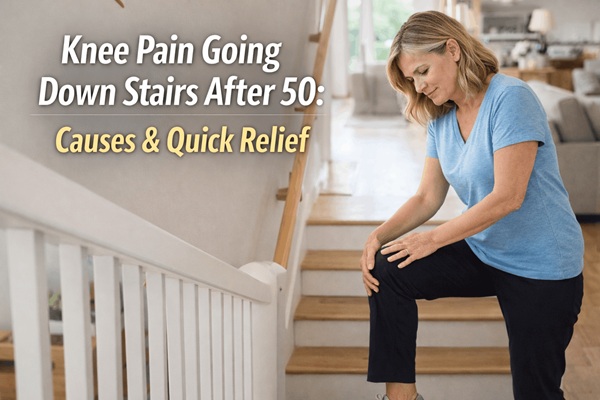
Going down the stairs should feel simple. One step, then another. Yet many adults notice something frustrating after fifty. The moment they start descending stairs, a sharp ache or uncomfortable pressure appears in the knee. Some people describe it as a dull ache. Others feel a sudden stabbing sensation around the kneecap.
If this sounds familiar, you are far from alone. Knee pain while going down stairs is one of the most common mobility complaints in adults over fifty. Orthopedic specialists often hear this exact question from patients: “Why do my knees hurt more when I walk down stairs than when I walk up?”
The answer lies in how the knee joint works. When you descend stairs, your knee absorbs much more pressure than when you climb them. According to the American Academy of Orthopaedic Surgeons, the knee joint can experience forces several times your body weight during activities like stair descent. That extra pressure often exposes weaknesses or irritation in the joint that might not appear during regular walking.
The good news is that knee pain going down stairs after 50 usually has understandable causes and many cases improve with proper care, strengthening exercises, and simple lifestyle adjustments. In this guide we will explore why this pain occurs, how to relieve it quickly, and what you can do to protect your knees long term.
Why Going Down Stairs Hurts More Than Going Up
Many people assume that climbing stairs should cause more pain because it feels like harder work. In reality, descending stairs places greater stress on the knee joint.
When you walk down stairs, the knee must control your body weight while bending at the same time. The quadriceps muscles slow your movement so you do not fall forward. This controlled movement increases the pressure between the kneecap and the thigh bone.
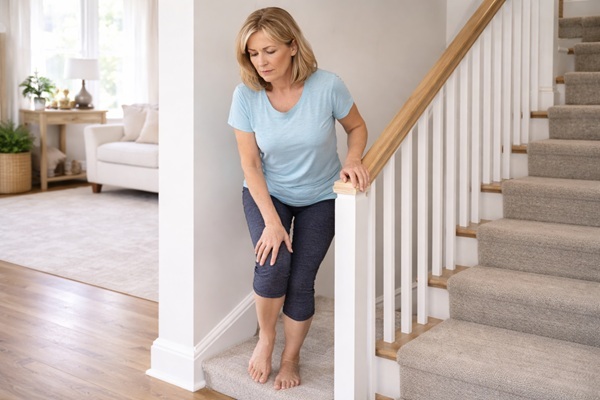
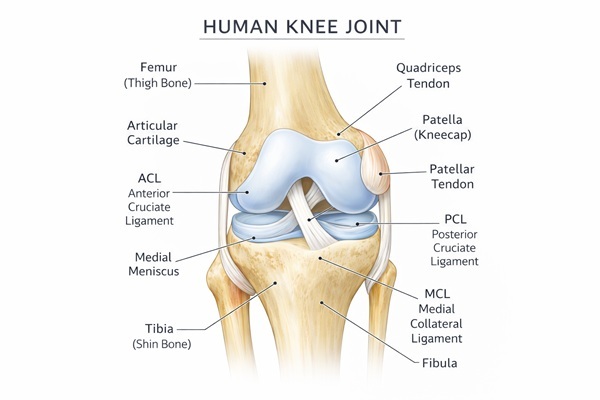
Research cited by the Cleveland Clinic explains that the kneecap acts like a pulley for the quadriceps muscles. When these muscles contract during stair descent, they press the kneecap firmly against the joint surface. If the cartilage underneath becomes irritated or worn, pain can appear quickly.
In simple terms, going down stairs asks the knee to act like both a brake and a shock absorber at the same time. If the joint already feels sensitive or inflamed, that combination can trigger discomfort.
Common Causes of Knee Pain Going Down Stairs After 50
Several conditions can lead to knee pain during stair descent. Understanding the most common causes can help you identify what may be happening inside the joint.
Weak quadriceps muscles, cartilage wear, and joint inflammation are some of the most common reasons people experience knee pain after 40, particularly during activities that place pressure on the joint such as walking down stairs.
Patellofemoral Pain Syndrome
Patellofemoral pain syndrome is one of the most frequent causes of pain when going down stairs. It occurs when the kneecap does not move smoothly along the groove in the thigh bone.
People often describe the pain as aching around the front of the knee. It may worsen when descending stairs, squatting, or sitting for long periods.
According to the Mayo Clinic, this condition commonly develops when the muscles around the knee become weak or unbalanced.
Knee Osteoarthritis
Osteoarthritis becomes more common with age. It occurs when cartilage gradually breaks down and the joint loses its cushioning.
The Arthritis Foundation explains that osteoarthritis often causes stiffness, swelling, and pain during weight bearing activities such as walking down stairs.
Many adults notice that their knees feel stiff in the morning and more painful after prolonged activity.
Weak Quadriceps Muscles
The quadriceps muscles sit at the front of the thigh and help control knee movement. Weak quadriceps make it harder for the knee to stabilize the body during stair descent.
Physical therapists frequently observe that strengthening these muscles reduces stair related knee pain.
Previous Knee Injuries
Old injuries sometimes return years later. Ligament strains, cartilage damage, or meniscus tears may create lingering joint instability.
As the knee ages, these previous injuries may become more noticeable during demanding movements like stair descent.
Tight Muscles Around the Knee
Muscle tightness also contributes to knee discomfort. Tight hamstrings, calves, or hip muscles can pull on the knee joint and change how it moves.
When alignment changes slightly, pressure inside the knee increases and pain may develop.
Symptoms That Often Accompany Stair-Related Knee Pain
Knee pain going down stairs after fifty rarely appears alone. People usually notice other symptoms as well.
Common symptoms include:
• Pain around or behind the kneecap
• A grinding or clicking sensation
• Knee stiffness after sitting
• Mild swelling around the joint
• Weakness when bending the knee
These symptoms often appear gradually rather than suddenly. However, severe swelling, locking, or inability to bear weight requires medical evaluation.
Quick Relief Tips for Knee Pain on Stairs
If your knee hurts when descending stairs, several simple steps can help reduce discomfort.
Use the Handrail
This might sound obvious, but many people ignore it. Holding the handrail reduces the load placed on the knee joint and improves stability.
Step Down Slowly
Fast movement increases pressure on the knee. Slowing down gives the muscles time to control the joint.
Lead With the Stronger Leg
When descending stairs, place the stronger or less painful leg first. This technique helps distribute weight more comfortably.
Apply Ice After Activity
Cold therapy can reduce inflammation in the knee joint. Apply an ice pack for about fifteen minutes after activity.
The Cleveland Clinic recommends ice as a simple method to reduce swelling and joint irritation.
Best Exercises to Reduce Stair-Related Knee Pain
Strengthening exercises often provide the most effective long term relief. Strong muscles protect the knee joint and improve movement control.
Straight Leg Raises
Straight leg raises strengthen the quadriceps without bending the knee.
Lie on your back with one leg straight. Lift the leg slowly about twelve inches off the floor. Hold for a few seconds, then lower it gently.
Repeat ten to fifteen times.
Step Ups
Step ups train the muscles used during stair movement.
Use a small step platform. Step up with one foot, then step down slowly. Keep movements controlled.
Perform ten repetitions on each leg.
Wall Sits
Wall sits strengthen the quadriceps and glutes.
Stand with your back against a wall. Slide down slightly until your knees bend gently. Hold the position for ten seconds.
Increase time gradually as strength improves.
Hamstring Stretch
Stretching improves flexibility and reduces joint tension.
Sit on the floor with one leg extended. Reach toward your toes while keeping your back straight.
Hold the stretch for twenty seconds.
Everyday Habits That Protect Your Knees
Exercise alone may not solve knee pain if daily habits continue to stress the joint.
Several lifestyle changes can support knee health.
Maintain a healthy weight
Extra body weight increases pressure on the knee joint.
Wear supportive shoes
Proper footwear improves alignment and absorbs shock.
Avoid prolonged sitting
Long sitting periods may cause stiffness.
Stay active regularly
Consistent movement keeps joints flexible.
These habits may seem simple, yet they have a powerful impact on joint health.
When to See an Orthopedic Specialist
Most cases of knee pain improve with conservative care, but some situations require medical evaluation.
Consult a doctor if you experience:
• Severe swelling
• Sudden intense pain after injury
• Inability to bear weight
• Knee locking or instability
• Pain lasting several weeks without improvement
The American Academy of Family Physicians recommends medical evaluation when knee pain interferes with normal daily activities.
Long-Term Outlook for Knee Pain After 50
Many adults worry that knee pain automatically leads to surgery or long term disability. In reality, many people manage knee discomfort successfully with exercise, physical therapy, and lifestyle adjustments.
Strengthening the muscles around the knee improves stability and reduces pressure on the joint. Regular movement also supports cartilage health and circulation.
Consistent care often leads to noticeable improvement within several weeks or months.
Exercises and lifestyle adjustments can significantly improve knee comfort, but understanding the root causes is equally important. Our detailed guide on knee pain after 40 explains symptoms, treatment options, and long-term knee care strategies.

Final Thoughts
Knee pain going down stairs after fifty can feel discouraging, especially when it interferes with everyday movement. Yet in many cases the problem has clear causes and practical solutions.
Understanding how the knee works is the first step. Strengthening exercises, supportive habits, and early care can significantly improve comfort and mobility.
Listen to your body, move consistently, and seek professional guidance when needed. Your knees have supported you for decades. With the right care they can continue supporting you for many more.
Sources and Medical References
American Academy of Orthopedic Surgeons
Mayo Clinic Knee Pain Causes and Treatment
Cleveland Clinic Knee Pain Overview
Arthritis Foundation Joint Health Resources
About the Author
Jennifer Collins
Health Research Editor, JointReliefJournal
Jennifer Collins focuses on translating complex health research into practical, easy to understand information for adults over 40. Her work centers on joint health, mobility, and long term wellness strategies that help readers make informed decisions about their daily habits.
Disclaimer
This article is intended for educational purposes only and should not replace professional medical advice. Always consult a qualified healthcare provider regarding any concerns about knee pain or other health conditions.