

If you spend most of your day sitting, your body quietly keeps score. Tight hips, aching lower back, and that uncomfortable pinch when you stand up? That’s not random. It’s your hip flexors asking for attention.
Hip flexor pain from sitting all day has become incredibly common, especially with desk jobs, long commutes, and screen-heavy lifestyles. The good news? You don’t need an hour-long workout to fix it. You can start feeling relief in as little as 10 minutes.
Let’s break it down in a simple, practical way—no fluff, no gimmicks.
Table of Contents
What Are Hip Flexors (And Why They Hurt)
Your hip flexors are a group of muscles that help you lift your knees and bend at the waist. The main ones include the iliopsoas and rectus femoris.
When you sit for long hours:
- Your hip flexors stay in a shortened position
- Blood flow reduces
- Muscles tighten and weaken over time
This creates a perfect storm for discomfort.
Why Sitting All Day Causes Pain
Think of your hip flexors like a rubber band. Keep it shortened all day, and it loses flexibility. Then suddenly stretch it when you stand—ouch.
Here’s what actually happens:
- Muscles become tight and stiff
- Glutes become inactive (also called “glute amnesia”)
- Lower back compensates, leading to strain
That’s why the pain often shows up in your hips and your lower back.
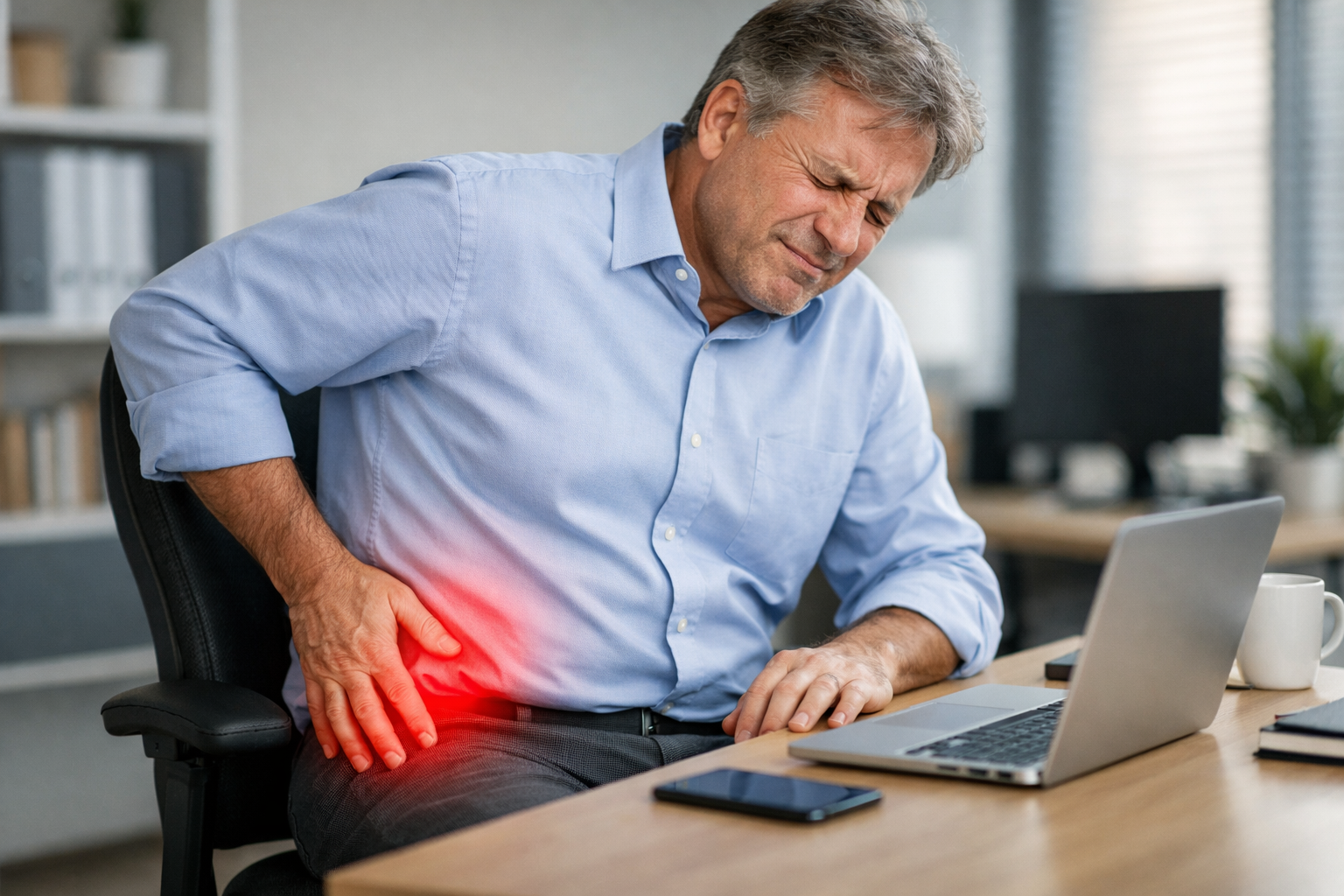
Signs You Have Hip Flexor Pain From Sitting All Day
You don’t need a diagnosis to spot the signs. Most people feel:
- Tightness in the front of the hips
- Pain when standing up after sitting
- Lower back stiffness
- Difficulty standing fully upright
- Discomfort during walking or climbing stairs
If that sounds familiar, your hip flexors are likely the culprit.
The 10-Minute Relief Routine (Do This Daily)
You don’t need fancy equipment or a gym membership. Just 10 minutes and a bit of consistency.

1. Kneeling Hip Flexor Stretch (2 minutes)
- Kneel on one knee
- Keep your back straight
- Gently push your hips forward
You should feel a stretch in the front of your hip.
Tip: Don’t arch your lower back—keep your core engaged.
2. Standing Quad Stretch (2 minutes)
- Stand tall
- Pull one foot toward your glutes
- Keep knees close together
This targets both your quads and hip flexors.
3. Glute Bridges (2 minutes)
- Lie on your back
- Bend your knees
- Lift your hips upward
This activates your glutes, which helps balance tight hip flexors.
4. Seated Figure-4 Stretch (2 minutes)
- Sit upright
- Place one ankle over the opposite knee
- Lean forward slightly
You’ll feel this in your hips and glutes.
5. Hip Flexor Mobility Pulses (2 minutes)
- Step into a lunge position
- Gently move forward and back
This adds movement, which improves flexibility faster than static stretching alone.
Why This Routine Works
This isn’t random stretching. Each move has a purpose:
- Stretching loosens tight muscles
- Activation strengthens weak muscles
- Mobility work restores natural movement
Together, they reset your hips in minutes.
Simple Habits That Prevent Hip Pain
Fixing pain is great. Preventing it is even better.
1. Follow the 30–30 Rule
Every 30 minutes, stand or move for 30 seconds. Even a quick walk helps.
2. Adjust Your Sitting Posture
- Keep feet flat on the floor
- Knees at hip level
- Avoid slouching
Good posture reduces unnecessary strain.
3. Use a Standing Desk (If Possible)
Switching between sitting and standing reduces continuous pressure on your hips.
4. Walk More Than You Think You Need
Short walks throughout the day:
- Improve circulation
- Reduce stiffness
- Keep muscles active
Even 5 minutes every hour makes a difference.
Along with movement, your daily diet matters more than you think—these Knee Pain Diet Anti Inflammatory Foods That Actually Help can support joint health and reduce inflammation.
The Hidden Connection: Hip Pain and Lower Back Issues
Here’s something many people miss—tight hip flexors don’t just stay in the hips.
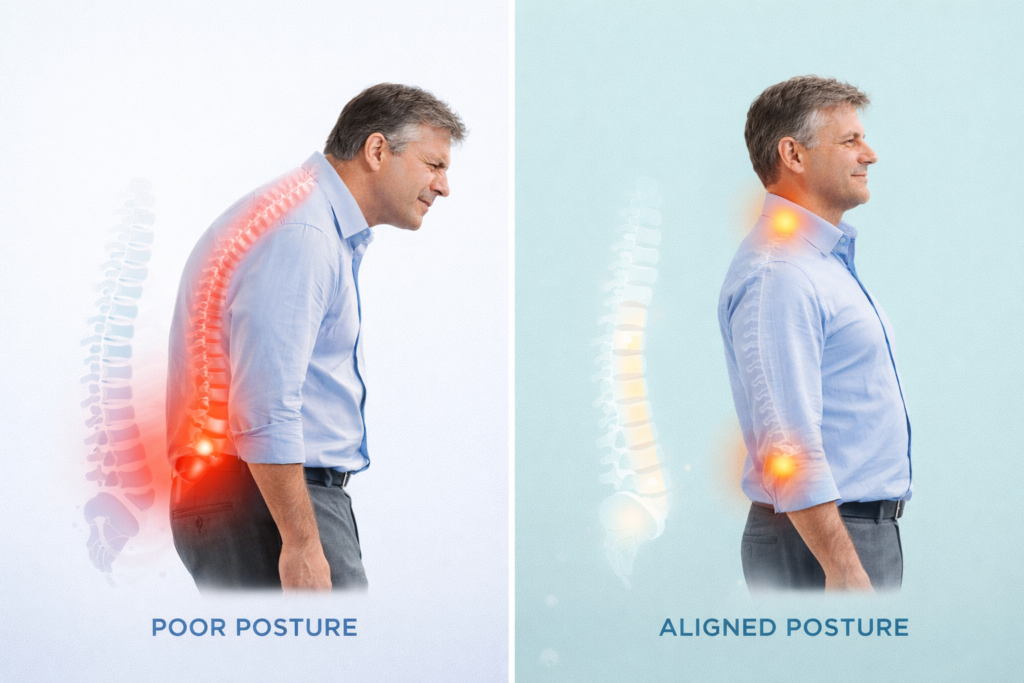
They pull your pelvis forward, creating an anterior tilt. This increases pressure on your lower spine.
Result?
- Lower back pain
- Poor posture
- Reduced core stability
Fixing your hip flexors often improves your back pain without directly treating your back.
Common Mistakes People Make
Let’s clear up a few things that slow your progress.
1. Stretching Without Strengthening
If you only stretch, the problem comes back. Weak glutes and core muscles need activation too.
2. Sitting Immediately After Stretching
You undo your progress if you stretch and then sit for hours again.
Move around after your routine.
3. Overstretching
More isn’t always better. Aggressive stretching can irritate muscles.
Keep it gentle and controlled.
4. Ignoring Pain Signals
Sharp pain isn’t normal. If something feels wrong, stop and adjust.
When Should You See a Doctor?
Most cases improve with movement and stretching. But you should seek help if:
- Pain lasts more than a few weeks
- You feel sharp or shooting pain
- Movement becomes limited
- Pain affects daily activities
A physical therapist can guide you with personalized exercises.
Quick Daily Checklist (Save This)
If you want fast results, stick to this:
- 10-minute routine daily
- Move every 30–60 minutes
- Maintain good posture
- Walk at least 20–30 minutes daily
- Strengthen glutes 2–3 times a week
Consistency beats intensity every time.
Frequently Asked Questions
Can sitting all day cause hip flexor pain?
Yes, sitting for long hours can directly cause hip flexor pain from sitting all day. When you sit too much, your hip flexor muscles stay shortened, which makes them tight and weak over time. This leads to stiffness, discomfort, and even lower back pain when you stand or move.
How do I relieve hip flexor pain quickly at home?
You can relieve hip flexor pain from sitting all day with a simple 10-minute routine. Focus on gentle stretches like kneeling hip flexor stretches, quad stretches, and glute bridges. These movements loosen tight muscles and activate weak ones, helping you feel relief quickly.
How long does it take to fix hip flexor pain from sitting all day?
Most people start feeling better within a few days if they stay consistent. However, fully fixing hip flexor pain from sitting all day may take a few weeks, depending on how long the muscles have been tight and inactive. Daily movement and stretching speed up recovery.
What are the symptoms of tight hip flexors from sitting?
Common symptoms include tightness in the front of the hips, pain when standing up, lower back discomfort, and difficulty standing straight. These signs often point to hip flexor pain from sitting all day, especially if you spend hours at a desk.
Can walking help reduce hip flexor pain from sitting all day?
Yes, walking is one of the easiest ways to reduce hip flexor pain from sitting all day. It improves blood flow, gently stretches the hip muscles, and prevents stiffness. Even short walks throughout the day can make a noticeable difference.
Final Thoughts
Hip flexor pain from sitting all day doesn’t mean your body is broken. It simply means your body needs movement.
You don’t need extreme workouts, expensive gear, or complicated plans. Just a few minutes of smart, targeted movement can reset your hips and improve how you feel throughout the day.
Start small. Stay consistent. Your hips will thank you.
Sources
- Harvard Health Publishing – Stretching and flexibility
- Cleveland Clinic – Hip Flexor Strain
- Mayo Clinic – Exercise and physical activity basics
- American Council on Exercise (ACE) – Hip Flexor Stretching & Mobility
- National Institute of Neurological Disorders and Stroke – Low Back Pain Fact Sheet
Author Bio
Jennifer Collins is a wellness researcher and natural health writer focused on adults over 40. With 3+ years of experience in digital health content, Jennifer specializes in making science-backed nutrition and lifestyle strategies easy to follow and apply.
Health Disclaimer
This content is for informational purposes only and is not intended to diagnose, treat, or cure any disease. Always consult your healthcare provider before making changes to your diet or health routine. This article may include affiliate links, which come at no extra cost to you.